
Lieferung heute & morgen

Qualitätsgarantie

Willkommens-Angebote freischalten: KOSTENLOSE Lieferung | Bis zu 80 % RABATT | Kostenlose 30-Tage-JoyPlus-Testphase
App herunterladen
Creative and educational toys for children should do more than keep them occupied for a short while. The key is to choose an age recommendation that fits, clear and understandable content, and a level of effort that works for family life. Whether you’re looking at craft kits for children, science kits, role-play toys or DIY sets, the product description alone won’t always tell you whether a set is really suitable.
A large number of items can look appealing at first. But without organised materials, clear instructions or specific project ideas, a set can quickly become confusing. Younger children in particular need manageable steps and materials they can hold securely.
A set described as suitable “from 4 years” may be right for one four-year-old, but not suit another child’s fine motor skills or attention span. Small decorations, beads or chemical ingredients need particular care. The age recommendation is a starting point, not a substitute for checking what’s included.
Claims such as “encourages creativity” or “improves concentration” are quite general. More useful are details you can check, such as the number of projects, tools included, household materials required, whether batteries are needed, dimensions and supervision advice. This makes it easier to decide whether a toy is right for how you plan to use it.
Check the official age recommendation and all safety warnings. Beads, small figures, decorations and accessories can pose a choking or inhalation risk for younger children. For example, the KOSMOS 604387 Bead Weaving Set is listed for children aged 6 to 10 and specifically warns about small parts and long cords.
For science kits, also check whether they contain mixtures, salts or other ingredients. The Clementoni Galileo Grow Your Own Crystals Starter Kit is intended for children aged 8 and over; adult supervision is recommended for children under 12.
A good set should clearly state what’s included and what you’ll need to provide. Craft kits for children aged 4 and over are often easier to use when they involve simple steps and don’t require scissors or glue. According to the product description, each of the Foil Art sets contains 80 foil sheets, 16 design boards, 16 colouring cards and a colour wheel pen with eight colours. The process involves peeling, placing and pressing.
For educational toys for children aged 6 and over, more detailed instructions may be useful. KOSMOS Student Lab features more than 50 experiments covering topics including light and shadow, air and water, and the senses.
Information about materials can help you choose, but it doesn’t replace checking the specific product. Wooden toys should be free from visible cracks and sharp edges. The tools in the hauck Learn to Work Tool Set are made from FSC-certified wood; according to the product details, the materials comply with EN 71. The set contains nine pieces, including a belt, and is intended for children aged 3 and over.
Also check the packaging size and storage options. A compact set is more suitable for travelling or keeping children occupied while you wait, while larger science and craft stations need a permanent place at home.
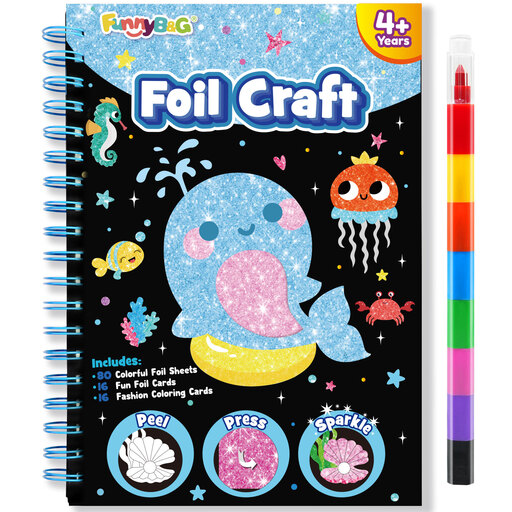
Why it suits this profile: The set is designed for children aged 4 to 10 and, according to the description, requires neither glue nor scissors. Its simple steps make it suitable for first craft activities and for keeping children busy away from screens.
The clearly explained three-step process cuts down on complicated preparation and extra materials.
112 pieces included, a compact format and a sea-creature design theme.
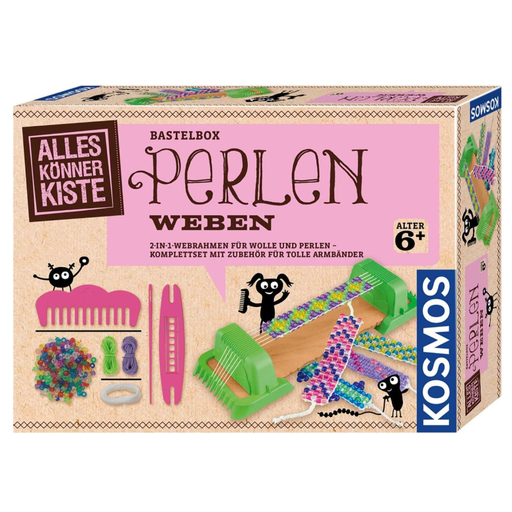
Why it suits this profile: Children aged 6 and over get a 2-in-1 loom for bead and yarn crafts, along with step-by-step instructions. It’s a good choice for families looking for a structured DIY craft set for children that introduces several techniques.
Templates and instructions provide guidance, so children aren’t left to figure out an unplanned mix of materials on their own.
The set is listed as including a 2-in-1 weaving loom, safety pins, beads, yarn and instructions; no batteries are needed.
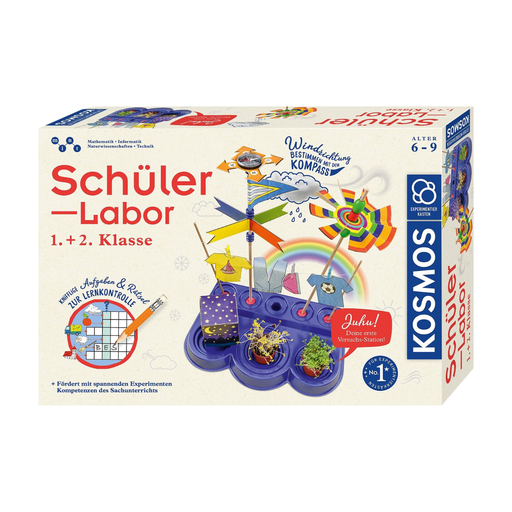
Why it suits this profile: Designed for children aged 6 to 9 who want to explore science regularly, this set includes instructions for more than 50 experiments about nature and technology.
The subject areas and illustrated instructions are clearly specified, making it easier to judge the learning content before you buy.
More than 50 activities, questions to test what children have learnt and no batteries required.
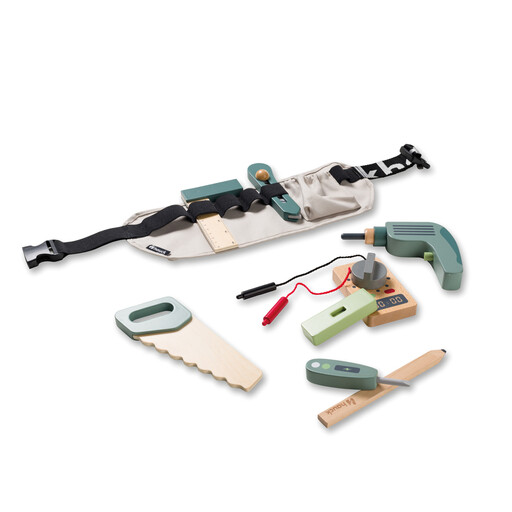
Why it suits this profile: This role-play toy is designed for children aged 3 and over to use at home, and its belt makes it easy to wear around the house or take on the go.
The pieces are clearly listed as a defined set of tools with an adjustable belt, and information about the materials and safety is easy to find.
Nine pieces, FSC-certified wood, an adjustable belt and no batteries required.
We’ve put together a complete, regularly updated list of products that meet these strict selection criteria and the safety regulations in force across the EU.
When choosing a birthday present for a child, make sure it suits the occasion and how the child will use it. A Foil Art set is better suited to a short, neatly contained activity. A bead-weaving set or pen art studio offers several creative steps and calls for more concentration. Magic sets for children can be a good choice if they enjoy putting on a show and practising with adults. With science kits for children, make sure you allow enough time for preparation, observation and tidying up.
Before you buy, run through this quick checklist:
Simple craft kits for children with just a few steps and easy-to-hold materials can be a good choice. According to the product description, the Foil Art sets for children aged 4 and over don’t require glue or scissors. Even so, adults should check the warnings and stay with younger children while they use the set.
Check the age recommendation, the type of ingredients used and the supervision guidance. If children will be mixing or observing chemical components, prepare the activity by following the instructions. Have work surfaces, containers and any household materials you’ll need ready beforehand.
That depends on the number of projects and how much of the consumable material is used. A set with fixed design boards will usually be finished once the included pieces have been used. Role-play toys or a weaving loom may last longer if you can buy extra materials. So it’s not just the number of pieces that matters, but whether the set allows children to repeat the activities or craft projects.