
Lieferung heute & morgen

Qualitätsgarantie

Willkommens-Angebote freischalten: KOSTENLOSE Lieferung | Bis zu 80 % RABATT | Kostenlose 30-Tage-JoyPlus-Testphase
App herunterladen
Creative learning toys for children should offer more than a few minutes of entertainment. Parents, grandparents and other gift buyers often look for age-appropriate materials, versatile ways to play and easy storage. At the same time, product images and marketing claims can hide important details.
As Joybuy Product Recommendation Officer, I’ve narrowed down the key things to look for and matched suitable play ideas to real-life situations.
A high piece count can look appealing at first. What matters, though, is whether the pieces can be combined and whether your child can use them to try out different ideas. A set of 32 magnetic tiles that work well together may be a better choice for beginners than a larger collection with lots of specialist pieces that can only be used to build one particular model.
“From age 3” isn’t a blanket recommendation for every family. Small parts and magnets need particular care. If you’re buying magnetic building blocks for children aged 3 and over, check that the magnets are securely enclosed in the casing and that any damaged pieces can be taken out of use straight away. The magnetic sets mentioned here are not suitable for children under 3, as they contain small parts that could be swallowed.
Electronic role-play toys for children may include sounds and lights, but could also need batteries. With larger playsets, it’s the assembled size that matters, not just the size of the packaging. If you’re short on storage space or looking for a gift to take on a trip, compare the dimensions, weight and storage options before you buy.
For plastic toys, smooth edges without burrs and a sturdy-looking casing are useful things to check. The product details should state the main material, such as ABS plastic. With magnetic toys, it’s also important that the magnets aren’t exposed. If a magnet comes loose or the casing is damaged, the toy should no longer be used.
Wooden and miniature sets may include small parts, glue and, in some cases, tools. So a craft set for teenagers isn’t automatically suitable for younger children.
The manufacturer’s age recommendation is a minimum requirement, but it doesn’t replace an assessment of your child’s individual abilities. Look out for:
This applies to magnetic building blocks for children just as much as to a LEGO building set, a role-play set or a creative craft kit.
For families, it’s worth considering whether a set offers open-ended play, guided play or a combination of the two. Magnetic building blocks usually allow children to create freely. A role-play set, on the other hand, provides a more defined setting. Also check the piece count, individual dimensions, packaging size and storage space required. A metal tin or built-in compartment can make it easier to keep everything tidy day to day.

Why it suits this profile: This set is designed for children aged 3 and over and contains 32 ABS plastic magnetic tiles. The compact metal tin is handy for storage at home or for creative play on the go.
The piece count is clearly stated, each tile measures 3.75 cm and storage is included in the set. This makes it easier to judge how much space you’ll need and how practical it will be to take with you.
32 pieces, basic geometric shapes, no assembly and a portable metal tin.
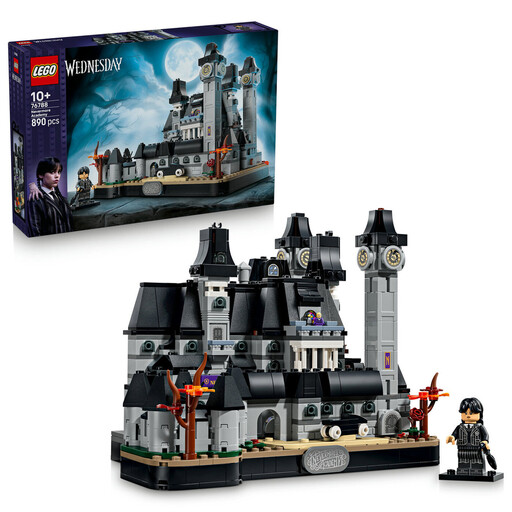
Why it suits this profile: This building set is designed for children aged 10 and over and includes 890 pieces. It combines a structured building process with opportunities to play with and display the finished model.
The age range, piece count and completed dimensions of around 17 × 21 × 19 cm are all stated. This makes it easier to judge the project’s level of difficulty realistically.
890 building pieces, printed instructions or app support, and a usable play area with figures.
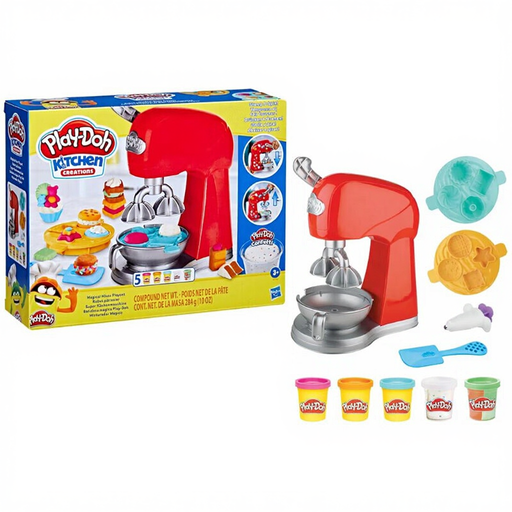
Why it suits this profile: Designed for children aged 3 and over, this set encourages open-ended kitchen role-play with a mixing bowl, measuring cups and accessories. It’s intended for one child and, according to the product details, doesn’t need batteries.
The product description lists the accessories, dimensions of 8.1 × 27.9 × 21.6 cm and cleaning instructions. This gives you a clear idea of what play involves and how much care the set needs before you buy.
A mixing bowl, measuring cup and accessories for role-play; the plastic parts can be cleaned with a soft, damp cloth.
For building together, 58-piece magnetic building blocks with house and roof shapes could be a good choice. If you’re planning lots of different constructions, a 120-piece magnetic construction toy offers more individual elements, but be sure to check that the magnets are safely enclosed.
For families who prefer role-play with figures, there’s also a Bluey aeroplane playset with three ways to transform it, or a Bluey supermarket with three levels, accessories and sound effects. Batteries aren’t included, so keep the battery compartment closed and store batteries out of reach of young children.
A DIY miniature set such as the Robotime Rolife Café, on the other hand, is more suited to teenagers and adults. Designed for ages 14 and over, it contains small parts and glue, as well as battery-powered lighting. It’s therefore not a suitable spur-of-the-moment gift for a child aged 3 and over.
We’ve put together a complete, regularly updated list of products that meet these strict selection criteria and fully comply with the safety regulations in force in the EU.
Sets specifically approved for children aged 3 and over, without features that are difficult to handle, may be suitable. For magnetic building blocks and role-play toys for children, parents should consider small parts, magnets and the level of supervision needed. Always check the manufacturer’s age recommendation against your family’s individual circumstances.
How long a toy stays engaging depends less on the number of pieces than on how many ways there are to play with it. Open-ended building blocks, figures and accessories for different scenarios can be combined in new ways time and again. Sets based around one fixed model offer a more limited range of play. A combination of building and role-play elements may therefore suit different stages of play.
It depends on the type of product. Magnetic building blocks and traditional building sets generally don’t need batteries. Electronic sets may require batteries, while DIY sets might need extra glue or small tools. Check the product description for these details before you buy.