
Lieferung heute & morgen

Qualitätsgarantie

Willkommens-Angebote freischalten: KOSTENLOSE Lieferung | Bis zu 80 % RABATT | Kostenlose 30-Tage-JoyPlus-Testphase
App herunterladen
Finding creative learning toys and gift ideas might seem straightforward at first: an appealing design, plenty of features and a reasonable price should make the decision easy. In practice, however, important differences often only become apparent after purchase. Parents, grandparents and relatives should therefore look beyond pictures and advertising claims, and pay attention to age recommendations, materials, features and care instructions.
A set with a high piece count can be versatile, but it needs enough space, storage options and time. With magnetic building blocks, there’s also the question of whether the pieces actually suit the intended play: simple blocks work well for free construction, whereas marble runs and light-up elements require extra attention when it comes to batteries and assembly.
Toys for ages 3 and up aren’t automatically suitable for every child of that age. Small parts, strong magnets, beads, needles or delicate components can pose a risk. A DIY craft set for children aged 8 and over, or a miniature dollhouse kit for ages 14 and up, shouldn’t be bought as an activity for younger children, even if the design looks child-friendly.
Labels like educational toys or Montessori toys don’t always clearly describe which skills are being developed. More meaningful are specific activities: fastening buttons, operating zips, connecting shapes, following rules, or assembling a model according to instructions. With Montessori-inspired products, you should also check whether the child can manage the activity independently or only with supervision.
First, check the recommended age group and all safety instructions. For products with small parts, remember: the age rating is a guide, but it doesn’t replace adult supervision. Extra care is needed with magnetic toys. If magnets are swallowed, it can cause serious injury. Damaged or loose parts should be removed immediately.
Also look for details about the manufacturer and the responsible person in the EU. For electronic products such as LCD writing tablets for children or learning machines, check the battery type, what’s included in the box and how to operate them. An LCD writing tablet, for example, may only need a button cell for the erase function, whereas a light-up building block set may require several AA batteries.
For toys that get frequent use, rounded edges, smoothly finished surfaces and securely attached components are important. With textile products like busy books for toddlers, you should regularly check the seams, ribbons and Velcro fastenings. Felt is lightweight and easy to handle, but should be kept away from water and fire.
Wooden models and 3D wooden puzzles need a dry storage place. Many delicate models should only be dusted with a dry, soft brush. For hardcover notebooks, dry storage is also recommended to keep the paper, fabric cover and embossing in good condition.
A craft gift should suit the time and space available. Personalisable pens can usually be decorated in a single crafting session. A miniature dollhouse kit or a mechanical wooden model, on the other hand, requires patience, good lighting and a stable work surface. For travel or waiting times, compact busy books, LCD writing tablets or small board games for children are more practical than large construction sets.
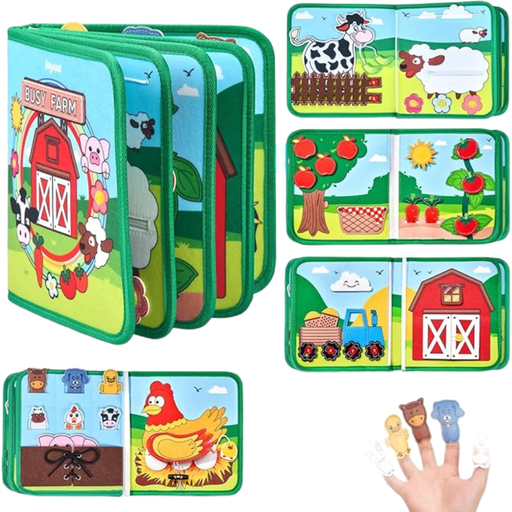
Why this product fits the profile: This compact busy book is designed for toddlers aged 1 to 3 and includes 15 activities with buttons, zips, laces and Velcro fastenings.
The age recommendation, soft felt material and securely stitched elements are clearly described. Adult supervision is still advised.
Lightweight, no batteries required and ideal for travel; focuses on practical everyday actions.
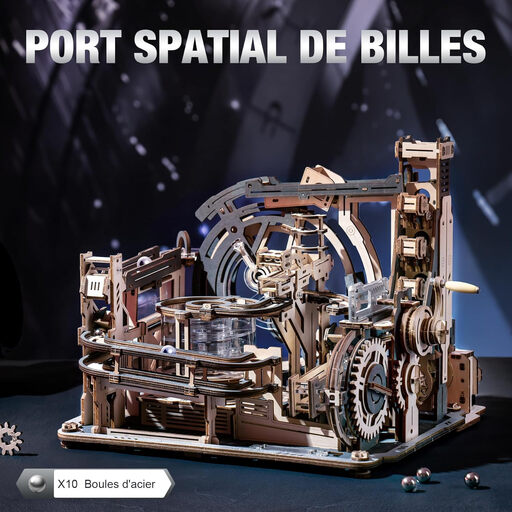
Why this product fits the profile: This model is designed for ages 14 and up, combining wood assembly, gears, marble runs and a USB-powered motor.
The age limit and required assembly effort are clearly stated. The USB connection is included; no additional batteries are needed.
31.2 × 25.1 × 23 cm when assembled; decorative model with both manual and motorised operation.
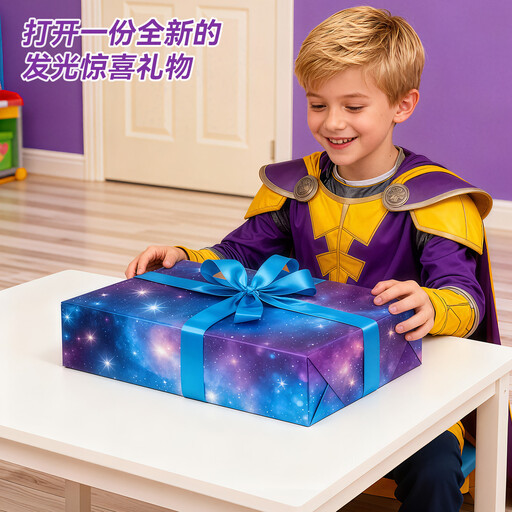
Why this product fits the profile: This 126-piece set is suitable for children aged 3 and up who want to explore 2D and 3D constructions as well as a light-up marble run.
The piece count, the three AA batteries required and the warning about small parts and strong magnets are all clearly stated.
126 pieces, transparent building elements and a light-up function; batteries must be inserted by an adult.

Why this product fits the profile: This miniature dollhouse kit is aimed at ages 14 and up and contains 62 laser-cut wooden pieces for a detailed kitchen scene.
The instructions, small parts and required patience are explicitly mentioned. The model is not intended for younger children to play with independently.
Static model with no power supply needed; the finished model measures approximately 13.5 × 5.5 × 15 cm.
For children aged 3 to 8, an LCD writing tablet or a card learning machine can be a good choice if you’re looking for a reusable, compact activity. For children aged 6 and up, a cooperative board game like “Die Schule der magischen Tiere ermittelt” with a 20-minute playing time for 2 to 4 players could be suitable.
If you want to give personalised stationery, you’ll find DIY sets for personalisable pens for ages 6 and 8 respectively. For fans of licensed designs, Harry Potter stationery with a notebook and wand pen is an option. Hardcover notebooks in A5 format with 192 pages are also suitable for school, the office, journaling or creative writing.
We’ve put together a full, regularly updated list of products that fully meet these strict selection criteria and the safety regulations in force in the EU.
For toddlers, simple, supervised activities with large, securely attached elements are best. A busy book with zips, buttons and laces can offer everyday actions. The age recommendation and any warnings about small parts remain crucial.
The lifespan depends on the material, storage and how they’re handled. Wooden models should be stored in a dry, dust-free place away from direct sunlight. With craft sets, it’s also important to know whether consumable materials are included or need to be bought separately later.
LCD writing tablets usually need a battery for the erase function, depending on the model. Light-up toys may require several AA batteries, which are often not included. So check the battery type, quantity and intended adult operation before you buy.