
Lieferung heute & morgen

Qualitätsgarantie

Willkommens-Angebote freischalten: KOSTENLOSE Lieferung | Bis zu 80 % RABATT | Kostenlose 30-Tage-JoyPlus-Testphase
App herunterladen
The selection of creative toys is vast, and so are the promises from manufacturers. But not every colourful set genuinely fosters long-term creativity. Many parents and relatives face the challenge of finding a gift that isn't just a fleeting thrill but is also educationally valuable and provides lasting enjoyment. Too often, well-intentioned purchases lead to unused toys gathering dust in a corner. This guide will help you recognise common purchasing traps and understand the key criteria for making a smart choice.
Before deciding on a product, it's helpful to know the most common issues that can diminish play value and lead to disappointment.
To avoid these pitfalls, you should base your purchasing decision on objective features. The following three parameters are of central importance.
A child's safety is the top priority. Look for reliable labels and material information. The CE mark indicates that the product meets the EU's basic safety and health requirements. For plastic toys, the BPA-free label is an important indicator that harmful plasticisers have been avoided. With wooden toys, you should look for a smooth finish with no risk of splinters and the use of non-toxic paints and varnishes. High-quality materials are not only safer but also more durable and resilient in daily use.
The manufacturer's age recommendation is a crucial starting point. For toddlers, motor skills toys that train gross motor skills and hand-eye coordination, such as large, easy-to-grip building blocks, are particularly suitable. For preschool and primary school-aged children, the demands on fine motor skills increase. More detailed craft kits for kids or more advanced construction toys are appropriate here. An age-appropriate educational toy challenges the child without overwhelming them, thus enabling positive learning experiences.
A good toy for fostering creativity is often characterised by an open-ended play concept. Unlike toys with a fixed purpose, open-ended play materials allow the child to invent their own rules, stories, and worlds. Classic examples include building blocks, simple figures, or materials for role-playing toys. This type of toy adapts to the child's development and remains interesting for years, as it can be reinterpreted again and again.
Based on the criteria above, we have identified some products that are suitable for different age groups and interests.
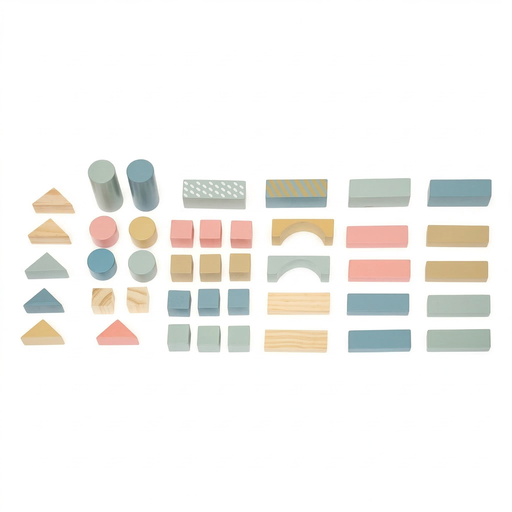
Why this product is a great fit: Ideal for toddlers to develop basic motor skills, colour recognition, and spatial awareness. The size of the blocks is tailored for small hands.
This set avoids the overwhelm trap with its simple, intuitive nature. As an open-ended toy, it offers extremely high replay value and won't become boring after a single use.
Made from natural pine wood. The classic design encourages imagination without electronic distractions.
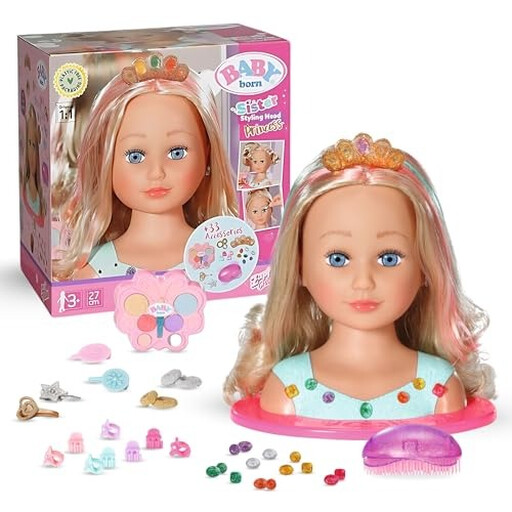
Why this product is a great fit: Perfect for children who enjoy role-playing, makeup, and hairstyling. It promotes fine motor skills and creativity while trying out different styles.
Thanks to its wide range of accessories and the ability to create endless new looks, this set offers high replay value, thus avoiding the short-lived excitement trap.
Includes a makeup palette that the manufacturer states is suitable for children's skin, plus 33 accessories for varied play.
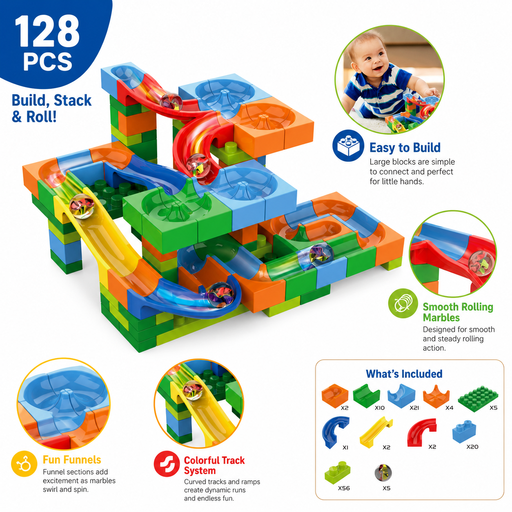
Why this product is a great fit: Ideal for children who love to build, solve problems, and playfully discover principles of physics like gravity and momentum.
As a modular construction toy, it grows with the child's abilities. It avoids the overwhelm trap, as simple runs can be built first and later expanded into more complex structures.
Promotes STEM understanding (Science, Technology, Engineering, and Mathematics) through creative building and experimentation.
We have compiled a complete, up-to-date list of products that fully meet these strict selection criteria and safety standards.
Look for robust construction and materials that are safe for health. For plastic products, the BPA-free label is a good sign. Wooden toys should be smoothly sanded to prevent splinters and treated with non-toxic paints. The CE mark is a fundamental indicator that the manufacturer complies with EU safety standards.
The manufacturer's age recommendation is the first clue. Also, consider your child's individual development stage and interests. For toddlers, motor skills toys with large, simple shapes are ideal. For older children, more complex construction toys or craft kits that require fine motor skills and concentration are suitable.
An open-ended play concept describes toys that have no fixed rules or a predetermined goal. Examples include building blocks, modelling clay, or role-playing toys. This type of toy stimulates the imagination and encourages children to develop their own ideas and solve problems creatively. It promotes independence and often has a longer play value because it can be rediscovered again and again.