
Lieferung heute & morgen

Qualitätsgarantie

Willkommens-Angebote freischalten: KOSTENLOSE Lieferung | Bis zu 80 % RABATT | Kostenlose 30-Tage-JoyPlus-Testphase
App herunterladen
Creative toys for children should offer more than a short-lived distraction. Parents, grandparents and relatives often look for a gift that’s right for the child’s age, clearly explained and genuinely used after it’s unwrapped. But with craft kits for children, DIY kits, experiment kits and building sets to choose from, finding the right one can be tricky.
As a Joybuy Product Recommendation Officer, I’ve narrowed down the most important things to consider. It’s not about choosing the set with the most persuasive description, but asking: is it right for the child, the space available and the way you want it to be used?
Big numbers on the packaging can look impressive. But they don’t tell you whether the pieces can be combined in different ways or whether the set will lose its appeal after just a few projects. With craft kits, check how many different projects you can make and whether you can buy more materials when you run out.
With building sets for children, it’s also worth checking whether children can create their own designs or only follow specific templates. A set with fewer pieces may suit younger children better if the shapes are easy to handle and they can get started without a lot of preparation.
‘Toys for ages 3+’ isn’t a blanket recommendation for every child of that age. Small parts, magnets, cords, tools or intricate steps may require extra supervision. So it’s important to consider the child’s fine motor skills, patience and experience alongside the age recommendation.
For experiment kits for children, or sets with functional edges and points, adults should read the instructions and warnings before buying.
The term educationally valuable toy doesn’t describe a single technical category. Specific features tell you more: does the toy encourage children to sort materials, plan models, record observations or try different ways of solving a problem?
STEM toys shouldn’t rely on scientific-sounding words in their marketing, either. Check whether the set actually includes activities involving spatial reasoning, cause and effect, construction or observation.
Check the recommended age against the European labelling and the manufacturer’s guidance. In particular, look out for:
Sets for children under 36 months are subject to particularly strict requirements around small parts. Even if a child is older, make sure loose beads, magnets and accessories are all collected after play.
Material details can help you choose, but they don’t replace a full safety check. Plastic parts should have smooth edges and be easy to clean. Wooden sets may seem sturdy, but check for cracks, splinters and damaged surfaces.
When it comes to craft materials, water requirements, adhesives, paints and the potential for mess all matter in practice. Playmais, for example, is joined using a damp sponge; according to the product description, no extra glue is needed. This can make preparation easier, but the material should still be kept out of children’s mouths.
Compare more than just the purchase price. Consider:
A microscope, for example, needs batteries for its LED light, while many classic building sets don’t need a power source. Compact creative sets are handy for travelling; larger educational toys need a permanent place and usually take more time to set up and pack away.
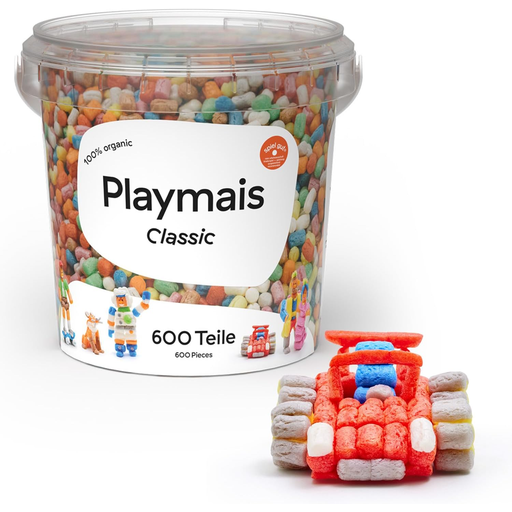
Why this product suits this profile: Suitable for children aged 3+, this set contains 600 colourful pieces, a sponge, accessories and instructions for creative projects.
The pieces are joined with water rather than extra glue. This keeps the materials you need to a minimum, although you’ll still need to follow the guidance on small parts and age suitability.
600 pieces, water-based use and compact storage. No batteries required.
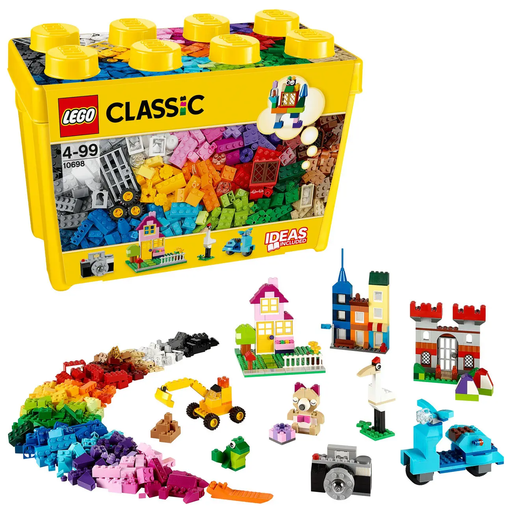
Why this product suits this profile: The box contains 790 pieces in 33 colours, a selection of windows and doors, and a handy plastic storage box for regular crafting and building.
The pieces are designed to be combined again and again, rather than being limited to a single model. The box makes it easier to sort the accessories after play.
790 pieces, two green baseplates and building ideas in the instructions. No batteries required.
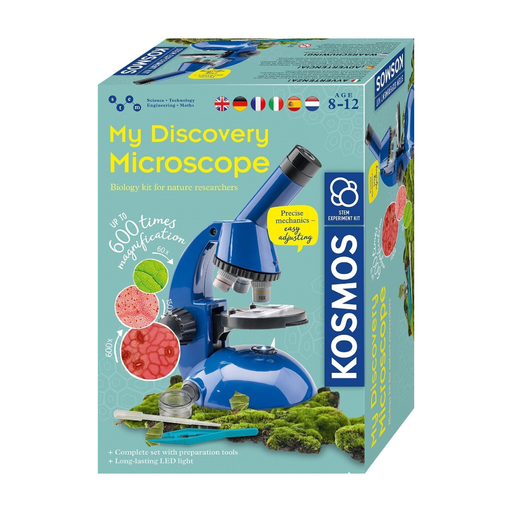
Why this product suits this profile: Suitable for children aged 8+, this experiment kit combines observation with prepared accessories and magnification of up to 600x.
The instructions and specimen-preparation accessories provide a structured introduction. Batteries aren’t included, so remember to factor them into the ongoing costs.
Up to 600x magnification, specimen-preparation accessories and LED lighting. Supervision is required because of the small parts and functional edges.
We’ve put together a complete, regularly updated list of products that meet these strict selection criteria and fully comply with the safety regulations in force across the EU.
For children aged 3+, options include larger building bricks, simple construction systems, Playmais or supervised role-play sets. Keep small beads, magnets and sharp tools out of reach of younger children. Always follow the product’s specific age recommendation and warnings.
How long it lasts depends on how quickly materials are used up and how the kit is designed. A one-off project will be finished sooner than an open-ended building set with reusable pieces. Before buying, check whether you can get more accessories and whether the child can use the kit to explore their own ideas.
It depends on the product. Some sets work without batteries and use included materials or everyday household items. A microscope with LED lighting needs batteries; craft kits may need consumables such as paper, paints or extra connecting pieces. Factor these ongoing costs into your decision.