
Lieferung heute & morgen

Qualitätsgarantie

Willkommens-Angebote freischalten: KOSTENLOSE Lieferung | Bis zu 80 % RABATT | Kostenlose 30-Tage-JoyPlus-Testphase
App herunterladen
Creative toys for children should offer more than a short-lived distraction. Parents, grandparents and anyone buying a gift often look for age-appropriate materials, clear product information and play value that lasts beyond the first afternoon. At the same time, the choice is vast: construction sets for children, puzzles, building bricks, strategy games for children and STEM toys differ considerably in their recommended age, construction method and supervision requirements.
820 building bricks may initially sound more substantial than 100 pieces. For younger children, however, a large quantity can be overwhelming. What matters is whether the instructions, colours, themes and opportunities for open-ended building suit the child’s stage of development. A smaller set with clear tasks may be more suitable for beginners than a very extensive construction toy.
For toys with small parts, the recommended age is a safety criterion, not merely a marketing indication. Building bricks and some puzzles contain parts that may pose a choking risk to children under three. Even a product described as being intended for older children should not be given to younger siblings without supervision.
Individual pieces of creative toys for children can easily go missing during everyday use. A storage box or bag can therefore be practical. For digital instructions, you should also check whether access is via a QR code or an app. For families without a tablet, printed instructions are often more straightforward.
For toys aimed at children aged 6 and over, small components are common in many sets. For children between 2 and 5, larger puzzle or building pieces are generally easier to grip. The statement ‘from 6 years’ does not replace the need for supervision: with complex construction sets, building together may be helpful.
Pay particular attention to:
For construction sets for children and building bricks, burr-free edges, secure connections and robust components are useful points to check. With children’s puzzles, sufficiently strong card is important so that the pieces do not bend quickly when assembled repeatedly. Claims such as ‘non-toxic’ or ‘particularly durable’ should ideally be supported by specific material and care instructions.
A LEGO construction set with a fixed model design is suitable for children who enjoy building step by step and then using the model for role play. An open-ended set with lots of colours and shapes allows more scope for creating their own constructions. A compact game, on the other hand, can be useful for travelling, waiting times or short periods requiring concentration.
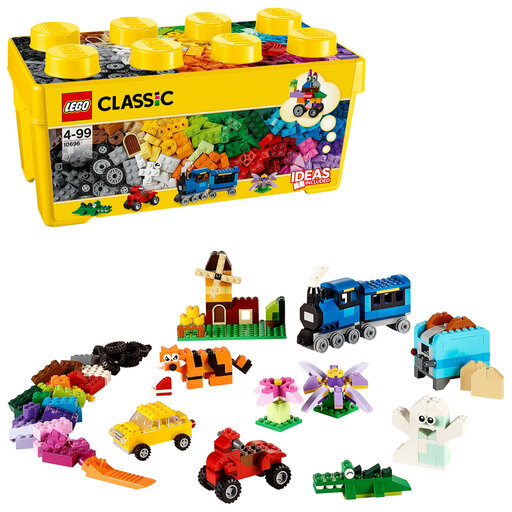
Why this product suits the profile: The box contains 484 elements in 35 colours, plus wheels, windows and eyes. This allows children aged 4 and over to start by building from ideas and later create their own vehicles or animals.
The storage box and included building ideas make the large number of pieces easier to organise. The recommended age and warning about small parts should still be observed.
484 elements, a storage box and compatible standard building bricks for open-ended construction.
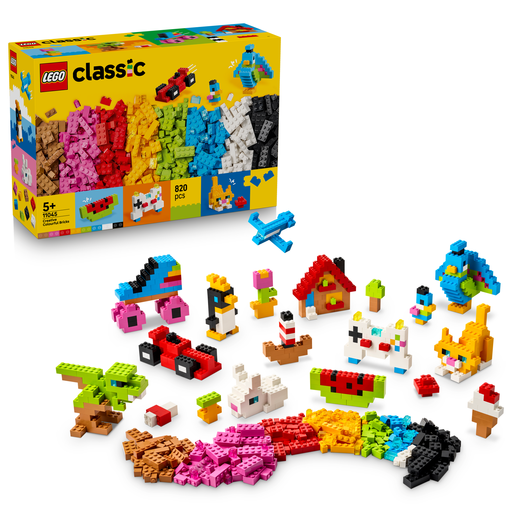
Why this product suits the profile: This set is designed for children aged 5 and over. It combines 820 elements with instructions for 14 models, as well as digital instructions for three additional building ideas.
The large number of pieces is given structure through specific models and step-by-step instructions. Younger children may require close support from an adult.
820 colourful elements, 14 model suggestions and additional digital building instructions.
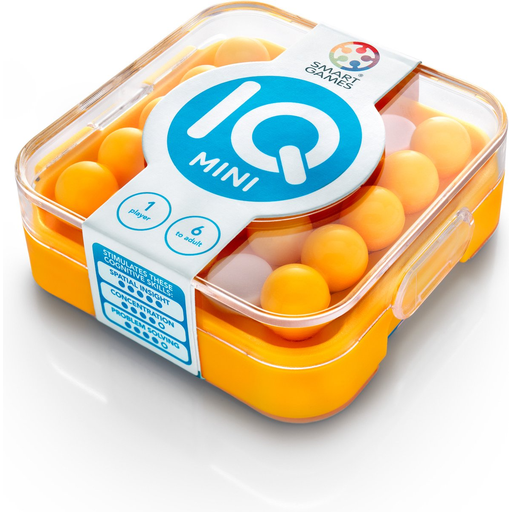
Why this product suits the profile: According to the product information, this compact logic game is intended for children aged 6 and over. The blockers can be moved, after which the playing board is completed with ball pieces.
The game has a clearly defined format and requires no batteries. The recommended age must be followed because of the small parts.
Pocket-sized format, adjustable challenges and additional access to hints and solutions via QR code.
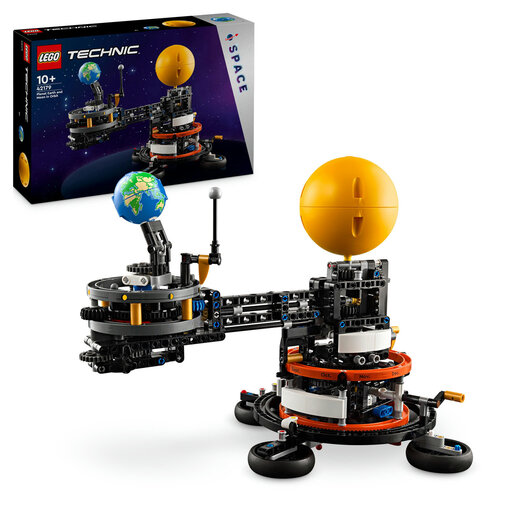
Why this product suits the profile: The model is intended for children aged 10 and over and contains 526 elements. A crank sets the Sun, Earth and Moon in motion, making the set appealing to users interested in space and STEM.
The play objective is not limited to creating a decorative model. The moving elements and printed months and moon phases provide a clear, practical purpose.
526 elements, a moving crank model and a thematic focus on orbits and moon phases.
For children aged 2 and over, a set such as Ravensburger My First Puzzle, Cute Pets, with four puzzles and increasing levels of difficulty, can provide a manageable activity. The large, sturdy card pieces are designed for small hands; the age-limit and supervision guidance should nevertheless be observed.
For role-play fans aged 6 and over, themed sets such as LEGO NINJAGO 71838 Kai’s Motorcycle Speed Race, with 79 pieces and two motorbikes, may be worth considering. Children aged 8 and over can build a vehicle with 387 pieces using LEGO NINJAGO 71856 Jay’s Transforming Car, then convert it into an alternative play mode. Adult hobbyists and military model builders can find models with several hundred ABS elements among the WANGE and CAYI sets. Here, the key considerations are piece size, construction time and the recommended level of supervision.
We have put together a complete, regularly updated list of products that fully meet these strict selection criteria and the safety regulations applicable in the EU.
Puzzles with just a few sturdy pieces and large grip edges are generally easier for beginners. You should check the specific recommended age and information about small parts for every product. Small building bricks or strong magnets should not be given to children who still put pieces in their mouths.
The lifespan depends on the material, connections, storage and the way the toy is used. Open-ended LEGO Classic sets can be rebuilt again and again after the first model. Puzzles should be stored in a dry place. Damaged, broken or missing pieces should be removed.
Most construction sets, puzzles and logic games do not require batteries. Additional costs may arise from expansion sets, replacement parts or digital devices needed for app-based instructions. Before buying, it is worth checking whether the game can be used in full and which functions are available without a smartphone or tablet.