Prepare the batter at home
You mix the runny batter before setting off and take it with you chilled. That means you won’t need to take the mixer to the picnic spot.


You don’t necessarily need an electric hand mixer to make runny crêpe batter: a whisk will do the job, but it takes some elbow grease. If you mix the batter at home, focus on the beaters, speed control and ease of cleaning when comparing mains-powered models. If you want to mix it at your picnic spot without a power socket, a cordless model could be an option, but you’ll need the right battery and a sufficient charge. Whichever device you choose, keep ingredients or prepared batter made with egg and milk properly chilled during transport. The German Federal Institute for Risk Assessment also emphasises the importance of careful food hygiene.
You mix the runny batter before setting off and take it with you chilled. That means you won’t need to take the mixer to the picnic spot.
You’d like to mix the batter electrically once you reach the picnic spot. So you’ll need to consider whether the battery, charge level and workspace are suitable.
You’d like to remove the beaters easily after use and clean them in accordance with the care instructions for your specific model.
| Priority | What to check before buying | Who is it important to? |
|---|---|---|
| Mix runny batter with control | Suitable beaters and a low speed that’s easy to control; wattage alone won’t tell you how your crêpes will turn out. | If I want to mix runny crêpe batter with control, I look for suitable beaters and a speed that’s easy to manage from the start. Around 31% of consumers put controlled batter preparation first. |
| Mix on site without a power socket | Decide where you’ll be mixing in advance. For cordless models, check what’s included, whether the battery is compatible and how much charge it has. | If I want to mix the batter at the picnic spot, I need a compatible, included and charged battery. Around 31% of consumers prioritise being able to mix on site without a power socket. |
| Clean the mixing attachments | Check for an eject button and read the care instructions for the attachments included with the specific model variant. | After mixing, I want to remove the attachments easily and clean them only as permitted by the instructions. Around 25% of consumers put cleaning and hygiene first. |
| Comfortable to use | Consider the weight, handle and position of the controls in relation to where you’ll be mixing. | When I’m mixing at the bowl, the handle and controls matter to me. Around 13% of consumers rank ease of use as a top priority. |
If you want to mix the batter at the picnic spot, a mains-powered mixer will only work there if you have a suitable power supply.
Before you buy, decide whether you’ll be mixing at home or on site. If you’re preparing the batter at home, you won’t need to take the mixer on your picnic.
The battery required to operate the KitchenAid 5KHMR700BM is not included.
Check the exact model number and what’s included. Charge any battery you already own before setting off, and follow the manufacturer’s guidance on where to use the mixer.
Care instructions vary by model and attachment. Philips does not list any dishwasher-safe parts for the HR3741/00.
Always follow the care instructions for your specific model variant and the attachments you’re actually using.
A hand mixer won’t stop germs multiplying if perishable ingredients or prepared batter aren’t kept sufficiently chilled. The German Federal Institute for Risk Assessment highlights the importance of adequate refrigeration and careful food hygiene.
Plan transport, refrigeration and clean containers separately from your choice of mixer.
The Go hand mixers are worth considering if you want to mix on site without a power socket. KitchenAid supplies the 5KHMR762BM with a battery; the battery is not included with the 5KHMR700BM.
The mains-powered HR3741/00 is an option if you’re preparing the batter at home.
The ErgoMixx MFQ36400 is a mains-powered model with a soft-touch handle and adjustable speed settings.
The 3Mix 4000 GN4001 and 3Mix 9000 GN9101 offer different features in mains-powered models.
The Prep’Mix HT450B is a mains-powered model with two beaters and five speed settings.
The HM 3832 is a mains-powered model for preparing batter at home.
This selection includes electric hand mixers for preparing batter before setting off, as well as a manual whisk for mixing without electricity.
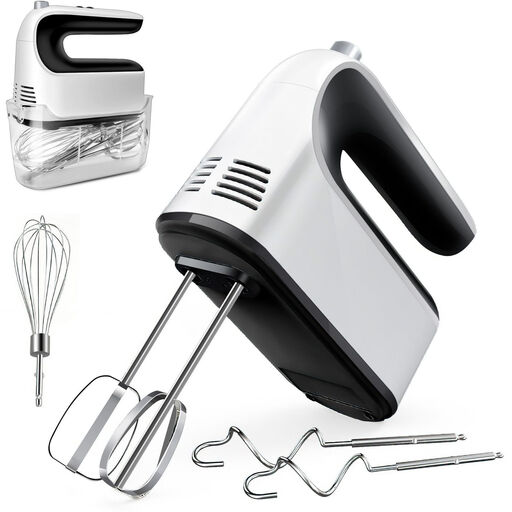 No image available
For mixing before you set off; the product title lists five speed settings, a whisk and other accessories.
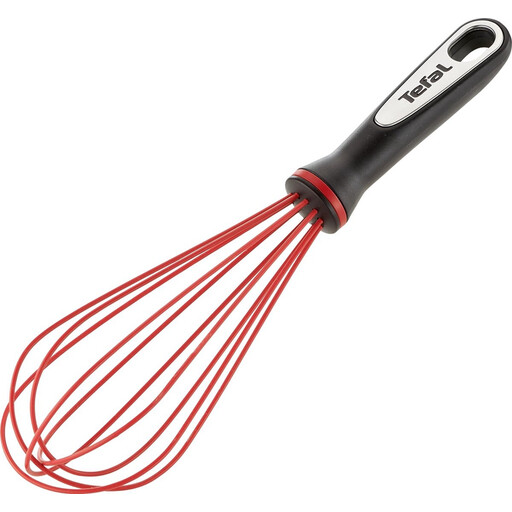 No image available
A manual alternative if you’d rather mix without an electric motor. You’ll be doing the whisking by hand.
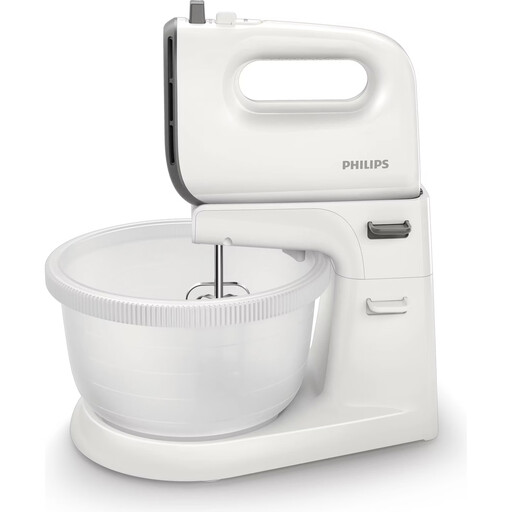 No image available
For preparing batter at home; the product description states that a mains socket is required.
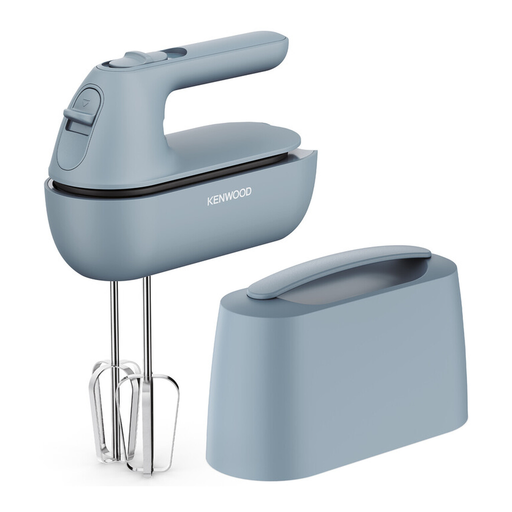 No image available
For mixing batter at home; the instructions describe mains operation and recommend starting at a low speed.
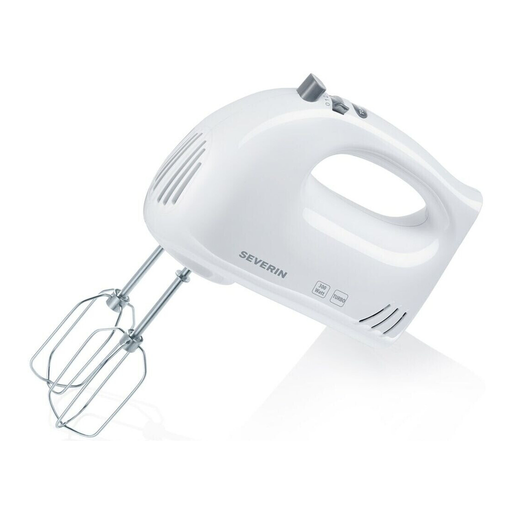 No image available
For preparing batter at home; the instructions describe connecting the mixer to the mains.
No. The crêpe recipe calls for the ingredients to be mixed, but doesn’t specify an electric mixer. If you’re buying one, suitable beaters and ease of use for the task are more useful indicators than wattage alone.
Only if you have a compatible, charged battery. KitchenAid explicitly describes the 5KHMR700BM as a version supplied without a battery; according to KitchenAid, a battery is included with the 5KHMR762BM. Also follow the instructions for your specific appliance on where it can be used.
Keep it hygienically stored and sufficiently chilled until you’re ready to use it. The German Federal Institute for Risk Assessment warns that inadequate temperatures during transport and storage can encourage harmful germs to multiply. Good hygiene and refrigeration are both important.
Not necessarily. Krups lists the GN9101’s beaters and dough hooks as dishwasher-safe, while Philips does not list any dishwasher-safe parts for the HR3741/00. Always follow the care instructions for your exact model and its attachments.
Electrical products are subject to the relevant EU product regulations. Where required, CE marking is the manufacturer’s declaration of conformity, not an independent quality mark. For the Low Voltage Directive, the European Commission specifies a range of 50 to 1,000 V AC, which includes mains-powered household appliances operating at 220–240 V. This doesn’t establish whether the directive applies to a model powered solely by a battery.