
Lieferung heute & morgen

Qualitätsgarantie

Willkommens-Angebote freischalten: KOSTENLOSE Lieferung | Bis zu 80 % RABATT | Kostenlose 30-Tage-JoyPlus-Testphase
App herunterladen
Making paper-thin, golden-brown crêpes at home can be a true delight—whether for a special weekend breakfast, a family celebration, or simply as a sweet or savoury meal. But choosing the right appliance is crucial for success. Many models on the market overpromise and underdeliver. This guide will help you avoid common purchasing pitfalls and make an informed decision.
Before you choose a model, you should be aware of the typical weaknesses that often only become apparent after a few uses, leading to frustration in the kitchen.
crêpe maker or material that is too thin in a crêpe pan.crêpe maker with accessories is therefore often the more practical choice.To avoid the problems mentioned above, focus on the following technical features in your selection. These largely determine the functionality and longevity of your appliance.
The plate is the centrepiece of any crêpe maker. The choice of material and the quality of the coating are decisive for the cooking results and maintenance.
The decision between a standalone electric appliance and a pan for the stovetop depends on your cooking habits and available space.
crêpe pan is more versatile and space-saving. It can also be used for omelettes or tortillas. It's important to check for compatibility with your type of stovetop. Models with a ferromagnetic base are suitable as an induction crêpe maker. Here, success depends more heavily on correct heat regulation on the stove.With an electric pancake maker, continuously adjustable temperature control is preferable to a simple on/off switch. It allows you to precisely adjust the heat to the batter's consistency and the desired level of browning. A power output between 1000 and 1300 watts is generally sufficient to heat the plate quickly and keep the temperature stable.
Here are some recommendations tailored to different needs and usage scenarios.
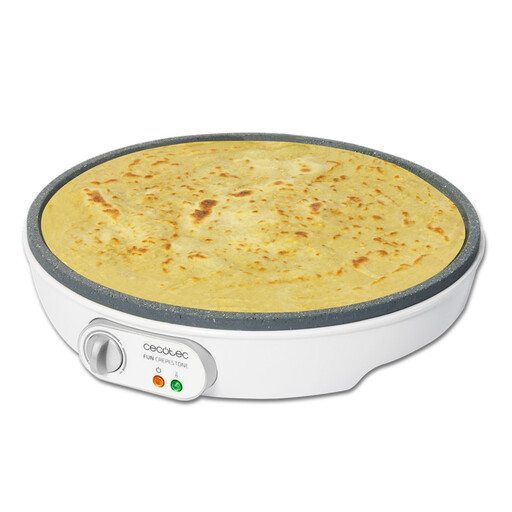
Why This Fits Their Persona: Ideal for users who want a specialised appliance for perfect, uniform crêpes. Its simple operation and all-inclusive package make it ready to use out of the box.
The RockStone non-stick coating is PFOA-free and durable, according to the manufacturer. The device comes complete with a spatula and batter spreader, so no additional purchases are necessary.
Features an adjustable temperature controller for precise results and an indicator light that shows when the plate is ready.
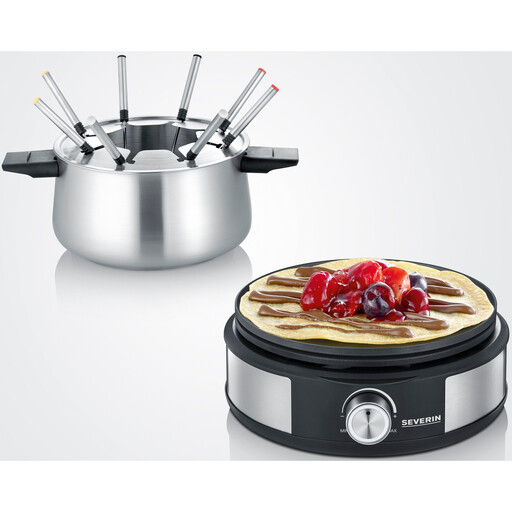
Why This Fits Their Persona: Perfect for anyone looking for a versatile appliance for parties and social gatherings. The combination of fondue and crêpe functions makes it the centrepiece of any celebration.
The continuously variable thermostat allows for precise heat control, preventing uneven browning. The crêpe plate is removable and has a non-stick coating.
2-in-1 functionality (fondue and crêpes) saves space and money. Removable, dishwasher-safe parts make cleaning easier.
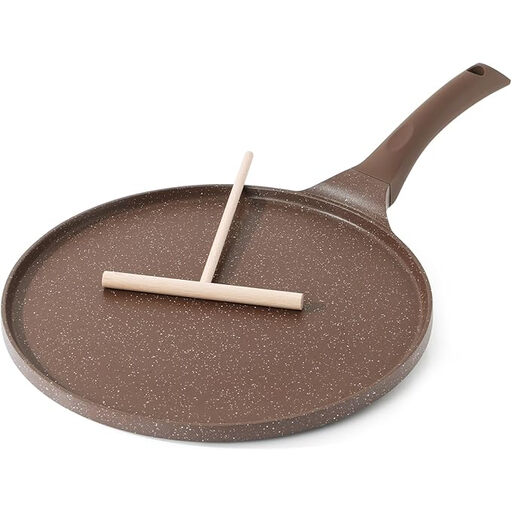
Why This Fits Their Persona: For cooks who prefer the control of a stovetop and want a versatile, space-saving pan. Its induction compatibility makes it attractive for modern kitchens.
The aluminium core ensures excellent heat distribution. The Swiss granite non-stick coating is PFOA-free and robust, according to the manufacturer, which counteracts rapid wear.
Universal stovetop compatibility (gas, electric, induction) and versatile use for crêpes, pancakes, dosa, or tortillas. Easy to clean and store.
We have compiled a complete, up-to-date list of products that fully meet these strict selection criteria and safety regulations.
1. How do you clean a crêpe maker properly to protect the coating? Let the appliance or pan cool down completely after use. Then, wipe the surface with a soft, damp cloth and, if necessary, a mild washing-up liquid. Never use metallic or abrasive cleaning tools like steel wool, as they will permanently damage the non-stick coating. Hand washing is recommended for most pans to maximise the life of the coating.
2. Do I need special accessories for a crêpe maker? For paper-thin crêpes, a T-shaped batter spreader for evenly distributing the batter and a long, narrow spatula are very helpful. Many electric models are already supplied as a crêpe maker with accessories. If not, purchasing a heat-resistant silicone spatula like the COOKER KING Silicone Spatula is a good choice, as it won't scratch the coated surface.
3. What is the difference between a crêpe maker and a pancake maker? The term pancake maker is often used synonymously. However, a crêpe maker traditionally refers to an appliance with a large, completely flat hot plate, which is ideal for making large, thin French crêpes. Some devices described as "pancake makers," on the other hand, have several small, round indentations for making thicker, American-style pancakes. The flat devices presented here are suitable for both types of preparation.