Instructors teaching thin crêpes
You want to teach people how to spread and flip crêpes on a flat, open cooking surface. Check the usable surface area and whether a batter spreader suits your class.


For a weekend cookery class focused on practising how to spread and flip thin crêpes, a flat electric crêpe maker is the better choice. Look at the usable cooking surface, batter spreader, temperature control and cleaning requirements. An electric party pan is more suitable if the class also includes other pan-fried dishes. Its high sides and lid don’t offer the same open working surface. Check the instructions for the specific model: diameter alone doesn’t prove that it’s suitable for crêpes or that it can be used for other dishes.
You want to teach people how to spread and flip crêpes on a flat, open cooking surface. Check the usable surface area and whether a batter spreader suits your class.
If participants will take turns using the appliance, clear controls and suitable utensils are important. Always follow the safety guidance for the specific model when working with hot surfaces.
If you’re planning to cook other pan-fried dishes as well as crêpes, check whether the party pan is designed for them. A dedicated crêpe maker isn’t automatically suitable for cooking other dishes.
A good choice if: The class focuses on spreading and flipping thin crêpes.
Things to consider: It’s designed for thin pancakes; other uses depend on the instructions for the specific appliance.
A good choice if: The class includes other pan-fried dishes and you have space for a larger appliance.
Things to consider: The sides and lid of a party pan don’t offer the same open working surface as a flat crêpe maker. The pan’s diameter alone doesn’t tell you how easy it is to spread the batter.
First, choose an appliance to suit your planned menu. Then compare the usable cooking surface, controls and cleaning requirements of the specific model.
| What matters | What to check before buying | Who is it important to? |
|---|---|---|
| Open cooking surface | Check the usable diameter, shape of the rim and overall appliance dimensions, as well as the batter spreader and spatula. | If I want people to spread large, thin crêpes, an open surface matters more to me than high sides. Around 33% of consumers say the cooking surface is their top priority when buying. |
| Easy-to-understand controls | Compare the temperature control, indicator lights, stability and safety guidance. | When learners take turns, I want to be able to check the settings and appliance status easily. Around 27% of consumers put ease of use first. |
| Cleaning between sessions | Check separately whether the cooking surface and accessories can be removed and how each can be cleaned. | If the appliance needs cleaning between class sessions, I want to know how to clean each part. Around 20% of consumers prioritise ease of cleaning. |
| Other pan-fried dishes | Check that the appliance is intended for your planned menu. For a party pan, also consider its sides, lid and footprint. | If I want to use the same appliance for other pan-fried dishes as well as crêpes, I first check that it’s designed for those uses. Around 20% of consumers put versatility first. |
Manufacturers’ specifications highlight differences in cooking surface and cleaning. WMF states that the Lono Crêperie has a removable, dishwasher-safe 33 cm plate; Cloer specifies that the 6630 makes crêpes up to 30 cm and recommends wiping the cooled surface with a damp cloth. These details apply to the specific models and don’t indicate cooking speed or class capacity.
When it comes to using an appliance for different dishes, check the instructions. CASO describes the Profi Partypfanne as a 42 cm pan with a lid and an internal height of up to 7.5 cm. This alone doesn’t show that it will handle crêpe-making as well as a flat plate.
Diameter doesn’t tell you how much open working space there is, as it would with a flat plate. According to the manufacturer, the CASO Profi Partypfanne has high sides and a lid.
For a crêpe-making class, consider the open cooking surface and shape of the rim. If you’re planning to cook other pan-fried dishes, check that the party pan is suitable for them too.
According to WMF, the Lono Crêperie is a flat crêpe maker with temperature control and a 33 cm diameter.
According to the manufacturer, the Cloer 6630 makes crêpes up to 30 cm and features continuously adjustable temperature control and indicator lights.
According to the manufacturer, the Fiesta Crêpes Maker 20920-56 has a 30 cm plate, a continuously adjustable control and a rim.
CASO offers both the flat CM 1300 crêpe maker and the taller Profi Partypfanne.
According to Severin, the CM 2199 has a removable crêpe plate with a diameter of about 38 cm.
This selection features flat electric crêpe makers for classes where participants spread the batter and flip the crêpes.
 No image available
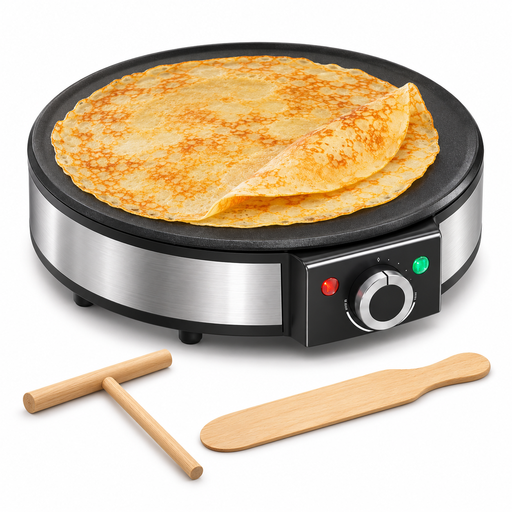
For practice sessions where participants spread the batter and flip the crêpes themselves, the product title lists temperature control, a batter spreader and a spatula.
Other listed features include a stainless steel finish and easy cleaning.
 No image available
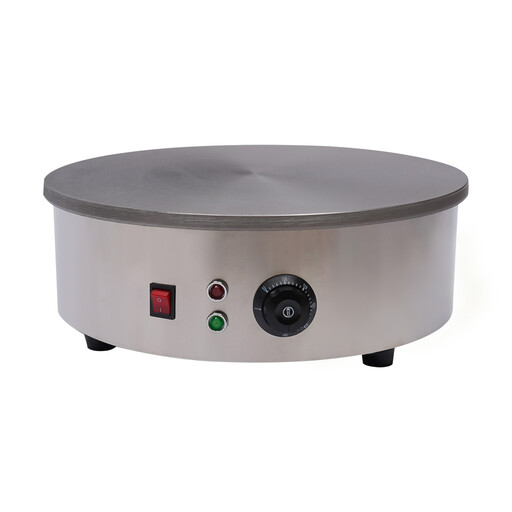
For classes practising how to use a batter spreader and spatula, the product title lists both utensils.
The product details specify 17.7 inches, 3 kW and an adjustable temperature of 122–572 °F.
 No image available
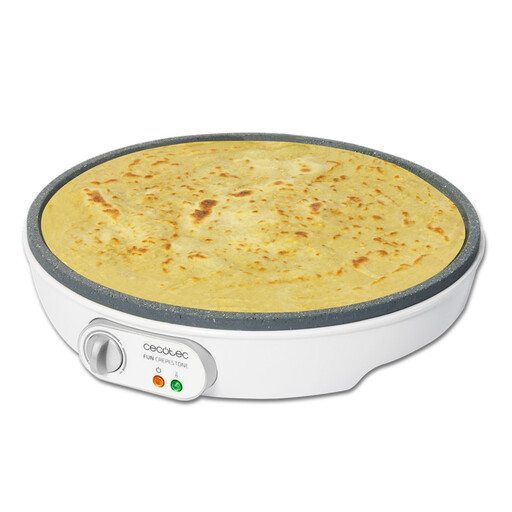
The product title lists a batter spreader and spatula, making it suitable for practising how to spread and flip crêpes.
Listed features include a RockStone non-stick coating, a 30.5 cm diameter and a temperature control.
 No image available
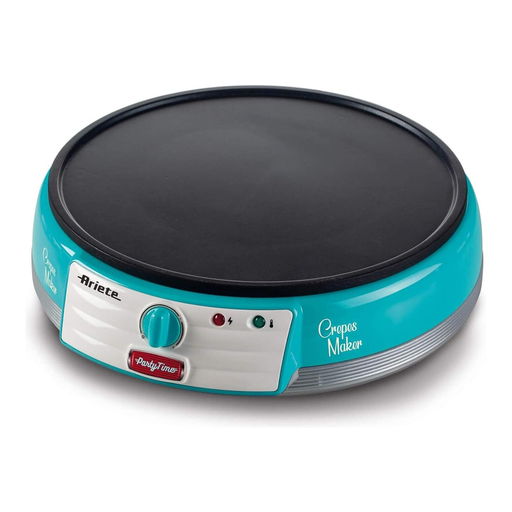
The product description lists spreading the batter and flipping the crêpes as steps in the cooking process.
Listed features include a non-stick surface and cleaning with a damp cloth.
The number you need depends on how many people will be cooking at the same time. First, decide whether all groups will spread the batter at once or take turns at one station. Plate diameter doesn’t indicate class capacity.
Only if the manufacturer explicitly says that the specific plate is dishwasher-safe. WMF describes the plate on the Lono Crêperie as dishwasher-safe; Cloer recommends wiping the cooled cooking surface of the 6630 with a damp cloth. Unplug the appliance before cleaning and follow the instructions.
The German Federal Institute for Risk Assessment notes that unfilled PTFE-coated cookware shouldn’t be overheated: harmful fumes can be produced at temperatures of 360 °C and above. Check the coating material of the specific appliance and follow its instructions. This advice doesn’t automatically apply to every non-stick coating.
Check that the specific product meets the requirements for its product type and carries the required CE marking. The European Union describes CE as a manufacturer’s declaration, not an independent EU quality mark. Surfaces that come into contact with food must also meet the applicable EU requirements for food contact materials; a non-stick claim alone doesn’t prove this.