What should you look for when buying?
First, decide whether your class will focus on cooking several small portions at once or spreading batter to make large crêpes. This will determine which type of cooking surface is right for you.
Continuous cooking surface
A good fit if: participants will be practising how to spread and flip large crêpes. Cloer lists crêpes up to 30 cm, stepless temperature control and a batter spreader for the 6630; WMF specifies a 33 cm plate for the Lono Crêperie.
Bear in mind: each cooking cycle gives you the space to cook one large crêpe.
Multiple mini wells
A good fit if: several participants will be cooking small portions at the same time. Tefal lists six mini wells for the PY55E8; DOMO specifies six cooking spaces, each measuring 11.5 cm, for the DO8709P.
Bear in mind: the fixed shapes aren’t suitable for practising how to spread batter for a large crêpe. According to the manufacturer, you can’t adjust the temperature on the Tefal PY55E8.
Traditional cast-iron plate
A good fit if: teaching participants about this traditional type of plate is part of the class, and you’ve set aside time to care for it. Krampouz offers the electric Billig in 35 or 40 cm diameters.
Bear in mind: Krampouz requires you to season the plate before first use and maintain its patina.
| What you need |
What to check before buying |
Who is this important to? |
| Cooking several portions at once |
Check the number and diameter of the wells, and the difference between individual wells and a continuous cooking surface. |
If I want several participants to cook small portions at the same time, fixed wells matter more than a large open surface. Around 33 % of consumers prioritise cooking multiple portions in parallel. |
| Learning to spread batter |
Check that the specific model has a continuous surface, a batter spreader and adjustable temperature. |
If I want to teach participants how to spread and flip large crêpes, I need an open surface and want to be able to adjust the temperature. Around 27 % of consumers focus on practising the batter-spreading technique. |
| Cleaning and storage |
Check separately whether the plate and accessories are removable and dishwasher-safe. Also consider how you’ll store them. |
If there’s little time to tidy up after class, I want to know how each part can be cleaned and stored. Around 20 % of consumers give cleaning and storage top priority. |
| Size of individual crêpes |
Compare your preferred portion size with the plate diameter and the appliance’s full dimensions. |
If I want to make larger individual crêpes, the available diameter matters more than the number of small wells. Around 20 % of consumers focus mainly on the space available for one large portion. |
Crêpe makers at Joybuy
This selection includes appliances for making individual crêpes on a continuous surface, including a traditional cast-iron plate.
 No image available
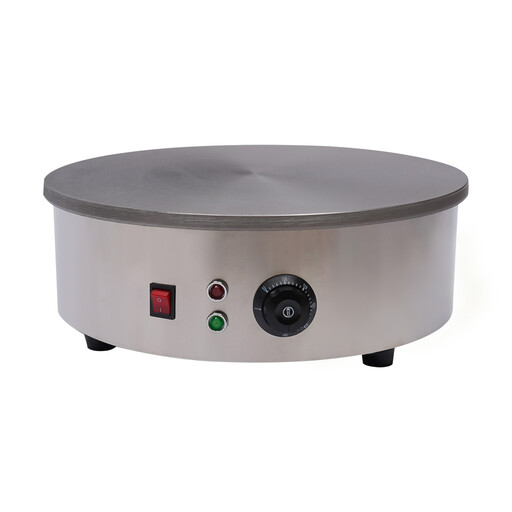
Electric cast-iron crêpe maker, 17.7 Inch
The continuous cast-iron plate is a good fit if participants will be practising how to spread batter for individual large crêpes.
Listed in the product name: 17.7 Inch, 3KW, adjustable temperature, batter spreader and spatula.
View at Joybuy
 No image available
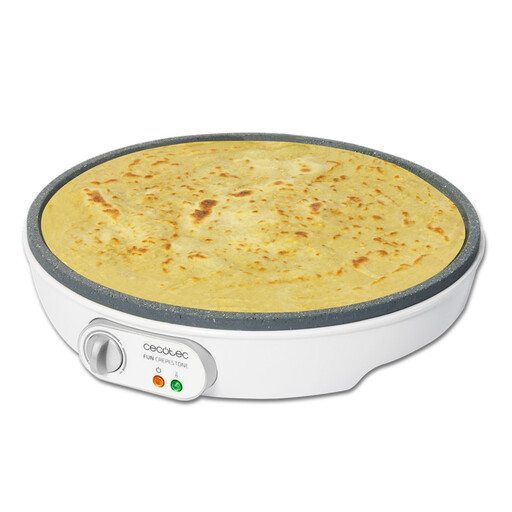
Cecotec Fun Crepestone crêpe maker, 30.5 cm
The continuous plate is suitable if participants will be practising how to spread and flip individual crêpes.
Listed in the product name: RockStone non-stick coating, 30.5 cm diameter, adjustable temperature, 1000 W, batter spreader and spatula.
View at Joybuy
 No image available
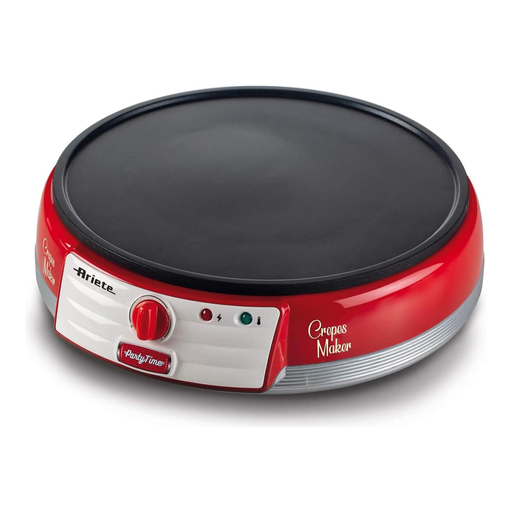
Ariete 202 crêpe maker, red
Could be suitable for your class if you’re looking for a crêpe maker for individual practice sessions. Before your class, check the product details for the plate size, temperature control and included accessories.
View at Joybuy
Frequently asked questions about crêpe makers for cookery classes
For a class, should I choose a large plate or six mini wells?
A continuous plate is ideal for practising how to spread batter for a large crêpe. If participants will be cooking small portions at the same time, multiple mini wells are worth considering. The key is deciding which technique you want to teach in your class.
Can I put the cooking plate in the dishwasher after class?
That depends on the model and the individual part. WMF describes the removable plate on the Lono Crêperie as dishwasher-safe. Severin doesn’t list any dishwasher-safe parts for the CM 2198; Tefal specifically lists a spatula and ladle for the PY55E8.
What additional costs or requirements should I consider when buying?
Check whether a batter spreader and turner are included, and whether you’ll need any other accessories. In Germany, statutory rights under the legal guarantee generally apply if consumer goods are faulty; the Verbraucherzentrale states that these rights last for two years. A manufacturer’s warranty is separate.
Does a weekend cookery class automatically require food hygiene training?
Not simply because it’s a cookery class. Under Section 4 of Germany’s Food Hygiene Regulation, training requirements apply to people who produce, handle or market highly perishable food. Whether they apply depends, among other things, on the ingredients and the activities involved. Section 3 sets out general hygiene requirements. The official text of the regulation is the authoritative source for running a specific class.
What does the CE marking mean on an electrical appliance?
For products covered by relevant EU harmonisation rules, the CE marking indicates that the manufacturer declares the product conforms to the applicable requirements. Your Europe explains that it isn’t an independent practical test of cooking performance. For the specific appliance, check the marking, instructions and relevant electrical connection details.


