For watching cricket with people seated to the sides, the horizontal viewing angle of the specific TV should be your deciding factor. An OLED or an LCD with a suitably tested viewing angle could be a good option. In daylight, you’ll also need to consider reflections and brightness; for fast-paced action, look at motion handling. RTINGS points out that advertised gaming refresh rates alone tell you neither the stream’s frame rate nor how well the broadcast handles motion.
Who should consider these options?
Hosts with guests spread across the room
If guests are sitting to the left and right of the screen, check how evenly colours and brightness hold up from the seats at either end. RTINGS highlights wide viewing angles as important for broad seating arrangements.
Cricket fans in a bright living room
In daylight, reflections and the brightness of the specific TV matter just as much as side viewing angles. RTINGS lists reflection handling and sufficient brightness among the things to consider when choosing a TV for sport in a bright room.
Viewers who use different ways to watch
If you stream some matches and use an external device for others, check the available reception options, the connections you need and the quality of the signal you can actually access. The Verbraucherzentrale recommends considering both your current and future reception options when choosing a TV.
What should you look for when buying?
OLED
A good fit if: Guests will be sitting well to the sides and consistent picture quality is a priority.
What to weigh up: In daylight, check the reflections and brightness of the specific model. For long periods with static on-screen graphics, follow the manufacturer’s care advice.
IPS LCD
A good fit if: You’re considering an LCD with viewing angle as an important factor. RTINGS describes IPS as an LCD type that typically offers wider viewing angles than VA.
What to weigh up: RTINGS says IPS typically has lower contrast than VA. Even so, assess the specific TV for viewing angle, reflections and motion handling.
VA or HVA Mini LED LCD
A good fit if: You’re considering an LCD for a bright room or can position the TV to face the seating area. TCL lists a CrystGlow WHVA panel for the 65Q8C.
What to weigh up: RTINGS describes VA as typically offering higher contrast but narrower viewing angles than IPS. A Mini LED label or a manufacturer’s refresh-rate claim doesn’t tell you how the picture will look from the seat at the far end.
For a spread-out seating arrangement, the viewing angle of the specific model comes first. Daylight, fast-paced action and reception options each need to be checked separately.
| What matters |
What to look for when buying |
Who should consider it? |
| Picture from the side |
Check the horizontal viewing angle of the exact model and take the seats at either end into account. |
If I’m sitting well to the side of the TV with guests, I want to be able to judge the colours and brightness from there too. Around 39% of shoppers put side-on picture quality first in this cricket-watching scenario. |
| Daylight and reflections |
Check the reflections and brightness of the specific model against the position of your windows. |
If I watch during the day, I want the match to remain clear despite incoming light. Around 23% of shoppers prioritise daytime viewing performance for this reason. |
| Fast-paced action |
Assess motion handling with sports footage, separately from the signal supplied by your stream or external device. |
If fast-moving play is particularly important to me, I focus on the motion on screen rather than just the advertised refresh rate. Around 23% of shoppers put this first. |
| Reception and ongoing costs |
Check how the specific match is broadcast, which apps or connections you need, and the model’s EU energy label. |
If I want to check before buying that my chosen way of watching will work, and find out about any ongoing or extra costs, this is my main priority. Around 15% of shoppers prioritise reception and total costs. |
Common misconceptions
-
“QLED” or “Mini LED” automatically means a wide viewing angle
The label alone doesn’t show how well colours and brightness hold up when viewed from the side.
Check independent viewing-angle tests for the exact model. With LCD TVs, the panel type can give you a starting point, but it doesn’t replace checking the specific set.
-
Gaming refresh rates match the frame rate of a cricket stream
A high advertised panel or gaming refresh rate doesn’t tell you the frame rate of the match you’re watching or how well motion is handled.
Assess motion tests and your planned reception method separately. A stream or external device may deliver a different signal from the TV’s advertised refresh rate.
-
The TV alone determines how you receive broadcasts
The reception method and equipment you need depend on how the specific match is being broadcast.
Before buying, check whether you plan to use an aerial, the internet, a suitable app or an external device. Also compare the exact model’s EU energy label, along with the delivery and installation terms.
Brands and model ranges at a glance
LG
LG’s German OLED C6 range includes the OLED65C6ELB, a documented 65-inch model you could consider for a broad seating arrangement.
- LG lists an anti-reflective display and gaming up to 4K at 165 Hz for the OLED65C6ELB.
- These are manufacturer claims; they don’t prove independently measured picture quality from the side or the frame rate of a cricket broadcast.
Samsung
Samsung’s German S90H and S95H OLED ranges include models you can look into more closely for side seating and daylight viewing.
- Samsung advertises “Glare Free” for the German GQ65S90HAEXZG model.
- An S95H model tested by RTINGS received positive reviews for sport, reflections and wide seating arrangements. This wasn’t a test of the S90H, and without checking the exact variant, it shouldn’t be taken as a measurement of a German S95H.
Sony
The OLED K-65XR8M2 is an option if you want to match up connections and external devices carefully.
- Sony lists an OLED panel, 120 Hz and four HDMI inputs for this model.
- These specifications don’t prove independently measured viewing-angle or motion performance.
Panasonic
The German OLED TV-55Z95BEG is an option if a swivelling stand could help with your seating arrangement.
- Panasonic lists a “Swivel Design”, a Sport picture mode and a panel refresh rate of up to 144 Hz.
- A swivelling TV can be angled into position, but you’ll still need to check its viewing angle and the space available for the stand.
TCL
The German 65Q8C is a Mini LED LCD option that you should assess for viewing angle, brightness and reflections.
- TCL lists a CrystGlow WHVA panel and a native refresh rate of 144 Hz for this model.
- The manufacturer’s claims don’t independently confirm how well the picture holds up from the seat furthest to the side.
Joybuy products for watching together
This selection from Joybuy includes large TVs for watching cricket together. The product names list a range of screen sizes and technologies; check the viewing angle of each model rather than assuming it from the technology label alone.
 No image available
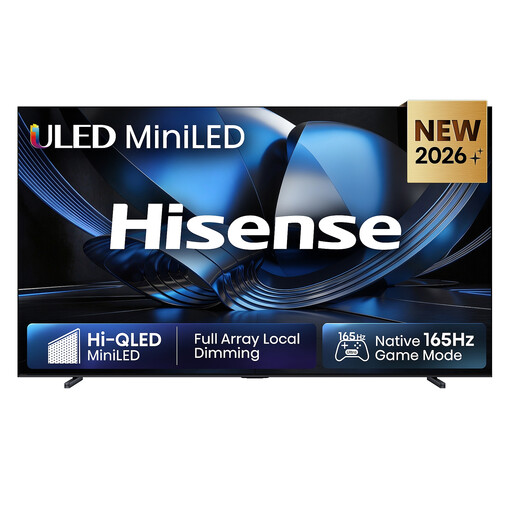
Hisense 100U7DSE, 100-inch ULED Mini LED 4K Smart TV
The listed screen size could be worth considering for watching together; before choosing, check the viewing angle from the seats at either end.
Listed in the product name: 100 inches, 4K, 165 Hz, Dolby Atmos and VIDAA Smart OS.
View at Joybuy
 No image available
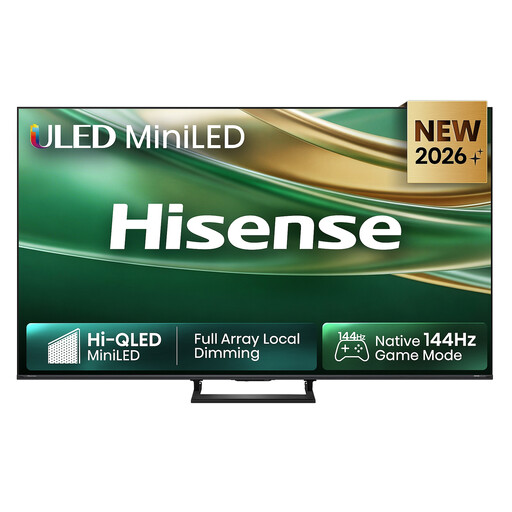
Hisense 85E8S, 85-inch 4K Ultra HD Mini LED Smart TV
If you’re looking for a large screen to watch together, this model is worth considering. Screen size alone, however, doesn’t tell you anything about the viewing angle.
Listed in the product name: 85 inches, 4K, 144 Hz, VIDAA, Dolby Vision IQ and Dolby Atmos.
View at Joybuy
 No image available
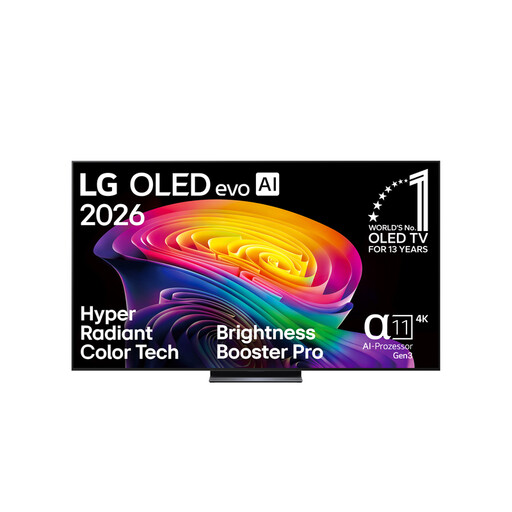
LG OLED83C67LA, 83-inch OLED Evo AI 4K Smart TV
If you’re considering OLED for a broad seating arrangement, it’s best to check the viewing angle of this specific model separately.
Listed in the product name: 83 inches, 4K, α11 AI Processor, Dolby Vision HDR and webOS Smart TV.
View at Joybuy
 No image available
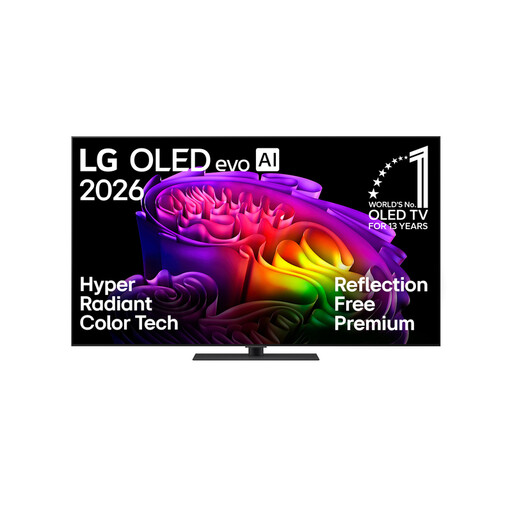
LG OLED65G66LS, 65-inch OLED evo AI G6 4K Smart TV
If you’re considering a 65-inch OLED, check how the picture looks from the side and in daylight in your seating arrangement.
Listed in the product name: 4K, up to 165 Hz, Dolby Vision, Dolby Atmos, webOS and stand.
View at Joybuy
 No image available
LG OLED65B68LA, 65-inch 4K OLED Smart TV
This 65-inch OLED is worth considering if you’re looking for an OLED option; whether it suits the seats at either end depends on the viewing angle of the specific model.
Listed in the product name: 4K, Dolby Vision, Dolby Atmos and webOS Smart TV.
View at Joybuy
Frequently asked questions
Can I assume that 144 or 165 Hz will give me a better picture for cricket?
No. The manufacturer’s panel or gaming refresh-rate figure isn’t the frame rate of the stream you’re watching, and it doesn’t replace testing motion handling with sports footage.
What should I bear in mind with an OLED after watching?
According to LG, pixel cleaning on LG OLED TVs can run automatically when the TV is switched off; LG recommends leaving the set plugged in for this. Check the guidance for the model you actually buy, as this manufacturer recommendation doesn’t automatically apply to other brands.
Do I need DVB-T2 HD or a specific subscription to watch cricket in Germany?
Not necessarily: the right way to watch depends on the specific match and its broadcast rights. DVB-T2 HD is for aerial TV; streaming requires a suitable service and a compatible app or external device. You can’t infer that there’s one subscription for all cricket.
What buying rights and ongoing costs or obligations should I consider in Germany?
The EU energy label helps you compare electricity consumption; the Verbraucherzentrale says online purchases generally come with a 14-day right to cancel. Your statutory rights against the seller are separate from any voluntary guarantee. The broadcasting fee is generally charged per household, not separately for every new TV you buy.


