People who plan ahead for their canteen break
If you pack your lunch before work, you can carry crispbread separately from moist toppings. Follow the storage instructions on the pack.


For a packed canteen lunch, crispbread makes a good bread option if you carry it dry and separate from moist toppings. Choose by checking the ingredients, nutrition information and allergens. If a particular slice thickness matters to you, check the specific product description rather than relying on “medium sliced”.
If you pack your lunch before work, you can carry crispbread separately from moist toppings. Follow the storage instructions on the pack.
If the ingredients in your bread option matter to you, compare the wholegrain claim, ingredients list and fibre per 100 g.
If you need to avoid gluten-containing cereals, sesame or milk, check the ingredients and allergen information on the specific pack. Rye contains gluten; other ingredients and traces information vary from product to product.
First, think about how you’ll store your crispbread until your break. Then compare the ingredients and nutrition information of the options that suit your diet.
| What to consider | What to check when buying | Who it matters to |
|---|---|---|
| Transport and crispness | Check the storage instructions, pack size and shape of the slices. If you want a particular slice thickness, check the details for the specific product. | If I’m preparing my lunch, I want to keep the crispbread dry until my break and add the toppings then. This is likely to be the main reason for buying for around 44% of consumers. |
| Wholegrain and fibre | Look for the wholegrain claim and compare fibre per 100 g and the ingredients lists. | If you’re choosing your bread option specifically for its wholegrain and fibre content, you need information that’s comparable across products. This is likely to be the main concern for around 33% of consumers. |
| Ingredients and allergens | Check the current ingredients list and allergen information, especially for gluten-containing cereals, sesame and milk. | If I need to avoid certain ingredients, the information on each pack will determine whether it’s suitable for me. This is likely to be the most important consideration for around 23% of consumers. |
The German Nutrition Society points out that colour alone is not a reliable way to identify wholegrain products.
Look for an explicit wholegrain claim and read the ingredients list.
Rye contains gluten. A short ingredients list doesn’t change that; allergen and traces information may also vary by product.
If you need to avoid gluten for medical reasons, check the current labelling and choose only a product that’s suitable for you.
Moisture can make crispbread less crisp by lunchtime. The products compared here are labelled for storage in a dry place or in a cool, dry place.
Pack the crispbread separately from moist ingredients and add the toppings just before eating.
The figure per 100 g describes the crispbread, not the whole lunch. Increasing your fibre intake too quickly can also cause discomfort.
Compare the ingredients and portion size too, and think about what you’ll eat with it. The German Nutrition Society recommends increasing your fibre intake gradually and drinking enough fluids.
The differences relate to specific crispbread varieties. Always check the ingredients and labelling on the pack you plan to buy.
EDEKA24 stocks several Wasa varieties, including rye sourdough and wholegrain crispbread.
Ryvita Original Crispbread is a useful comparison if you want to look at the ingredients in a rye variety.
Burger Delikatess and Burger Ballaststoff differ in their ingredients and stated fibre content.
Rye Wholegrain Crispbread is an option to compare if you’re looking for an organic product with a short ingredients list.
The REWE range is a good starting point for comparing crispbread from different brands and with different recipes.
These crispbread varieties could work as a bread option with toppings, carried separately. They differ in their grains, other ingredients and slice shape. If you want a particular slice thickness, check the details for each product.
 Image unavailable
A variety made with oats and sesame, ideal for a topped snack. If you need to avoid allergens, check the current pack labelling before buying.
 Image unavailable
Wholegrain rye crispbread that you can add toppings to. Rye contains gluten; if you have other dietary restrictions, check the current allergen information.
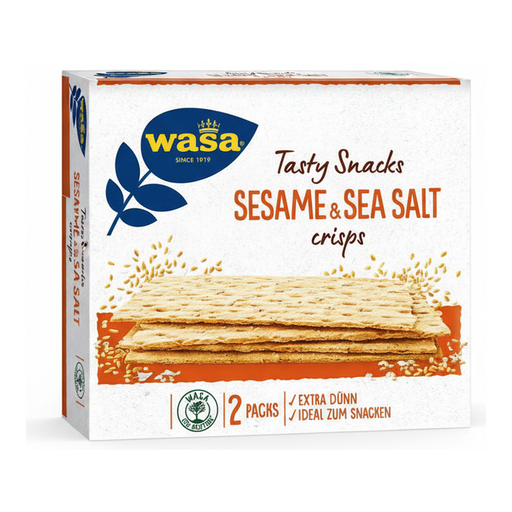 Image unavailable
Round crispbread with sesame and sea salt, ideal with savoury toppings. If you have a sesame allergy, check the current labelling.
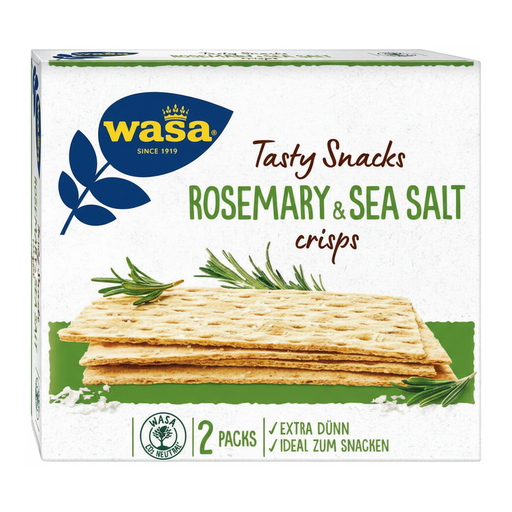 Image unavailable
A round variety with rosemary and sea salt, if you fancy taking seasoned crispbread for your canteen break. Compare the salt per 100 g if it’s important to your choice.
 Image unavailable
A rye sourdough variety to enjoy with toppings. If you have an allergy or need to follow a gluten-free diet, check the ingredients and allergen information on the current pack.
Look for a wholegrain claim and read the ingredients list. According to the German Nutrition Society, a dark colour alone isn’t a reliable sign that a product is wholegrain.
No, rye contains gluten. If you need to follow a gluten-free diet for medical reasons, ordinary rye crispbread isn’t suitable; check the labelling on the specific product.
Store it in a dry place, following the instructions on the pack, and carry moist spreads or other toppings separately. Add them just before you eat.
Check the ingredients and allergen information on the current pack for anything you need to avoid. Depending on the recipe, gluten-containing cereals, sesame or milk may be relevant, as may information about possible traces.