Parents keeping an eye on sugar
You’d like to serve crispbread as a snack base while keeping an eye on the sugar in spreads, other treats and drinks too.


Crispbread can make a handy base for small party bites at a children’s birthday party. Compare the sugar content of similar varieties per 100 g, and take the toppings into account too. The ingredients, allergens and salt content also matter for your particular group of guests; the ‘reduced sugar’ label alone is no substitute for a comparison.
You’d like to serve crispbread as a snack base while keeping an eye on the sugar in spreads, other treats and drinks too.
Before serving, you need to check which ingredients and declared allergens are relevant to the children you’ve invited.
You’d like to top small pieces of crispbread and serve a selection of toppings separately, so you can tailor the options to your guests.
Before choosing a variety, find out about any known allergies in your group of guests. Then compare the nutritional information per 100 g for similar crispbreads and consider which toppings will work with your planned party bites.
| Criteria | What to check | Who should consider it? |
|---|---|---|
| Sugar and toppings | Compare ‘of which sugars’ per 100 g across similar varieties; check the ingredients and planned toppings too. | If I want to offer less sweet party bites, I need to choose the crispbread and toppings together. Around 42% of consumers would make sugar their main priority. |
| Allergens and ingredients | Check the ingredients list on the specific pack for relevant cereals, sesame and other allergen information. | If guests have known allergies, I want to know before shopping which varieties are suitable. For around 33% of consumers, this check would take priority. |
| Serving and salt | Check that the format works for small bites and compare the salt content per 100 g; plan to serve toppings separately. | For a selection of make-your-own bites, I need pieces and toppings the children will enjoy. This would be the most important buying consideration for around 25% of consumers. |
A marketing claim alone won’t tell you how the crispbread compares with the variety you’d normally buy.
Compare ‘of which sugars’ per 100 g across similar products, and take the ingredients and planned toppings into account too.
The seeded products reviewed have different ingredients. These include sesame and cereals containing gluten, and some carry warnings about possible traces of other allergens.
Ask about any known allergies before shopping and read the labelling on the pack you actually buy.
Salt and toppings matter when choosing food for the party too. A sweet topping changes the snack, even if the crispbread itself has a lower sugar content.
Compare sugar and salt on the same basis, and serve toppings separately.
Wasa offers rye, wholegrain and seeded crispbread varieties.
Ryvita Original is a rye crispbread that could be a straightforward option for comparison.
REWE Bio Naturland Vollkorn Knusperknäcke is a specific wholegrain product you can use for comparison.
EDEKA Bio 3 Saaten Knäckebrot is a seeded variety to compare with other crispbreads.
These Wasa crispbreads include rye, wholegrain and seeded varieties for topped party bites. Check the current pack labelling before choosing a variety for your guests.
 No image available
A rye variety for preparing small bites with separate toppings. Check the sugar, salt and allergen information on the current pack; the details about cereals, milk and sesame are particularly relevant to your guests.
 No image available
A wholegrain rye variety for topped bites. Compare the sugar and salt content per 100 g with similar varieties. If you know your guests have allergies, check the current warnings, including those about possible traces of milk and sesame.
 No image available
A seeded variety for topped crispbread bites. Before serving, check the ingredients and allergen information on the pack, especially if any guests need to avoid cereals or sesame.
 No image available
An oat and sesame variety for a selection of topped bites. Check the current ingredients and allergen information against your guests’ needs, and compare sugar and salt per 100 g.
 No image available
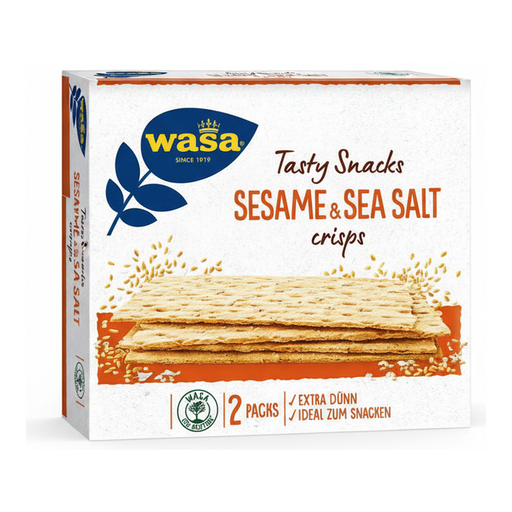
A round sesame and sea salt variety for topped bites. As well as the sugar content, pay particular attention to the salt per 100 g and check the allergen information on the current pack.
Compare ‘of which sugars’ per 100 g across similar crispbreads rather than relying on a label alone. Plan your toppings and drinks too: the sugar content of the crispbread doesn’t tell you what’s in the whole party snack.
Ask about any known allergies before shopping, then read the ingredients and allergen information on the pack you actually buy. The Federal Office of Consumer Protection and Food Safety explains the labelling of key allergenic substances. With crispbread, pay particular attention to the cereals used in each variety and to sesame in seeded varieties.
No. Sugar content alone isn’t enough to make a decision. EDEKA24 lists 1,4 g of sugar per 100 g for EDEKA Bio 3 Saaten Knäckebrot, but the ingredients, allergens and salt content also need to suit the particular group of guests at your party.
Serve small pieces with a selection of toppings on the side so guests can choose what they like. If you want to avoid making the bites unnecessarily sweet, take the sugar in spreads and drinks into account too. Check the ingredients in each topping for anything relevant to your guests.