Small households looking to avoid leftovers
If you’re shopping for just a few breakfasts or an outing, compare the net weight and any individual portions inside the pack. It’s also worth checking how to keep any remaining slices dry after opening.


For a small household or a visit to a Christmas market, the stated net weight is more useful than the term “half loaf”. For taking crispbread on the go, choose a portion that can be transported dry, and check the labelling on the specific variety if you want wholegrain or have allergies. A smaller pack limits potential leftovers, but it’s no substitute for suitable storage or checking the ingredients.
If you’re shopping for just a few breakfasts or an outing, compare the net weight and any individual portions inside the pack. It’s also worth checking how to keep any remaining slices dry after opening.
Whether you’re heading to the market or making your way home, you’ll want to know if you can carry your portion safely and keep it dry. Pack toppings separately so they don’t make the slices soggy on the way.
If you’re looking for wholegrain or need to avoid certain ingredients, check the product name, ingredients list and allergen information for the variety you’ve chosen. The German Nutrition Society points out that a dark colour alone does not prove a product is wholegrain.
When buying crispbread for a small household or a visit to a Christmas market, it’s worth checking pack size, transport, wholegrain labelling and ingredients separately. Choosing the right size doesn’t tell you anything about the other features.
| Criteria | What to check | Who it matters to |
|---|---|---|
| Pack size | Net weight in grams, any individual portions inside the pack, and how to store it after opening. | In a small household, I only want to open as much as I’m likely to use. That’s why the right pack size is a priority for around 31% of consumers. |
| Transport and crunchiness | Portion size and packaging or a container that keeps the contents dry on the go. | For a trip to the Christmas market, I need a snack I can carry safely. Around 25% of consumers mainly want it to stay crunchy while they’re out and about. |
| Wholegrain and ingredients | The “wholegrain” description and ingredients list, rather than colour or the appearance of grains alone. | If I’m specifically looking to buy wholegrain crispbread, being able to identify the grains matters more to me than the shape of the pack. This is the main concern for around 25% of consumers. |
| Allergens | Ingredients and precautionary allergen information for the specific variety, especially for cereals containing gluten, milk and sesame. | Before buying, I need to know whether the variety contains ingredients I have to avoid. For around 19% of consumers, this check comes first. |
Dark or grainy-looking crispbread isn’t necessarily wholegrain. If you’re specifically looking for wholegrain, you can’t rely on appearance alone.
Look for the word “wholegrain” and check the ingredients list. The German Nutrition Society also advises doing this.
Plain rye, sourdough, cheese and seeded varieties can differ in their ingredients and precautionary allergen information. A smaller pack or a flavour you like says nothing about whether it’s suitable for you if you have allergies.
Check the labelling on each specific variety, even if you already know another product from the same brand.
Moisture can take the crunch out of crispbread – especially disappointing if you’re taking it with you as a snack.
Store any leftovers in a dry, airtight container and protect your portion for the outing while you’re carrying it.
Wasa offers crispbread in a range of rye, wholegrain and flavoured varieties.
The varieties considered range from plain wholegrain rye crispbread to crispbread with cheese and pumpkin seeds.
The organic sesame crispbread considered here combines wholegrain rye with sesame.
This selection includes packs in different sizes, as well as a crispbread sandwich in three 40-g portions. For your outing, compare the stated quantity and, if you have specific ingredient requirements, always check the labelling on the particular pack.
 No image available
The 125-g pack is worth considering if you only want to buy a small amount for a few occasions.
If you’re choosing this product because it says “Gluten-Free”, check the labelling on the specific pack, including the ingredients and precautionary allergen information.
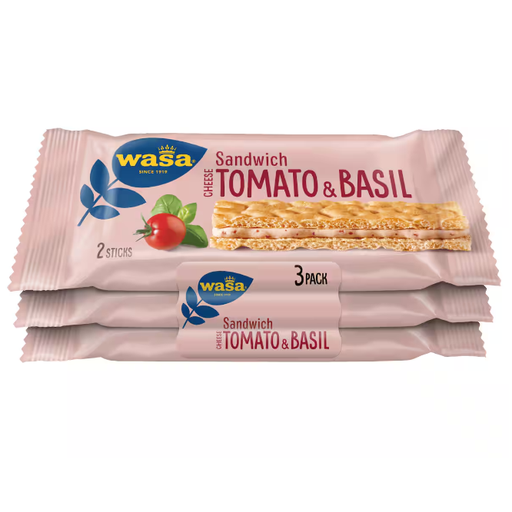 No image available
The three 40-g portions could be handy for taking several small snacks on an outing.
The product name specifies tomato and basil. Check the pack to see whether the portions are individually wrapped and which allergens are declared.
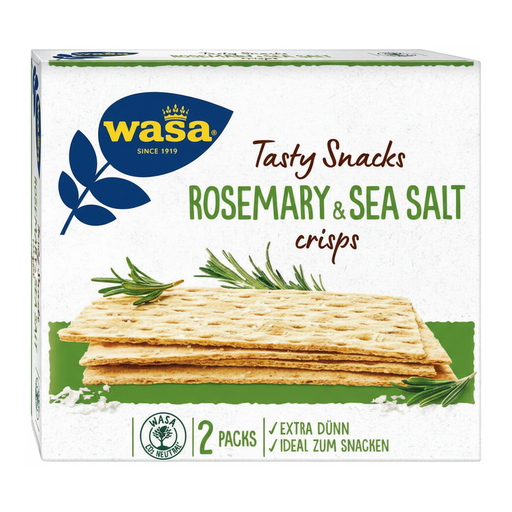 No image available
The 190-g pack could be a good option if you’re looking for a quantity under 200 g.
Before choosing, check the exact product name on the pack: this product code is listed under different names, both as crispbread and as snack crisps.
 No image available
This 230-g variety could be a good choice if you’re looking for crispbread with the oat and sesame profile named on the pack.
If you’re taking some with you, plan how to keep it dry. If you have specific ingredient requirements, the pack labelling is what matters.
 No image available
The 210-g pack is another option if you’re planning to enjoy seeded crispbread on several occasions.
The product name specifies sesame and flaxseed; for the actual ingredients and any possible traces, check the labelling on the specific pack.
You can’t work out a specific weight in grams for crispbread from the term “half loaf”. Instead, compare the net weight and any individual portions inside the pack. The crispbread examples listed by EDEKA24 contain 200 g, 235 g and 250 g respectively.
Carry the slices somewhere dry and protected from moisture. Store any opened leftovers in an airtight container, and take moist toppings separately if possible.
No. Colour alone isn’t a reliable way to identify wholegrain. The German Nutrition Society recommends looking for the word “wholegrain”; the ingredients list can help you compare the types of grain used.
Check the ingredients and precautionary allergen information for the specific variety, especially for cereals containing gluten, milk or sesame. The Federal Ministry of Agriculture, Food and Home Affairs explains the labelling requirements for the 14 most common allergens and substances that cause intolerances. However, ingredients can still vary from one variety to another.