If you’re looking for wholegrain crispbread with a mild flavour for your coffee break, start by looking for a thin variety described as mild. If fibre or a short ingredients list matters more to you, check the details for the specific product – including its texture, salt content and allergens – rather than judging it by its colour or visible grains.
Which crispbread is right for you?
New to wholegrain and prefer a mild texture
If you’re not keen on coarse grains or a strong flavour, look for thin varieties described as mild. As the Verbraucherzentrale explains, wholegrain products don’t necessarily contain whole, visible grains. However, that alone won’t tell you how a particular crispbread will feel or taste.
Fibre-conscious shoppers
If you mainly want to compare fibre content, check the nutritional information per 100 g and look at the ingredients too. REWE’s description of Burger Ballaststoff Knäckebrot lists 30 g of fibre per 100 g; its recipe also contains bran and seeds.
Shoppers checking ingredients and allergens
For these shoppers, the current packaging matters more than a short product name: rye, wheat or sesame may be relevant depending on the variety, as may any stated traces. A short ingredients list is no substitute for checking the label if you have an allergy.
What should you look for when buying?
Start by asking yourself what matters most for a short break: a mild bite, a particular fibre content or the chance to check individual ingredients. Then compare the information on the packaging. One crispbread may not meet all three preferences equally well.
| What to consider |
What to check |
Who it matters most to |
| Flavour and texture |
Look for descriptions of thin or mild varieties, and check the ingredients for meal and seeds. |
If a strong rye flavour or coarse grains would spoil my coffee break, I’m looking for an easier introduction to wholegrain. Around 40% of consumers prioritise a mild flavour and pleasant texture. |
| Wholegrain and fibre |
Compare the grain base in the ingredients list and the fibre content per 100 g. |
I want to choose mainly by the wholegrain base and fibre content, and I’m also open to recipes containing bran or seeds. For around 40% of consumers, this is their main reason for buying. |
| Ingredients and allergens |
Check the ingredients, highlighted allergens and traces on the current packaging; compare salt per 100 g. |
If I need to avoid certain ingredients, clear labelling matters more than flavour descriptions. Around 20% of consumers base their choice primarily on checking ingredients and allergens. |
Common selection mistakes
-
Assuming a dark colour or visible grains means it’s wholegrain
A wholegrain base and a coarse texture are two different things. According to the Verbraucherzentrale, finely milled wholegrain products without whole grains are also available.
Check the grain description and, where relevant, the wholegrain content in the ingredients list. If you’re looking for a mild introduction, the product’s texture description can also help, but it doesn’t replace the ingredients information.
-
Looking only at the fibre figure
A recipe designed to be high in fibre may contain bran and seeds. REWE’s description of Burger Ballaststoff Knäckebrot lists wheat and oat bran, as well as sesame, among its ingredients.
Compare the fibre content per 100 g with the ingredients list. Then decide whether the recipe suits your preferences and any allergens you need to watch out for.
-
Comparing figures per slice directly
If slices are different sizes, the same figure per slice doesn’t give you a consistent basis for comparison.
Start by checking the nutritional information per 100 g. How much you actually eat and what you add on top are separate considerations.
-
Assuming online information never changes
EDEKA notes that its product information may differ from the packaging, while ALDI SÜD says that its wholegrain crispbread may come from different suppliers.
Always check the current packaging of the product you’re buying, especially for allergens and nutritional information.
Brands and product ranges to consider
The information below relates to specific product examples. Ingredients, texture and nutritional values can vary between products within the same brand.
Wasa
Wasa describes Delikatess as a thin, crunchy crispbread with a mild flavour. That makes it a useful option for shoppers who prefer a less robust bite – but it doesn’t guarantee the same flavour in other Wasa products.
- According to Wasa, Delikatess contains wholegrain rye flour and salt; it lists 17 g of fibre per 100 g.
- The product contains rye. Wasa also notes that it may contain traces of sesame and milk; if you have an allergy, check the current packaging.
GUT&GÜNSTIG / EDEKA
Two crispbreads described by EDEKA let you compare a simple wholegrain recipe with a sesame variety.
- EDEKA lists 95% wholegrain rye flour, water and salt for Knäckebrot Vollkorn, and 11% sesame seeds for Knäckebrot Sesam.
- Sesame is an ingredient in the sesame variety. EDEKA notes that packaging information may differ from the details shown online.
Burger
Burger Ballaststoff Knäckebrot is a useful comparison for shoppers who prioritise the stated fibre content over a particularly short ingredients list.
- REWE lists 30 g of fibre per 100 g for this product.
- The recipe described includes wholegrain rye flour, wheat and oat bran, linseed and sesame. Check whether the ingredients and texture suit you.
GOLDÄHREN / ALDI SÜD
GOLDÄHREN Knäckebrot Vollkorn is another basic wholegrain option to compare packaging information with.
- For the product described, ALDI SÜD lists 15.3 g of fibre and 1.27 g of salt per 100 g.
- According to ALDI SÜD, the product may come from different suppliers. Compare the information on the specific pack you’re buying.
Crispbread at Joybuy
These Wasa varieties offer different options for your coffee break: wholegrain rye, seeds, sourdough or a seasoned variety. The names alone won’t tell you which one will taste mild enough for you, so check the ingredients, allergens and nutritional information on each pack.
 No image available
Wasa Delicate Crisp Oats & Sesame Crispbread, 230 g
An option if you’re looking for a variety with oats and sesame for your break. If you prefer a particularly mild flavour or need to avoid sesame, check the ingredients and allergen information before choosing.
View at Joybuy
 No image available
Wasa Whole Grain Rye Crispbread, 260 g
This wholegrain rye variety is a useful comparison if the grain base matters more to you than an explicit description of a mild flavour. Check the ingredients, fibre content and allergen information on the pack.
View at Joybuy
 No image available
Wasa Sesame & Flaxseed Crispbread, 210 g
This variety is an option if you’d like sesame and linseed in your crispbread. If fibre content is your main priority, compare the nutritional information per 100 g on the pack, and check the allergen information too.
View at Joybuy
 No image available
Wasa Sourdough Rye Crispbread, 235 g
Rye and sourdough define this variety, making it an option for shoppers who aren’t specifically looking for crispbread described as mild. Before eating, check the current packaging carefully for clear information about ingredients and allergens.
View at Joybuy
 No image available
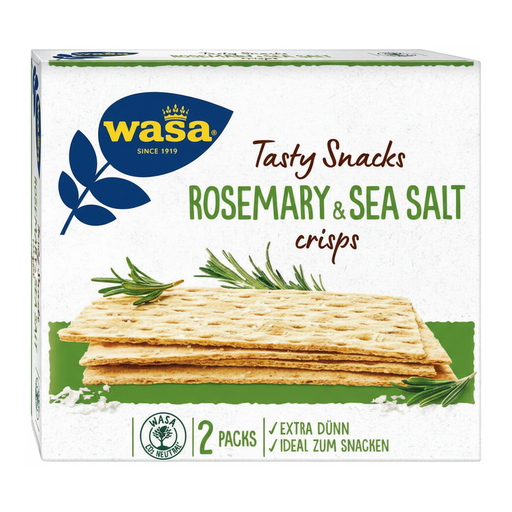
Wasa Round Crispbread Rosemary & Sea Salt, 190 g
This rosemary and sea salt variety is better suited to shoppers looking for a seasoned option than a more subtle one. In particular, compare the salt content per 100 g and check the ingredients if you’re looking for a blend of different flours.
View at Joybuy
Frequently asked questions
Is wholegrain crispbread always coarse?
No. Wholegrain doesn’t mean there have to be visible whole grains. The Verbraucherzentrale points out that finely milled wholegrain products are also available. To find out how a particular crispbread will bite, check the ingredients and product description too.
Is rye crispbread gluten-free?
The wholegrain rye products described here aren’t gluten-free. If you need to avoid gluten, check the explicit labelling and information on the current packaging of another product rather than assuming it’s suitable just because it’s crispbread.
What should I bear in mind with sesame crispbread?
If you have a sesame allergy, crispbread containing sesame as an ingredient isn’t suitable. EDEKA lists 11% sesame seeds in its GUT&GÜNSTIG Knäckebrot Sesam. For other varieties, check the ingredients and traces information on the packaging too.
How should I store opened crispbread?
Follow the storage instructions for the product and reseal the pack carefully after opening. REWE specifically recommends storing Burger Ballaststoff Knäckebrot in a dry place.


