Smaller households hosting family
If you rarely eat crispbread after a family meal, a small pack or individually sealed portions will limit how much you need to open at once. Compare the pack weight and packaging format.


For a family meal, the key thing is how much crispbread you’ll actually open and use afterwards. If crispbread is rarely eaten once your guests have gone, consider a smaller pack or individually sealed portions. For several regular crispbread eaters, a 200–275 g pack may be a better fit for the amount you have in mind. Also check the ingredients and allergen information for the specific variety, along with storage instructions after opening.
If you rarely eat crispbread after a family meal, a small pack or individually sealed portions will limit how much you need to open at once. Compare the pack weight and packaging format.
A pack of around 200–275 g may be suitable when several people will be eating and you’ll use up any leftovers afterwards. The amount you need also depends on whether crispbread will be served as a side or used as a base for toppings.
If guests need to avoid particular grains, seeds or other ingredients, check the ingredients list and allergen information for the specific variety. General information about a brand isn’t enough.
First, work out how much you’ll need for the table and how much you’re likely to use afterwards. Then choose a variety whose flavour and ingredients suit your guests and the toppings you plan to serve.
| What to consider | What to check when buying | Who it matters most to |
|---|---|---|
| How much you open | Compare the pack weight and, where applicable, individually sealed portions with the amount you plan to serve. | If I rarely eat crispbread after a family meal, I don’t want to open more than I need. This is a priority for around 38% of consumers. |
| Variety and toppings | Choose a variety to suit the toppings you plan to serve and your guests’ tastes. | If I’m serving crispbread with different toppings, I want to choose a variety my guests will enjoy. This is a top priority for around 31% of consumers. |
| Ingredients and allergens | Read the ingredients list, highlighted allergens and, where applicable, precautionary statements on the specific pack. | If a guest needs to avoid certain ingredients, I want to check the labelling before serving. This is a priority for around 31% of consumers. |
In Germany, crispbread is usually listed by weight in grams, sometimes in packs with individually sealed portions. The English phrase “half loaf” won’t help much when you’re trying to find the right amount for your table.
Compare smaller packs and individually sealed portions based on how much you want to open for the meal.
These labels answer different questions. For example, according to EDEKA24, EDEKA Bio 3 Seed contains wheat, rye and sesame. If you’re choosing crispbread for someone with an allergy, always check the labelling on the specific pack.
Before serving, read the ingredients list and the allergen and precautionary statements for each variety.
Moisture can make crispbread lose its crunch. Kaufland recommends storing it in a cool, dry place away from fresh bread.
Seal the opened pack well and store it somewhere dry. If you only need some of the crispbread, check whether your chosen pack contains individually sealed portions.
Wasa offers crispbread in a range of varieties and pack sizes. For a family meal, the packaging of the variety you choose is particularly relevant.
EDEKA Bio 3 Seed is a 200 g option for households looking for a variety made with wholegrain cereals and seeds.
GOLDÄHREN Wholegrain is a 250 g crispbread variety described by ALDI SÜD.
REWE Bio offers another choice of variety. The REWE category includes, among other products, a 200 g crispbread with cheese and pumpkin seeds.
These Joybuy products are mostly packs of 205–260 g for sharing, plus a 125 g pack for when you’re planning to use less. Choose according to the amount you need, and check the labelling of each variety if you have specific requirements.
 No image available
The 260 g pack may suit you if several people will be eating crispbread or you’ll use up any leftovers afterwards. If any guests have dietary requirements, check the ingredients and allergen information on the pack.
 No image available
The 230 g pack is an option if you’d like to serve a variety made with oats and sesame at your family meal. Check sesame and any other listed allergens against your guests’ requirements.
 No image available
This 250 g pack may suit you if several people will be sharing and sesame fits the meal you have planned. Before buying, check the other ingredients and the packaging format if you only want to open part of the pack.
 No image available
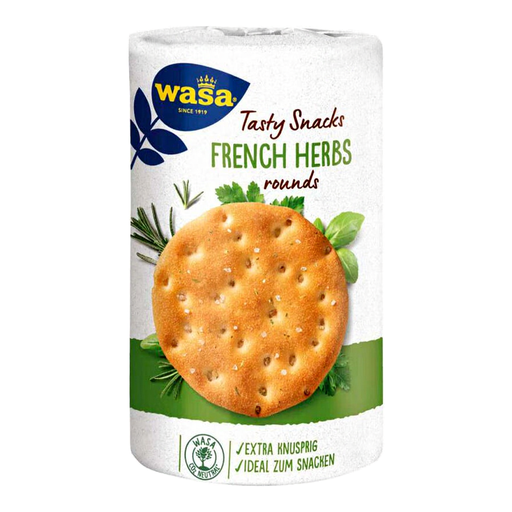
The 205 g herb variety may suit you if its seasoning goes well with the toppings you plan to serve. If you’re offering crispbread to suit different tastes, bear the herb seasoning in mind when choosing.
 No image available
The 125 g pack limits how much you’ll open, but may not be enough for several crispbread eaters. The product is described as gluten-free; if you have specific dietary requirements, check the labelling and any precautionary statements on the pack.
“Half loaf” isn’t a useful size guide when choosing crispbread for a family meal. Instead, compare the weight in grams and check whether the pack contains individually sealed portions.
Seal the pack well and store the crispbread somewhere dry. Kaufland also recommends a dark storage place away from fresh bread, as moisture from fresh bread can affect its crunch.
Passing its best-before date doesn’t automatically mean that crispbread has gone off. The Verbraucherzentrale explains that food is often still safe to eat beyond this date if the packaging is intact and it has been stored correctly. Check the product carefully before eating it. A best-before date is not the same as a use-by date.
No. “Vegan” doesn’t mean gluten-free or free from other allergens. Check the ingredients, allergen information and, where relevant, an explicit gluten-free label on the specific pack.