Carnival snackers keeping an eye on sugar
You’re looking for a savoury crispbread to use as a snack base and want to compare the stated sugar content per 100 g, rather than relying on the taste or the front of the pack.


For a Carnival snack with less sugar in mind, the ‘of which sugars’ value per 100 g is a more reliable guide than a description such as ‘less sweet’. Then compare the ingredients and fibre; if you need to avoid gluten or sesame, the labelling on the specific variety will determine whether it’s suitable.
You’re looking for a savoury crispbread to use as a snack base and want to compare the stated sugar content per 100 g, rather than relying on the taste or the front of the pack.
As well as the sugar content, the type of grain and the fibre information matter to you. With rye, wheat or oat varieties, you’ll also check that the ingredients meet your requirements.
You may need to avoid gluten or sesame, or be looking for a variety that’s explicitly labelled as suitable. In that case, it’s the ingredients list and information on the individual pack that matter—not the brand as a whole.
When comparing crispbread, start by checking the sugar content using the same measure. Then decide whether fibre or a specific allergen or dietary requirement is the main factor limiting your choice.
| Criteria | What to check | Who it matters most to |
|---|---|---|
| Sugar | Compare ‘of which sugars’ per 100 g and check the ingredients list for sweetening ingredients. | If I’m looking for a savoury snack base for Carnival with a clear sugar value, I don’t want to choose based on ‘less sweet’ alone. Around 50% of shoppers prioritise this sugar-related goal. |
| Wholegrains and fibre | Check the grain ingredients and fibre per 100 g for the variety you’re considering. | A low sugar value alone isn’t enough for me if I also want a variety with a stated fibre content. This is the top priority for around 30% of shoppers. |
| Allergens and labelling | Check the ingredients and allergen information on the specific pack; make sure to check labels such as ‘gluten-free’ for the exact variety. | If I need to avoid gluten or sesame, the right labelling takes priority over comparing sugar or fibre. This is the most important selection criterion for around 20% of shoppers. |
Taste and phrases like this don’t tell you how much sugar a product contains, so they can’t be used for a like-for-like comparison. The Verbraucherzentrale (German consumer advice centre) points out that syrup, honey and fruit juice can also contribute to a food’s sugar content.
First check ‘of which sugars’ per 100 g in the nutritional information, then read the ingredients list.
Rye and other grains may not be suitable if you need to avoid gluten. REWE also lists sesame as an ingredient in Burger Ballaststoff Knäckebrot; its sugar and fibre values don’t change that.
If you need to avoid an ingredient, check the ingredients and allergen information on the current pack before comparing nutritional values.
These labels describe different things: REWE lists 3 g of sugar per 100 g for Wasa Sesame & Sea Salt gluten-free, compared with 1.5 g per 100 g for Wasa Vollkorn Roggen. The gluten-free variety contains sesame.
Check any gluten-free labelling you need separately from the sugar content and other allergens.
Nutritional values and ingredients can vary between products from the same brand. The information below relates to the specific varieties named.
The brand offers, among other options, rye wholegrain crispbread and varieties explicitly labelled gluten-free.
Burger offers, among other options, grain-based crispbread with a stated fibre content.
Ryvita makes rye crispbread, including the Original Crispbread variety.
These Wasa varieties offer different grain, seed and seasoning options for a savoury Carnival snack. Compare their sugar content and any allergen information you need on each individual pack; this selection isn’t a gluten-free comparison group.
 Image unavailable
A rye wholegrain variety to compare, with stated sugar and fibre values: REWE lists 1.5 g of sugar and 20 g of fibre per 100 g for Wasa Vollkorn Roggen. Rye isn’t a suitable grain if you need to avoid gluten; check the pack for information about other allergens too.
 Image unavailable
An option for shoppers looking for oats and sesame in the ingredients. If you need to avoid sesame or gluten-containing grains, check the ingredients and allergen information; use the nutritional information on the specific pack to compare sugar and fibre.
 Image unavailable
If you’re considering a variety with linseeds, compare the sugar content per 100 g with the other packs. If you have a sesame allergy or need to avoid gluten, the ingredients and allergen information are especially important; check the fibre value on the pack if it will influence your decision.
 Image unavailable
A rye sourdough option if this is the grain you’re looking for. Compare sugar and fibre using the nutritional information per 100 g, and check the pack labelling if you need to avoid specific allergens.
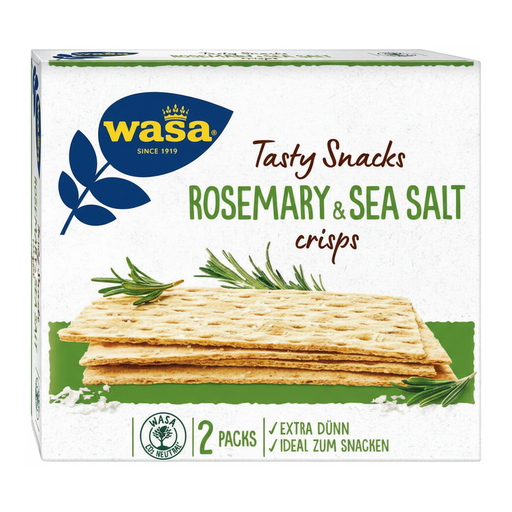 Image unavailable
A round variety seasoned with rosemary and sea salt for a savoury snack. The seasoning doesn’t replace checking the sugar content per 100 g, grain ingredients and allergen information; check the fibre value on the specific pack if it matters to you.
For solid foods, the Verbraucherzentrale (German consumer advice centre) defines ‘low in sugar’ as no more than 5 g of sugar per 100 g. To see whether a particular crispbread meets this threshold, check its ‘of which sugars’ value in the nutritional information; toppings aren’t included in the value for the pack.
No, it doesn’t replace checking the total sugar content. Compare ‘of which sugars’ per 100 g and read the ingredients list: according to the Verbraucherzentrale, ingredients such as fruit juice or dried fruit can contribute to the sugar content.
Check the labelling on the specific crispbread variety for any ingredients and allergens you need to avoid. Rye is a gluten-containing grain; even a variety explicitly labelled gluten-free may contain sesame, as shown by the Wasa Sesame & Sea Salt variety listed by REWE.
Store it in a dry place as directed on the pack, and seal an opened pack tightly. The product information listed by REWE for Wasa and Burger recommends dry storage; for Wasa, it also advises keeping the product away from light.