Making the switch to wholegrains at lunchtime
You want to put together a home-office lunch with wholegrain crispbread, and check whether wholegrain rye flour or another wholegrain ingredient is actually listed in the ingredients.


For a home-office lunch, classic wholegrain crispbread can be a good base, provided the ingredients list confirms the type of wholegrain you want and the nutritional information meets your criteria. Compare fibre and salt per 100 g, and check the allergen information on the pack for rye or seeded varieties. The word “digestive” does not prove that a product has any effect on digestion.
You want to put together a home-office lunch with wholegrain crispbread, and check whether wholegrain rye flour or another wholegrain ingredient is actually listed in the ingredients.
When choosing crispbread, you check the information on cereals containing gluten, sesame and possible traces. The product name or dark colour alone isn’t enough to help you decide.
You compare established brands and supermarket own-label products by their organic labelling, ingredients, nutritional information and availability at your chosen retailer.
When choosing crispbread for a home-office lunch, it’s worth checking the wholegrain base and nutritional information first, followed by the ingredients and allergens. Organic labelling or brand preference can help narrow down your options, but they don’t replace these checks.
| Criteria | What to check | Who it matters to |
|---|---|---|
| Wholegrains and fibre | Look for wholegrain flour or wholegrain meal in the ingredients list; compare fibre per 100 g. | For my lunch, I want wholegrains as the base and to be able to check the fibre content. Around 42% of consumers would make this their top priority when buying. |
| Ingredients, allergens and salt | Read the ingredients and allergen information on the pack; compare salt per 100 g. | If I need to avoid certain ingredients, I need clear information rather than making a decision based on the front of the pack. This check would be a priority for around 33% of consumers. |
| Organic, variety and retailer | Check that the specific product matches the labelling and variety you want; check availability at your chosen retailer. | I’m looking for a particular organic, branded or own-label variety and want to know whether I can buy that exact one. Around 25% of consumers would see this as their main priority. |
The colour and visible grains don’t tell you how much wholegrain flour or meal a crispbread contains.
Read the ingredients list, then compare the nutritional information. The German Nutrition Society recommends choosing wholegrain versions of cereal products.
A fibre figure doesn’t predict how well an individual will tolerate a product or whether it will affect any symptoms.
Compare the figures per 100 g. If you currently eat little fibre, you can increase your intake gradually, as the German Nutrition Society advises.
Rye is a cereal that contains gluten. Some crispbreads may also contain sesame or carry a relevant traces warning.
If you have allergies or need to follow a gluten-free diet, check the ingredients and allergen information on the specific pack.
A figure per serving cannot be compared directly with one per 100 g. Wholegrain or organic labelling is no substitute for checking the salt content.
For product comparisons, use the salt content per 100 g each time. For your meal, also consider how much you eat and what you put on your crispbread.
Wasa describes its wholegrain rye crispbread as hearty and full of flavour; REWE lists Wasa Vollkorn Roggen in a 260-g pack.
EDEKA lists documented wholegrain rye varieties under GUT&GÜNSTIG and EDEKA Bio.
REWE lists an organic Naturland wholegrain crispbread in a 200-g pack.
ALDI SÜD lists GOLDÄHREN wholegrain crispbread with nutritional information per 100 g.
On its UK product page, Ryvita describes Original Crispbread as being made with wholegrain rye flour, rye flour and salt.
This selection includes classic rye crispbread and organic varieties with sesame, seeds or chia seeds. For a home-office lunch, the pack’s ingredients and allergen information should suit your needs, as well as your preferred variety.
 No image available
A good choice for a topped lunch if you’re looking for classic wholegrain rye crispbread.
If you have specific allergen or salt requirements, check the information on the pack you choose.
 No image available
Worth considering for a topped lunch if you’re specifically looking for an organic variety with sesame.
This variety isn’t suitable if you have a sesame allergy; check the pack for other allergen information too.
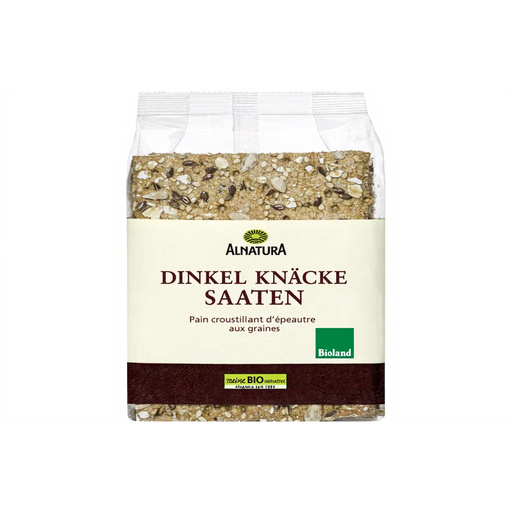 No image available
This variety is for shoppers who want spelt crispbread with seeds for lunch.
For this product, the ingredients list and allergen table conflict on several allergens. If you need to avoid particular ingredients, check the information against the pack itself before deciding.
 No image available
A rye option for shoppers who specifically prefer a sourdough recipe for lunch.
If fibre content is important to your comparison, check it along with the allergen information on the pack.
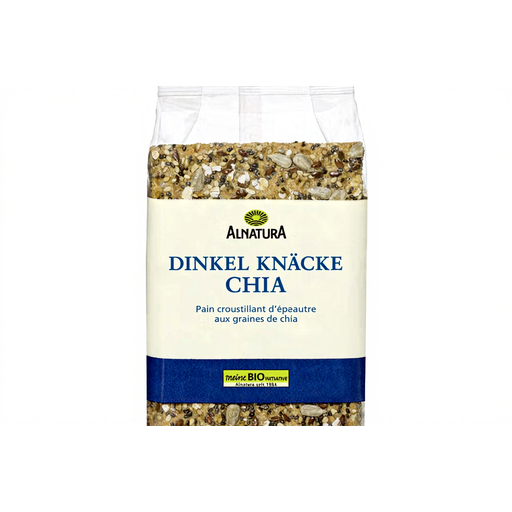 No image available
An option if you’re looking for an organic spelt variety with chia seeds for lunch.
To compare fibre, salt or allergens, check the relevant information on the specific pack.
When choosing a product, “digestive” isn’t proof that it will help with digestive problems. Instead, check the wholegrain ingredients and fibre information, as well as whether it suits your dietary needs.
If you currently eat little fibre, you should increase your intake gradually. That’s the advice of the German Nutrition Society; compare fibre per 100 g when choosing a product.
Check the ingredients list, highlighted allergens and any traces warnings on the specific pack. Rye is a cereal that contains gluten; sesame is also listed in some varieties.
The pack shows the information for the product you’re actually buying. EDEKA notes that the details for its listed crispbreads may differ from the online information; ALDI SÜD says its wholegrain crispbread may vary because it uses different suppliers.