For a lunch that’s mindful of sugar, first compare the ‘of which sugars’ values per 100 g, then check the ingredients, fibre, salt and allergens against your chosen topping. A low sugar value alone doesn’t make a product ‘reduced sugar’, and a high-protein or gluten-free option isn’t automatically the better choice.
Which crispbread is right for you?
For anyone keeping an eye on sugar
If you’re choosing crispbread for lunch based on its sugar content, the ‘of which sugars’ value per 100 g makes it easier to compare products. The ‘reduced sugar’ label answers a different question: it refers to a comparison with a similar product.
For anyone looking for wholegrain and fibre
If you’re using crispbread as the base for a topped lunch, the grain ingredients and fibre content are worth checking. The values listed by REWE for Wasa Vollkorn Roggen and Burger Ballaststoff differ, and your planned topping is also part of the decision.
For anyone with specific ingredient requirements
If you need to avoid gluten or sesame, or watch out for possible traces of milk, check the full labelling on the specific pack. Salt content may also matter when choosing between rye, protein and sesame varieties.
What should you look for when buying?
For lunch, start by comparing crispbreads in the same category using the nutritional information per 100 g. Then consider the ingredients, your topping and your personal requirements to decide which option is right for you.
| What to check |
What to look for |
Who it matters to |
| Sugar content |
Compare the ‘of which sugars’ values per 100 g. For ‘reduced sugar’ claims, check which similar food is being used for comparison. |
If I choose a savoury topping in the canteen, I want to assess the sugar content of the crispbread separately. Around 45% of consumers would make sugar content their top buying priority. |
| Wholegrain and fibre |
Check the grain ingredients and fibre per 100 g, and factor your planned topping into your choice. |
For crispbread with toppings at lunchtime, wholegrain ingredients and a stated fibre value matter most to me. This would be the top buying priority for around 33% of consumers. |
| Ingredients for the working day |
Check the allergens, salt per 100 g and storage instructions on the pack. |
If I take my lunch to work, the ingredients list needs to meet my requirements, and I need to be able to store the crispbread as directed on the pack. For around 22% of consumers, this practical need would come first. |
Common comparison mistakes
-
Assuming ‘reduced sugar’ means a low sugar value
A single ‘of which sugars’ value doesn’t show whether the sugar content has been reduced compared with a similar crispbread. Lebensmittelklarheit explains ‘reduced sugar’ as a comparative claim, not a label for a particular value.
Compare the values per 100 g and, if a reduction claim is made, check which product it’s being compared with.
-
Looking only at sugar
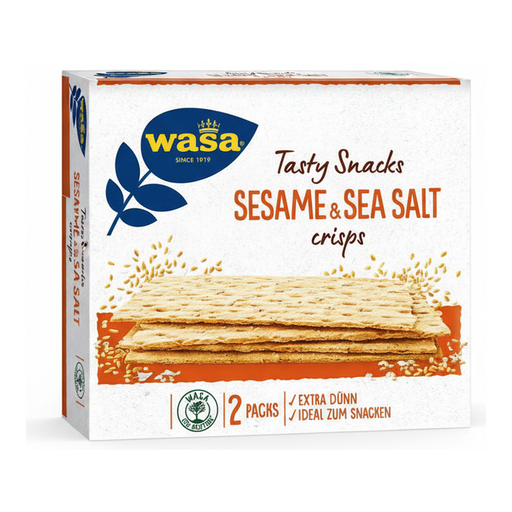
High-protein and gluten-free varieties can also differ in their salt content and ingredients. REWE lists 2.4 g of salt per 100 g for Dr. Karg's Protein Knäcke Pita Style; the gluten-free Wasa variety Sesame & Sea Salt sold there contains sesame.
Check sugar, salt and allergen information together rather than assuming one feature alone makes a product suitable for your lunch.
-
Skipping the information on the pack
ALDI SÜD notes that the nutritional values for GOLDÄHREN Vollkorn may vary between suppliers. EDEKA also warns that online information may differ from what’s on the pack.
Before buying, read the current nutrition table and ingredients list on the specific pack, especially if you need to watch out for allergens.
Brands and product ranges to consider
GOLDÄHREN (ALDI SÜD)
The wholegrain variety is worth considering if you’re comparing stated sugar and fibre values.
- ALDI SÜD lists 1.1 g of sugar and 15.3 g of fibre per 100 g for GOLDÄHREN Vollkorn.
- As there may be different suppliers, nutritional values can vary. Always check the specific pack when choosing.
Wasa
The varieties considered range from wholegrain rye to Protein+ and a crispbread labelled gluten-free.
- REWE lists 1.5 g of sugar and 20 g of fibre per 100 g for Wasa Vollkorn Roggen.
- The varieties have different ingredients and nutritional values. With Protein+ and Sesame & Sea Salt, pay particular attention to the grains or sesame and the relevant labelling.
Burger
Burger Ballaststoff crispbread is worth considering if fibre content matters alongside sugar when you’re choosing.
- REWE lists 1.5 g of sugar and 30 g of fibre per 100 g for this variety.
- The ingredients include cereals containing gluten and sesame; REWE also notes that it may contain traces of milk.
GUT&GÜNSTIG (EDEKA)
The wholegrain crispbread considered here is a rye option for comparing ingredients and nutritional values.
- EDEKA lists 95% wholegrain rye flour and 2.9 g of sugar per 100 g.
- The product contains rye. Also check the warnings about possible traces of other allergens and the information on the current pack.
Dr. Karg's
Protein Knäcke Pita Style is another crispbread option for anyone who wants to compare protein, sugar and salt values together.
- REWE lists 32 g of protein and 1.9 g of sugar per 100 g.
- REWE also lists 2.4 g of salt per 100 g. Protein content alone doesn’t determine whether it’s right for your meal.
Crispbread for lunch at Joybuy
This Wasa selection includes rye varieties as well as crispbread made with oats or sesame, which could all make a good base for lunch. If sugar content is your main concern, compare the current nutritional information on each pack; the product names alone don’t substantiate a claim such as ‘reduced sugar’.
 No image available
Wasa Whole Grain Rye crispbread, 260 g
A wholegrain rye option for savoury lunch toppings. REWE lists 1.5 g of sugar and 20 g of fibre per 100 g for Wasa Vollkorn Roggen; check the information on the specific pack.
View at Joybuy
 No image available
Wasa Sesame & Flaxseed crispbread, 210 g
If you’re considering a variety with sesame and flaxseed for lunch, check the sugar and salt per 100 g, as well as the allergen information on the pack.
View at Joybuy
 No image available
Wasa Sourdough Rye crispbread, 235 g
For lunch with rye sourdough crispbread, compare the sugar value per 100 g on the pack and check the full allergen information.
View at Joybuy
 No image available
Wasa Delicate Crisp Oats & Sesame crispbread, 230 g
If you’re interested in an oat and sesame variety for topped crispbread, compare the sugar, fibre and salt per 100 g on the pack, as well as the allergen information.
View at Joybuy
 No image available
Wasa Round Sesame & Sea Salt crispbread, 190 g
A round sesame and sea salt variety that could make a good base for toppings. If salt content matters to you, check it alongside the sugar value per 100 g and the allergen information.
View at Joybuy
Frequently asked questions
Does crispbread with a low sugar value automatically count as ‘reduced sugar’?
No. A single sugar value doesn’t prove that the sugar content has been reduced. Lebensmittelklarheit explains ‘reduced sugar’ as a comparison with a similar food, so check what a claim on the pack refers to.
What sugar values do retailers list for the wholegrain varieties featured here?
ALDI SÜD lists 1.1 g of sugar per 100 g for GOLDÄHREN Vollkorn. REWE lists 1.5 g for both Burger Ballaststoff and Wasa Vollkorn Roggen, while EDEKA lists 2.9 g for GUT&GÜNSTIG Vollkorn. According to ALDI SÜD, GOLDÄHREN’s values may vary by supplier, so check the specific pack before buying.
How should I take crispbread with me for lunch?
Follow the storage instructions on the pack and keep the crispbread dry while you’re travelling. You can take your topping separately if you want the crispbread to stay crunchy until you eat it.
What should I look out for with gluten, sesame and possible traces of milk?
Check the ingredients and allergen information on each specific pack rather than relying on the sugar value alone. REWE lists cereals containing gluten and sesame for Burger Ballaststoff, as well as possible traces of milk. The Wasa Sesame & Sea Salt variety sold there is labelled gluten-free, but contains sesame.


