Lunch planners looking for wholegrain
You want to use crispbread regularly as the base for your lunch and look for clearly labelled wholegrain products and comparable fibre values.


Wholegrain is a sensible starting point for a crispbread lunch: according to the German Nutrition Society, wholegrain products keep you fuller for longer than products made with white flour. Whether plain rye crispbread, an organic recipe or a seeded and cheesy variety is best for your meal depends on the ingredients, nutritional values and flavour. If you need to avoid gluten or specific allergens, always check the labelling on the actual pack.
You want to use crispbread regularly as the base for your lunch and look for clearly labelled wholegrain products and comparable fibre values.
For you, an organic or Demeter label and a straightforward ingredients list matter more than a particularly strongly seasoned recipe.
If you need to avoid certain ingredients, check the information on the specific pack. Colour, brand and product type are no substitute for the ingredients list or allergen labelling.
First decide what matters most to you: wholegrain and a stated fibre value, the source and make-up of the ingredients, or a savoury recipe. Then check the nutritional information and any allergens relevant to you on the specific product.
| Criterion | What to check | Who it matters to |
|---|---|---|
| Wholegrain and fibre | Check for wholegrain in the product name or ingredients list; compare the declared fibre values per 100 g. | If I want my crispbread to be the wholegrain base for a regular lunch, I want to be able to compare its fibre content. This is the top priority for around 36% of consumers. |
| Organic and ingredients | Check for an organic or Demeter label and read the full ingredients list; note the types of grain and the stated proportions. | With a simple recipe, I want to know which grain and other ingredients I’m buying. Around 29% of consumers prioritise this choice of ingredients. |
| Savoury recipe | For seeded or cheesy varieties, compare protein, fat and salt on the same per-100 g basis. | If I want the crispbread itself to have a bold flavour, I’m happy to have extra ingredients, but I also want to consider the other nutritional values. Around 21% of consumers prioritise this. |
| Gluten and allergens | If you need to follow a gluten-free diet, check for an explicit gluten-free label; if you have allergies, read the ingredients and allergen information on the pack. | If I need to avoid certain grains or other allergens, the labelling of the individual product matters more than its flavour or recipe. This is the key concern for around 14% of consumers. |
A rustic-looking crispbread doesn’t prove its wholegrain content through its colour.
Read the product name and ingredients list. If fibre matters to you, compare the nutritional information per 100 g as well.
Additional ingredients affect other nutritional values too. REWE lists 17 g of protein, 20 g of fat and 2 g of salt per 100 g for Dr. Karg's Organic Spelt & Cheese crispbread.
Consider protein alongside fat and salt per 100 g, and decide how the crispbread will work with your planned toppings.
Standard rye or spelt crispbread contains gluten-containing grains. Depending on the recipe, it may also include other ingredients such as milk or sesame.
Check the ingredients and allergen information on the specific pack. If you need to avoid gluten, look for an explicit gluten-free label.
Rustikal is a useful option if you’re looking for wholegrain rye and a stated fibre value.
The organic wholegrain crispbread described by REWE is aimed at shoppers looking for a rye recipe with a short ingredients list.
This organic Demeter spelt crispbread is an option if the stated origin and make-up of the ingredients are your priorities.
Organic Spelt & Cheese is worth considering if you fancy savoury crispbread with cheese and seeds.
This wholegrain crispbread is a useful comparison for a simple rye recipe without added seeds or cheese.
This selection includes wholegrain rye, seeded and spelt crispbread that you could use as the base for a topped lunch. Compare the ingredients and nutritional information for each variety rather than choosing by product name alone.
 No image available
A variety with oats and sesame, if you’re looking for seeded crispbread to go with your toppings. If you have allergies, check the ingredients and information on the specific pack.
 No image available
Organic crispbread with sesame for anyone who wants to take this ingredient into account when choosing. If wholegrain content matters to you, check the ingredients list on the pack.
 No image available
Wholegrain rye crispbread for a topped lunch. Compare the fibre value on the pack if it’s your deciding factor; rye contains gluten.
 No image available
Crispbread with sesame and linseed, if these seeds suit your planned lunch. To compare fibre content, check the value per 100 g on the pack.
 No image available
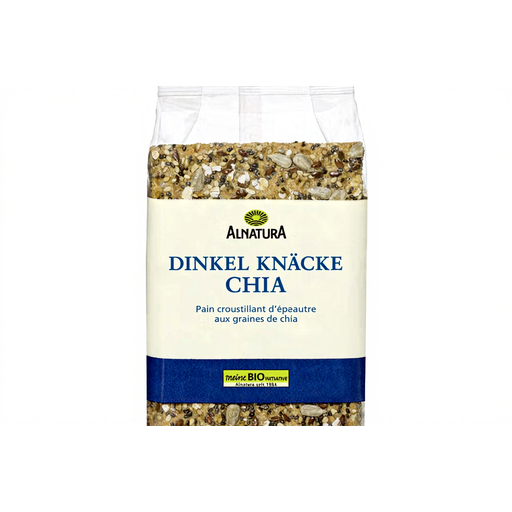
Organic spelt crispbread with chia seeds for lunch with toppings or a spread. Spelt contains gluten. If you have allergies, check the ingredients and allergen information directly on the pack rather than relying on online details alone.
Look for the word “wholegrain” and check which grain is used in the ingredients list. A dark colour or rustic-sounding name alone doesn’t reliably indicate the wholegrain content.
No. The declared fibre value per 100 g is just one of several points to compare. Also consider the ingredients, salt, other nutritional values and how much you actually plan to eat. The German Nutrition Society recommends increasing your fibre intake gradually and drinking plenty of fluids if you’re making a significant change.
Standard rye or spelt crispbread isn’t gluten-free, as both grains contain gluten. If you need to avoid gluten, look for an explicit gluten-free label on the specific product and check its ingredients.
As well as the ingredients list, check the highlighted allergens and any precautionary ‘may contain’ information on the current pack. Lebensmittelklarheit explains that mandatory allergen labelling applies to allergenic ingredients that have been deliberately added. So a missing ‘may contain’ warning should not be the only basis for your decision.
Store it in a dry place as directed on the pack and seal it well after opening. Joybuy recommends this in its storage guidance for Wasa wholegrain rye crispbread to help keep it crunchy.