For a single meal with toppings, the type you choose matters more than the word “premium”: plain wholegrain rye crispbread makes a good base for your own toppings, while seeds and spices add more flavour of their own. If you need gluten-free crispbread, check that the specific pack is clearly labelled as such. Whatever the type, make sure the ingredients, allergens and nutritional values per 100 g suit the meal you have planned.
Which type might suit you?
People who live alone and favour wholegrains
If you make up breakfast or an evening meal just for yourself, plain wholegrain rye crispbread can be a handy cupboard staple. To compare fibre content, check the nutritional information per 100 g for each variety.
People looking for more flavour
Seeds, sea salt or spices can add interest to a small meal, especially if your toppings are mild. As well as flavour, pay attention to salt, fat and allergens.
People who need a gluten-free option
Only crispbread clearly labelled as gluten-free is suitable. Check that the other ingredients and any ‘may contain’ warnings meet your requirements too.
What to look for when buying
First, decide whether you need a plain base for toppings, more flavour or a variety that is clearly labelled gluten-free. Then compare the nutritional information per 100 g, and consider the actual amount of crispbread and toppings you plan to eat together.
| What to consider |
What to check when buying |
Who it matters most to |
| Wholegrain base |
Check for wholegrain rye in the ingredients list, and compare fibre and salt per 100 g. |
If I want my toppings to take centre stage, I look for a plain base with a fibre level that suits me. Around 36% of consumers put this first. |
| Flavour and seeds |
Check the type of seeds, salt and fat per 100 g, as well as any declared allergens. |
For a lightly seasoned meal just for myself, I want the crispbread to bring more flavour. Around 29% of consumers say this matters most to them. |
| Storage and portions |
Read the pack and storage information; use per-slice figures as a useful extra alongside comparisons per 100 g. |
I take out only the slices I need for one meal and want to store the rest appropriately. This practical consideration comes first for around 21% of consumers. |
| Gluten-free options |
Look for a clear gluten-free label and check the ingredients and ‘may contain’ warnings on the specific pack. |
If I need gluten-free crispbread, the other ingredients must meet my requirements too. This is the main consideration for around 14% of consumers. |
Common misconceptions
-
“Premium” doesn’t automatically mean the nutritional values are right for you
Seeded and sea-salt varieties differ from plain rye crispbread in more than just flavour. For example, REWE lists Wasa Tasty Snacks Sesame & Sea Salt Crisps as containing 13 g of fat and 1.75 g of salt per 100 g.
Compare specific varieties using their nutritional information per 100 g, rather than assuming you know what’s in them from the product name.
-
Gluten-free doesn’t mean free from other allergens
The Wasa Sesame & Sea Salt gluten-free product listed by REWE contains sesame; any ‘may contain’ warnings are also relevant when choosing a product.
Read the full ingredients list and allergen information on the specific pack, even if the front says “gluten-free”.
-
A manufacturer’s portion isn’t your whole meal
Per-slice information doesn’t account for extra slices or toppings. Lebensmittelverband Deutschland describes portion information as an additional detail alongside the per-100-g reference.
Use the per-100-g figures to compare varieties, then factor in the actual amount you’ll eat and the toppings you’ll add.
-
Online information doesn’t replace checking the pack
EDEKA notes that online information may differ from what’s on the packaging; ALDI SÜD lists several possible suppliers for its crispbread.
In store, check the ingredients, allergens, nutritional information and best-before date on the pack you’re buying.
Brands to consider
Wasa
The varieties listed by REWE range from wholegrain rye and sesame options to Protein+ and crispbread clearly labelled gluten-free.
- A range of recipes means you can choose based on your toppings, flavour preferences or dietary requirements.
- Ingredients and allergens vary by variety: Protein+ contains wheat gluten, while the listed gluten-free sesame variety contains sesame.
Finn Crisp
Wholegrain rye varieties listed by REWE, for anyone choosing between a plain base and a more seasoned option.
- Finn Crisp Rustikal is listed as containing 20 g of fibre per 100 g.
- REWE describes the Chia & Sea Salt variety as heavily salted; check the ‘may contain’ warnings too.
EDEKA GUT&GÜNSTIG
Wholegrain crispbread that makes a simple base for individual meals with your own toppings.
- EDEKA’s product description says the 250-g pack has a resealable closure.
- EDEKA recommends checking the information on the actual packaging; availability may vary by store.
GOLDÄHREN (ALDI SÜD)
Wholegrain crispbread in a 250-g pack, another option for keeping a supply of slices ready to top.
- This wholegrain variety offers an alternative to more heavily seasoned options.
- ALDI SÜD lists several possible suppliers; check the product in store for accurate nutritional information.
Crispbread for individual meals with toppings at Joybuy
This selection includes rye crispbread for your own toppings, as well as varieties with seeds or seasoning. If you need crispbread that is specifically gluten-free, check the label on a suitable variety; the products shown here don’t meet this requirement.
 Image unavailable
Wasa Whole Grain Rye Crispbread, 260 g
A wholegrain rye option for making your own toppings for a meal. Rye contains gluten; if you have other allergen requirements, check the packaging.
View at Joybuy
 Image unavailable
Wasa Delicate Crisp Oats & Sesame Crispbread, 230 g
Oats and sesame give this variety its flavour, making it a good choice when you want the crispbread itself to add something to your meal. It’s not suitable if you have a sesame allergy or need a gluten-free option.
View at Joybuy
 Image unavailable
Wasa Sourdough Rye Crispbread, 235 g
Rye crispbread made with sourdough, for anyone who wants a rye base with flavour of its own. Check the latest allergen information, particularly if you need to avoid ingredients other than rye too.
View at Joybuy
 Image unavailable
Wasa Sesame & Flaxseed Crispbread, 210 g
A seeded option for a meal with your own toppings. It’s not suitable if you need a gluten-free option; if you have a sesame allergy, check the ingredients and ‘may contain’ warnings on the pack.
View at Joybuy
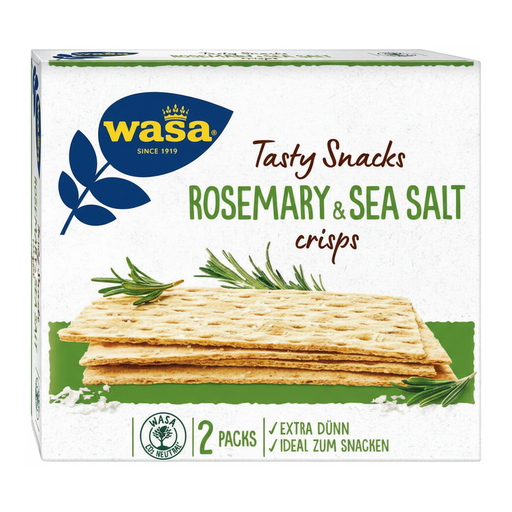 Image unavailable
Wasa Round Crispbread Rosemary & Sea Salt, 190 g
Round crispbread with rosemary and sea salt, ideal if you want a seasoned base for milder toppings. Before choosing, compare the salt content per 100 g and check the allergen information.
View at Joybuy
Frequently asked questions
Should I compare crispbread per slice or per 100 g?
Nutritional information per 100 g is best for comparing different varieties. Per-slice figures can also help you plan the amount you’ll actually eat; Lebensmittelverband Deutschland describes portion information as optional extra information.
Is wholegrain rye crispbread gluten-free?
No, rye contains gluten. If you need gluten-free crispbread, look for a clear gluten-free label on the specific variety and check the other ingredients and any ‘may contain’ warnings too. For example, the Wasa Sesame & Sea Salt gluten-free product listed by REWE contains sesame.
What should I check when shopping in store?
Base your choice on the information on the pack you’re buying. EDEKA notes that online information may differ from the packaging, while ALDI SÜD lists several possible suppliers for its crispbread.
How should I store an opened pack for future meals?
Follow the storage instructions on the pack and reseal it after taking out what you need. The listed Wasa and Finn Crisp varieties should be stored in a dry place; some products should also be kept away from light.


