People keeping an eye on their sugar intake
You want to use crispbread as a base for an office snack and compare the ‘of which sugars’ value per 100 g across similar types, rather than relying on a word on the front of the pack.


If you’re looking for a lower-sugar option for an office snack, it’s worth comparing the ‘of which sugars’ value per 100 g across similar types of crispbread. Check the ingredients, fibre, salt and allergens too: a low sugar value doesn’t tell you everything about the carbohydrate content or the finished snack. If you need to buy gluten-free, ordinary rye crispbread isn’t suitable just because it has a low sugar value.
You want to use crispbread as a base for an office snack and compare the ‘of which sugars’ value per 100 g across similar types, rather than relying on a word on the front of the pack.
You look for wholegrain ingredients and the stated fibre content when choosing, and also take salt and carbohydrates into account.
An explicit gluten-free label is essential for you. Ordinary rye crispbread isn’t a gluten-free alternative, whatever its sugar value.
Start by comparing the sugar value of similar types of crispbread, then check which other details matter for your snack. Values per 100 g help you compare products, but the topping matters too when it comes to the finished meal.
| What to consider | What to check | Who it matters most to |
|---|---|---|
| Sugar | Compare ‘of which sugars’ per 100 g and the ingredients lists of similar types of crispbread. | If I’m looking for a less sweet base for a snack, I don’t want to judge the sugar value by the packaging design. Around 36% of consumers put this criterion first. |
| Wholegrains and fibre | Check the wholegrain ingredients and fibre per 100 g; consider carbohydrates separately. | For a regular office break, I want to know what the crispbread is made from, rather than choosing it just because it’s crunchy. Around 29% of consumers prioritise wholegrains and fibre. |
| Salt, ingredients and toppings | Check the salt per 100 g and the ingredients list; think about the topping you plan to use. | If I’m adding a topping to crispbread, I want the bread and spread to work well together. Salt and clear ingredient information come first for around 21% of consumers. |
| Gluten and allergens | If needed, check for an explicit gluten-free label as well as the ingredients and allergen information. | If I need to buy gluten-free, I can’t judge rye crispbread by its sugar value alone. Around 14% of consumers put suitability first when choosing. |
A low sugar value doesn’t tell you the total carbohydrate content. Wasa lists 58 g of carbohydrates per 100 g for its wholegrain rye crispbread.
Read ‘of which sugars’ and ‘carbohydrates’ as separate figures in the nutrition table, and remember to take your topping into account too.
According to the Federation of German Consumer Organisations, ‘of which sugars’ includes all mono- and disaccharides in the product, not just added sugar.
Compare the nutrition information per 100 g and read the ingredients list before choosing between similar types.
Salt may still matter when a crispbread has a low sugar value: REWE lists 1.4 g of salt per 100 g for Burger Knäckebrot Delikatess. A spread will also change the nutritional values of your finished snack.
Compare the salt content of different crispbreads and choose a topping to suit. You can carry moist toppings separately and add them during your break.
Rye contains gluten. If you need to buy gluten-free, ordinary rye crispbread isn’t suitable just because it has a low sugar value.
In this case, look for an explicit gluten-free label and check the ingredients and allergen information on the current pack.
Wasa’s range includes wholegrain rye crispbread. On its product page, Wasa gives the fibre content of its Whole Grain variety as 20 g per 100 g.
REWE stocks Burger Knäckebrot Delikatess as a wholegrain rye crispbread.
EDEKA24 stocks EDEKA Bio Knäckebrot Roggenvollkorn in a 250 g pack.
Here, REWE is a retailer with crispbread from different brands and ranges, rather than a single crispbread brand.
ALDI Nord has a product page for GOLDÄHREN crispbread.
These types of crispbread can be compared as a base for an office snack. The selection includes rye crispbread as well as varieties with oats, sesame or seasoning. A low sugar value or suitability for a gluten-free diet can’t be assumed from the product name alone.
 No image available
A crispbread option for your office break, delicious on its own or with a topping. Compare the sugar and salt values on the current pack, and check the ingredients if allergens are a concern for you.
 No image available
A wholegrain rye base for toppings during your office break. Rye contains gluten, so if you need to buy gluten-free, choose a product with an explicit gluten-free label instead.
 No image available
A rye option for a snack with or without a topping. Check the fibre value on the pack if it matters to your choice; rye isn’t gluten-free.
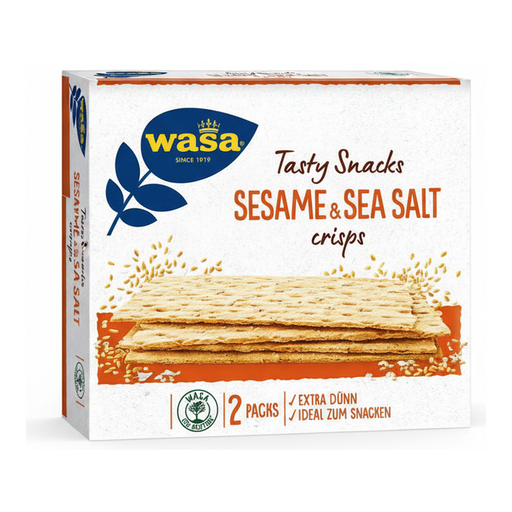 No image available
A sesame and sea salt option for your office break, delicious on its own or with a topping. As well as sugar, pay particular attention to salt per 100 g and the allergen information.
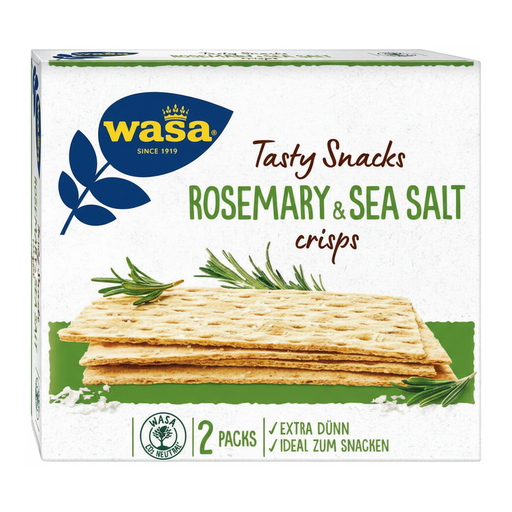 No image available
A rosemary and sea salt option for an office break, with or without a topping. Compare the salt value with other varieties and check the fibre content on the current pack if it matters to your choice.
No. Sugar is just one part of the carbohydrate content: Wasa lists 58 g of carbohydrates per 100 g for its wholegrain rye crispbread. So compare both figures in the nutrition table.
This figure includes all the mono- and disaccharides in the product, not just added sugar. The Federation of German Consumer Organisations points this out; also check the ingredients list to find out what’s in the specific crispbread.
No, rye contains gluten. If you need to buy gluten-free, look for an explicit gluten-free label and check the current ingredients and allergen information.
Keep it somewhere dry and seal the pack well after opening. Carry moist toppings separately and add them to the crispbread shortly before eating.
It can offer an extra point of reference when comparing similar products, but it doesn’t replace checking the ingredients and nutrition information. The Federal Centre for Nutrition recommends comparing products intended for the same occasion.