For a snack spread with guests
If you’re serving crispbread alongside cheese, dips or spreads, your choice may come down to seeds, a more robust flavour or the organic label you’re looking for.


When picking up crispbread for a special snack, choose it to suit how you plan to serve it: rye crispbread makes a good base for savoury toppings, seeded varieties offer a different recipe, while products explicitly labelled gluten-free are the right choice if you need to avoid gluten. According to Lebensmittelklarheit, there are no clear legal requirements for the term ‘premium’, so the ingredients, allergen information and nutritional details on the specific pack are more useful when choosing.
If you’re serving crispbread alongside cheese, dips or spreads, your choice may come down to seeds, a more robust flavour or the organic label you’re looking for.
If you’re looking for a rye-based option, compare the ingredients, fibre and salt on the same basis: per 100 g. Check the allergen information on the pack too.
Look for an explicit gluten-free label on the specific pack. Rye crispbread is not a gluten-free alternative; check separately for other allergens and ‘may contain’ warnings.
For a special snack, first work out whether you need a gluten-free option. Then decide whether the toppings you’re planning to serve, a wholegrain rye recipe, or organic ingredients and seeds matter most.
| Criterion | What to check when buying | Who it matters to |
|---|---|---|
| Special snack | Check the ingredients for the flavour profile you want and make sure the crispbread will work with your planned toppings. | When I’m serving cheese, dips or spreads to guests, I want the crispbread to complement the food. For around 36% of consumers, this flavour profile is the main consideration when buying. |
| Wholegrain rye and recipe | Compare the wholegrain content, fibre and salt per 100 g. | For my regular snacks, I want a clear rye recipe and nutritional information I can compare. Around 29% of consumers put this ingredient comparison first. |
| Organic and seeds | If you want an organic product, check the label; for seeded products, check the ingredients and allergens. | If I specifically want organic crispbread or a recipe with plenty of seeds, a ‘premium’ label isn’t enough. Around 21% of consumers prioritise this. |
| Gluten-free suitability | Look for an explicit gluten-free label and check the pack for other allergens. | If I need to avoid gluten, the correct label comes before a rye flavour or organic option. For around 14% of consumers, this is the most important buying criterion. |
According to Lebensmittelklarheit, there are no clear legal requirements for this term. On its own, it tells you nothing about wholegrain content, organic certification or whether the recipe is suitable for your snack.
Instead, compare the ingredients, allergens and nutritional information for the specific products.
These labels answer different questions: according to Verbraucherzentrale, ‘organic’ is a protected term; seeds are part of the recipe and may be relevant when checking for allergens. Neither one automatically means gluten-free.
Decide which criterion matters most to you, then check the label on the pack you’ve chosen.
Rye contains gluten. A similarly crisp-looking slice is therefore no substitute for a product explicitly labelled gluten-free.
If you need to avoid gluten, check for the relevant label as well as other allergens and ‘may contain’ warnings on the current pack.
EDEKA notes that online product information may differ from what’s printed on the packaging. Ingredients and allergens in particular may affect your choice.
When you buy, read the information on the pack actually being offered and check its best-before date.
The products mentioned range from wholegrain rye crispbread to a variety explicitly labelled gluten-free. It’s the individual recipe that matters, not just the brand.
Original is a thin wholegrain rye variety for a classic snack.
Urtyp is worth considering if you’re looking for a rye recipe with barley malt flour for your snack.
The Naturland Vollkorn Knusperknäcke mentioned here combines organic certification with a recipe featuring seeds.
Knäckebrot Vollkorn offers a rye recipe to compare with other products if a ‘premium’ label isn’t a deciding factor.
Original Crispbread is another rye variety to consider when comparing ingredient lists.
These products include rye varieties, as well as crispbread with seeds or a named seasoning to enjoy with your snack. If you specifically need gluten-free crispbread, check the label on a pack sold as gluten-free separately.
 No image available
A rye variety that works well with savoury toppings. Rye contains gluten, so if you need to check for allergens, read the information on the pack.
 No image available
A good choice if you’re looking for a snack where rye and sourdough set the flavour profile. If you need a gluten-free option, choose an alternative explicitly labelled as such.
 No image available
A variety for anyone looking for oat and sesame crispbread to serve with a snack. If you need to check for allergens, pay particular attention to the ingredients and ‘may contain’ information on the pack.
 No image available
This crispbread variety combines sesame and linseeds. Check the ingredients and allergen information on the specific pack to make sure it meets your needs.
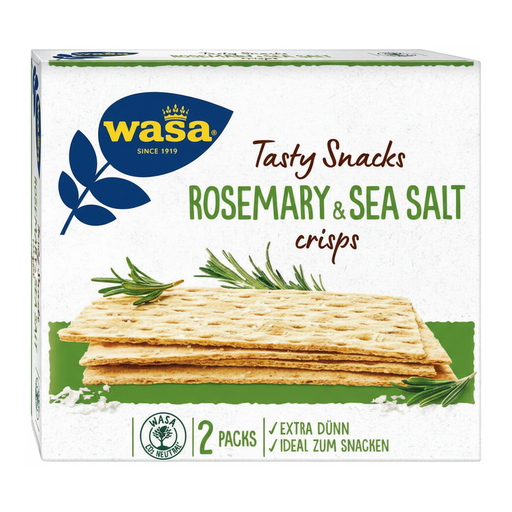 No image available
This round variety with rosemary and sea salt is a good option with dips or toppings. Check the ingredients, allergens and salt content on the pack.
No. According to Lebensmittelklarheit, there are no clear legal requirements for terms such as ‘premium’. To decide whether a crispbread is right for your snack, it’s better to check the ingredients, allergens and nutritional information.
Check the ingredients list, any highlighted allergens, nutritional information, pack size and best-before date. Verbraucherzentrale explains this labelling for packaged foods; when you buy, always check the information on the pack actually being offered.
No, rye contains gluten. If you need gluten-free crispbread, choose a pack explicitly labelled as such and check for other allergens separately. For example, the gluten-free Wasa Sesame & Sea Salt variety described by REWE contains sesame.
Store crispbread according to the instructions on the pack. The Federal Office of Consumer Protection and Food Safety distinguishes between best-before dates and use-by dates: once the best-before date has passed, a correctly stored product isn’t automatically spoiled, but you should check it before eating.