Picnic planners keeping an eye on fibre
You’re looking for a dry base for toppings and want to compare the type of grain, fibre and salt content using the ingredients list and nutritional information per 100 g.


Rye wholegrain crispbread could be a good choice for a summer picnic if you want to compare fibre content and keep the slices dry in transit. Check the ingredients and nutritional values per 100 g, as well as the allergen information on the specific pack. The word “digestive” and the use of sourdough do not guarantee that a product will suit you.
You’re looking for a dry base for toppings and want to compare the type of grain, fibre and salt content using the ingredients list and nutritional information per 100 g.
You want to take the ingredients and your own experience of what you tolerate into account, rather than assuming that a “digestive” label tells you how well you’ll tolerate a crispbread.
If you need to consider allergies or intolerances for a picnic, check the ingredients, highlighted allergens and any may-contain warnings on the actual pack you buy.
If you have an allergy, the information on the specific pack should come first. For the rest of your choice, consider the nutritional information, what suits you and how you’ll keep the crispbread dry in transit.
| What to consider | What to check when buying | Who it matters to |
|---|---|---|
| Fibre and wholegrains | Compare the grain base in the ingredients list, as well as fibre and salt per 100 g. | I want to choose a rye wholegrain base with clear nutritional information, without assuming that one value tells me how well I’ll tolerate it. Around 37% of consumers make this their main priority. |
| Personal tolerance | Compare the ingredients and any added fibre with varieties you’ve tolerated well in the past. | If I’m sensitive to certain ingredients, a familiar recipe matters more to me than a “digestive” promise. Individual tolerance comes first for around 27% of consumers. |
| Gluten and allergens | Read the highlighted allergens, ingredients and any may-contain warnings on the specific pack. | I’m bringing crispbread for someone with an allergy and need to know which pack is suitable before I shop. This is the main concern for around 18% of consumers. |
| Keeping it dry in transit | Follow the storage instructions and keep the crispbread separate from moist toppings. | For a picnic, I want to add the toppings just before eating so the slices don’t get damp on the way. Around 18% of consumers pay particular attention to this practical detail. |
Verbraucherzentrale distinguishes between fibre and special health claims for prebiotic ingredients: the manufacturer claims it reviewed did not substantiate a particular beneficial effect on gut flora.
If you don’t tolerate certain ingredients well, check the recipe and go by your own experience rather than the marketing term.
Rye contains gluten. Depending on the variety, the pack may also carry warnings about traces of sesame or milk, for example.
If you have an allergy or need to follow a gluten-free diet for medical reasons, check the ingredients and information on the exact pack you plan to take.
The type of grain, ingredients and salt content can also vary between crispbreads. Individual values are directly comparable only when they use the same basis.
Check the fibre and salt values per 100 g, and take into account the portion you plan to eat.
Keeping it dry is important if you want it to stay crisp. The best-before date applies to unopened products stored appropriately.
Pack toppings separately, open the crispbread as close to mealtime as possible and reseal any leftovers, keeping them dry.
A useful option for comparing wholegrain rye crispbread with a rye sourdough variety.
The rye wholegrain variety is an option if you’re looking for a recipe without added seeds.
Here, REWE is a retailer where you can compare the crispbread recipes it stocks, rather than a review of its own-brand range.
These Joybuy products include rye wholegrain, oat and sesame, seeded, wheat and sourdough varieties for a dry picnic base. Check the specific pack carefully, especially if fibre or allergens are key to your decision.
 No image available
This rye wholegrain variety is worth considering if you want to compare fibre and salt on the same basis for your picnic.
REWE lists Wasa Vollkorn Roggen 260 g as containing 20 g of fibre and 1.2 g of salt per 100 g. Rye contains gluten, so if you have an allergy, check the other details on the specific pack too.
 No image available
This oat and sesame variety offers a different flavour from plain rye crispbread to enjoy with picnic toppings.
If you’re shopping for someone else, check the ingredients and allergen information on the specific pack. The variety name alone can’t tell you whether it’s suitable for someone with an intolerance.
 No image available
This seeded variety is an option if you’d like something different from plain rye crispbread for your picnic.
If you have a sesame allergy, it’s particularly important to check the pack: sesame appears in the product name, but the available ingredient and allergen information does not clearly match. To compare fibre content, check the nutritional information per 100 g.
 No image available
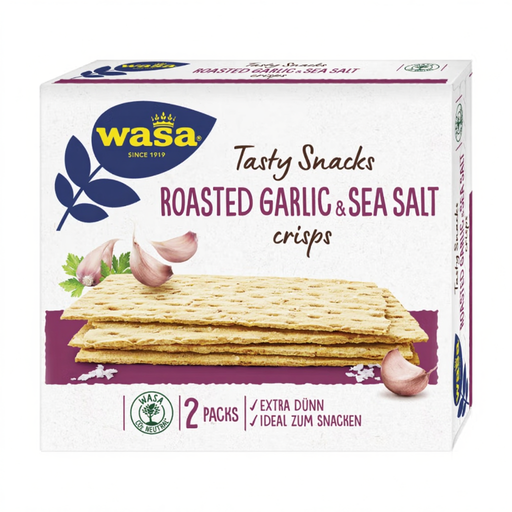
This garlic and sea salt variety offers a different flavour if you’re looking for something other than plain rye crispbread.
To help you choose, compare the grain base and salt content per 100 g on the pack. If you have a milk allergy, check the information carefully, as the available ingredient and allergen details for milk differ.
 No image available
This variety is a good fit if you’re specifically looking for rye crispbread made with sourdough to go with your picnic toppings.
EDEKA24 lists wholegrain rye sourdough and barley malt as ingredients in Wasa Roggen Sauerteig 235 g. Sourdough does not make rye crispbread gluten-free, so check the allergen information on the specific pack.
No. The term doesn’t tell you whether an individual product will suit you. Verbraucherzentrale notes that manufacturers have not substantiated particular beneficial effects of the prebiotic fibres it reviewed on gut flora. Check the ingredients and take into account what you’ve tolerated in the past.
If you’re having high-fibre crispbread, remember to bring drinks too. Verbraucherzentrale notes that you may need more fluids in hot weather, but this doesn’t mean there’s a fixed amount that everyone should drink.
No. Rye contains gluten. If you need to follow a gluten-free diet for medical reasons, assess a product by checking its specific ingredients and labelling, not simply because it’s called crispbread.
Keep it dry and separate from moist toppings, and open it as close to mealtime as possible. Follow the storage instructions on the pack. The best-before date is a quality date for unopened products stored appropriately.