Families packing several lunchboxes every day
If you open several packs, it’s important to match the quantity to how much you’ll get through. Make sure you have somewhere dry to store any slices left over.


When you’re packing several lunchboxes over the school holidays, the key isn’t whether a pack is labelled ‘family size’, but whether its quantity, your household’s consumption and dry storage all work together. Choose a particular type of crispbread to suit your family’s tastes and ingredients. If you need to avoid gluten, check the labelling on the individual pack rather than relying on the brand name.
If you open several packs, it’s important to match the quantity to how much you’ll get through. Make sure you have somewhere dry to store any slices left over.
Compare the grains and fibre content of specific varieties, while also considering whether your children will enjoy eating the crispbread.
The information on each individual pack is what matters. Another variety from the same brand may contain different ingredients or carry different ‘may contain’ warnings.
First, plan how much crispbread you’re likely to get through for your school holiday lunchboxes. Then compare the recipes and labelling of the varieties that could work for your family.
| What to consider | What to check when buying | Who it matters most to |
|---|---|---|
| Pack size and how much to stock up on | Compare the net weight with how much you expect to use, and plan how to store the pack in a dry place once opened. | If you pack several lunchboxes every day, you’ll want to use up the opened pack before the slices absorb moisture. Around 31 % of consumers put this need to stock up first. |
| Wholegrain and fibre | Check the grain type and wholegrain claims, and compare the nutritional information for specific varieties per 100 g. | If you’re looking to include wholegrains in lunchboxes, consider which variety your child will actually eat. Around 31 % of consumers consider this their top priority. |
| Taste and whether it gets eaten | Try an unfamiliar variety in a small quantity first, and pack crispbread separately from moist toppings. | If robustly flavoured or very crunchy crispbread regularly gets left uneaten, choosing a variety your family likes matters more than stocking up. Around 23 % of consumers put actual consumption first. |
| Ingredients and allergens | Read the ingredients list, highlighted allergens, any gluten-free labelling and ‘may contain’ warnings on the individual pack. | If certain ingredients need to be avoided, the labelling on the variety you choose will determine whether it’s suitable. Around 15 % of consumers make this their top priority. |
A larger pack won’t be much use if the opened slices absorb moisture before you eat them. The Verbraucherzentrale Sachsen recommends protecting crispbread from moisture and storing it separately from other bread.
Compare the net weight with how much you’ll use over the school holidays, and keep opened packs somewhere dry.
A dark slice doesn’t reliably tell you which grains the variety contains.
Check the wholegrain claim and ingredients list. To compare nutritional values, use the information per 100 g on each pack.
A variety labelled gluten-free may still contain other ingredients or carry ‘may contain’ warnings. The Bundesamt für Verbraucherschutz und Lebensmittelsicherheit explains how allergens are labelled on packaged foods.
Check the full ingredients list and any warnings relevant to your household for every variety.
Crispbread is the grain element, not a complete lunchbox. The Deutsche Gesellschaft für Ernährung in Schleswig-Holstein recommends including vegetables or fruit, grains and water in lunchboxes, among other things.
Round out the lunchbox to suit your family’s eating habits, and pack moist toppings separately from the crispbread.
The Wasa varieties featured here show why the recipe matters more than choosing on brand name alone.
The rye wholegrain crispbread featured here comes in a 250-g pack, for households looking for this type of grain.
The wholegrain variety featured here comes in a 250-g pack.
The EDEKA24 range featured here includes several Alnatura crispbread varieties, including options with rye and spelt or sesame.
These crispbread varieties come in different pack sizes and flavours to help you plan school holiday lunchboxes. Choose a quantity that suits how much you’ll use, and check the information on the specific pack if you have particular dietary requirements.
 Image unavailable
A wholegrain rye option in a 260-g pack, if you’re packing several lunchboxes. Match the pack size to how much you’ll use, and check the allergen information on the pack.
 Image unavailable
A 250-g sesame variety for lunchboxes where this flavour is a favourite. If you have any food intolerances, check the ingredients and allergen information on the pack.
 Image unavailable
A 230-g variety with oats and sesame in the product name. Whether it’s right for your lunchbox also depends on the taste and the ingredients listed on the specific pack.
 Image unavailable
A 235-g rye variety made with sourdough, for households looking to give it a try. Compare the pack size with how much you plan to use, and check the ingredients.
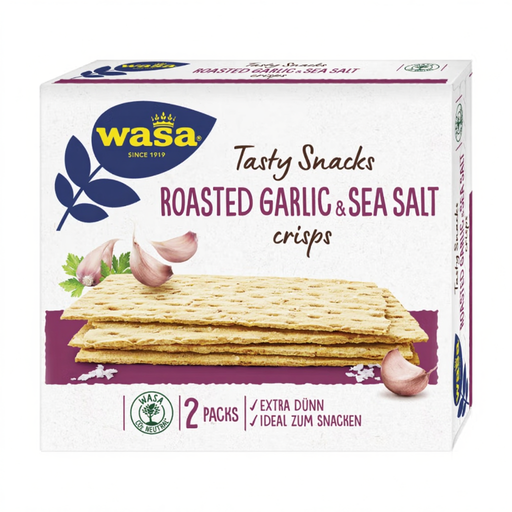 Image unavailable
A smaller 190-g pack with garlic and sea salt in the variety name, if you’d rather start with less in your cupboard. Try the flavour before buying a larger pack.
Protect it from moisture and don’t store it with other bread. Also follow the storage instructions on the pack you choose; EDEKA24 recommends keeping its organic rye wholegrain crispbread in a cool, dry place.
Yes. If allergens are relevant to your household, check the information for every variety. The Bundesamt für Verbraucherschutz und Lebensmittelsicherheit explains that allergenic ingredients must be listed and highlighted in the ingredients list on packaged foods. Also look out for any ‘may contain’ warnings.
Not necessarily: it also matters whether your child will eat the variety you choose. Compare the wholegrain and nutritional information for specific products, and try an unfamiliar variety before planning to buy several packs.
No. ‘Wholegrain rye’ is not the same as a gluten-free label. If you need to avoid gluten, look for an explicit gluten-free label on the variety you choose, and check its ingredients and allergen information.