What should you look for when buying?
When doing your weekly shop, first check the pack size and how much you expect to eat. You can then narrow down which ingredients, allergen information and product types are right for you. A lighter pack doesn’t automatically mean it’s the same kind of crispbread.
| Criteria |
What to check when buying |
Most relevant to |
| Pack size and storage |
Match the pack size to your weekly consumption and check the storage instructions for the opened pack. |
If I only eat crispbread occasionally and live alone or with one other person, I want to finish the pack without having much left over. That’s why around 37% of consumers would prioritise choosing the right pack size. |
| Grains and nutritional information |
Compare the ingredients list and nutritional information per 100 g, particularly the grain base and fibre content. |
If I regularly add toppings to my crispbread, I want to know which grain and other ingredients I’m buying. Around 27% of consumers would make this comparison their most important buying decision. |
| Allergens and gluten |
Check the ingredients, highlighted allergens, may-contain statements and, where relevant, whether the variety is explicitly labelled gluten-free. |
If I need to avoid a particular ingredient, pack size shouldn’t be the deciding factor. For around 18% of consumers, allergen or gluten requirements would come first. |
| Flavour and format |
Check the product name and ingredients to see whether you want a plain slice or a seasoned or seed-topped variety. |
If you choose crispbread mainly as a base for toppings or as a more savoury snack, you’ll be looking for a different type of product. For around 18% of consumers, this would be their main priority. |
Brands to consider
The differences below apply to the specific products mentioned, not every crispbread made by each brand.
Wasa
The varieties listed by REWE offer a range of options: wholegrain rye, oats with sesame, and sesame crispbread explicitly labelled gluten-free.
- REWE lists Wasa Vollkorn Roggen 260 g as containing 20 g of fibre per 100 g, and Wasa Hafer & Sesam 230 g as containing 26 g per 100 g. These figures relate to different recipes and are not a product rating.
- The oat and sesame variety contains wheat and sesame, among other ingredients. Wasa Sesame & Sea Salt, which is labelled gluten-free, also contains sesame and carries a warning about possible traces of milk.
Finn Crisp
According to REWE, Finn Crisp Original 200 g is a thin wholegrain rye crispbread for anyone looking for this format and grain base.
- The ingredients listed for Original are wholegrain rye flour, sourdough, salt and yeast.
- As it contains rye, Finn Crisp Original is not gluten-free. Always refer to the information on the specific pack.
Burger
Burger Urtyp 250 g is a wholegrain rye variety containing barley malt flour, according to the product information at REWE.
- Burger Urtyp is listed as containing 20 g of fibre per 100 g.
- The product contains gluten-containing cereals. REWE’s product information also mentions possible traces of sesame, milk and other gluten-containing cereals.
Crispbread selection at Joybuy
This selection includes rye crispbread, varieties with sesame and a seasoned snack format. Compare the pack weights with how much you eat: none of the sizes shown here is a standard “half loaf” pack based on its weight alone.
 No image available
Wasa Whole Grain Rye crispbread 260 g
A wholegrain rye variety for shoppers who regularly add toppings to their crispbread.
The pack contains 260 g; compare this with how much you eat in a week. If you have requirements relating to gluten or other allergens, check the information on the pack.
View at Joybuy
 No image available
Wasa Delicate Crisp Oats & Sesame crispbread 230 g
This variety is for shoppers specifically looking for crispbread made with oats and sesame.
The pack weighs 230 g. If you have a sesame or grain allergy, check the ingredients and allergen information on the specific pack.
View at Joybuy
 No image available
Alnatura Organic Sesame crispbread 250 g
A sesame variety for shoppers who want to take this ingredient into account when choosing their crispbread.
The pack contains 250 g. You can only tell whether the recipe meets any other dietary requirements by checking the ingredients and allergen information.
View at Joybuy
 No image available
Wasa Sourdough Rye crispbread 235 g
This rye variety made with sourdough is an option if you’re looking for a different recipe from plain rye crispbread.
The pack weighs 235 g. Check the allergen information on the specific pack carefully, especially if milk or sesame is relevant to your choice.
View at Joybuy
 No image available
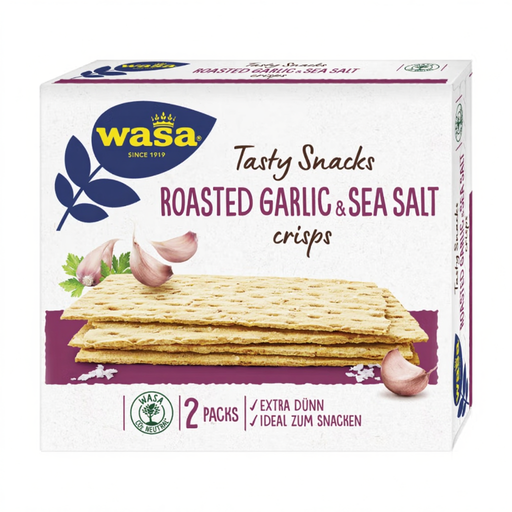
Wasa Round Crispbread Roasted Garlic & Sea Salt 190 g
Seasoned with roasted garlic and sea salt, this round crispbread is more of a snack than a plain rye base for toppings.
The pack contains 190 g. As well as the pack size, check the ingredients and storage instructions if you plan to eat it over several days.
View at Joybuy
Frequently asked questions
What should I search for instead of “half loaf” crispbread?
Search for the type of product you want and compare the pack weight with how much you eat. REWE, for example, stocks products weighing 75 g and 125 g alongside crispbread packs of 200 g or more; the ingredients and format can vary too.
How should I store opened crispbread?
Follow the storage instructions on the pack and keep opened crispbread somewhere dry in a tightly sealed container. Products listed by REWE specify dry storage; some varieties also need to be kept away from light or heat.
Should I throw away crispbread after its best-before date?
No. According to the German Food Federation, the date indicates quality rather than being an automatic use-by date, provided the product is unopened and has been stored appropriately. After the date has passed, check its appearance, smell and texture. Don’t eat crispbread if it is mouldy or has noticeably changed.
Where can I find allergen information on packaged crispbread?
Check the ingredients list and any separate may-contain statements on the specific pack. The German Food Federation explains that the most common allergens are highlighted in the ingredients list; a warning about possible traces is not the same as an ingredient being deliberately added.
Is wholegrain rye crispbread gluten-free?
No. Crispbread made with rye is not gluten-free. If you need gluten-free crispbread, look for an explicit gluten-free label on the specific variety and check any other relevant ingredients and may-contain statements separately.


