Smaller households who eat crispbread occasionally
If crispbread only makes an appearance now and then alongside coffee and cake, choose a pack size that suits how much you’ll actually eat.


For smaller households, pack weight, how much you expect to eat and, where applicable, a resealable pack are more useful considerations than the term ‘half loaf’. If you want a savoury contrast to sweet cake, rye wholegrain crispbread is one option; for a different flavour, check the specific recipe. Whatever you choose, check the ingredients, allergens and pack information.
If crispbread only makes an appearance now and then alongside coffee and cake, choose a pack size that suits how much you’ll actually eat.
If you’d like to serve something savoury alongside sweet cake, choose rye wholegrain crispbread to suit your preferred flavour.
If you need to avoid certain grains or other ingredients, check the current pack labelling, including any ‘may contain’ warnings.
Start by estimating how much you’re likely to eat. Then you can compare the flavour, nutrition information and ingredients of the products you’re considering.
| Criteria | What to check | Who it matters to |
|---|---|---|
| Pack size and leftovers | Compare the pack weight, resealable packaging and storage instructions for the specific product. | If I only serve crispbread occasionally, I don’t want to open a pack that will be left sitting around for a long time. Around 31% of consumers put finding a suitable pack size first. |
| Flavour with cake | Check the type of grain and flavour; Wasa describes its rye varieties as savoury. | I’d like a deliberately savoury contrast to sweet cake, rather than a neutral accompaniment. This flavour profile is a priority for around 19% of consumers. |
| Wholegrain and fibre | Compare the grain base in the ingredients list and the fibre per 100 g in the nutrition information. | If crispbread features on my table more often, I want to be able to check which varieties contain wholegrain ingredients and how much fibre they provide. Around 25% of consumers focus on this first. |
| Ingredients and allergens | Read the ingredients list, declared allergens and, where applicable, ‘may contain’ warnings on the pack. | If I need to avoid certain ingredients, the specific recipe determines whether a product is suitable for me. This check comes first for around 25% of consumers. |
Crispbread is sold in packs labelled with their weight in grams. The term ‘half loaf’ doesn’t tell you how much crispbread is inside.
Go by the stated weight and how often you expect to use the pack once it’s open.
Wasa describes its rye wholegrain and rustic varieties as savoury. You may want that flavour alongside cake, but it won’t suit everyone looking for a more subtle accompaniment.
Choose your flavour deliberately and, if you’re serving a range of things with coffee, consider serving the toppings separately.
Ingredients and warnings vary between crispbreads. Rye is a gluten-containing grain, and some products also carry warnings about possible traces of other substances.
If you have an allergy or need to avoid certain ingredients, check the labelling on the current pack.
A resealable closure is a feature of the particular packaging. It doesn’t replace the storage instructions or the need to check the best-before date.
Reseal the pack as directed after use, and choose a quantity that suits how often you’ll eat it.
Wasa offers several crispbread varieties, including wholegrain rye, rustic crispbread and varieties with seeds.
EDEKA states that its organic wholegrain rye crispbread comes in a 250 g pack and contains organic wholegrain rye flour, water and sea salt.
Burger offers high-fibre crispbread in a 250 g pack.
These products offer different pack sizes and flavours, whether you’re serving crispbread occasionally or looking for a savoury contrast to cake. Compare the specific pack with how much you’ll eat, and check the ingredients and allergens before eating.
 No image available
The 125 g pack is worth considering if you only serve crispbread occasionally. If you need to avoid gluten-containing grains, check the labelling on the specific pack; if you have a soya allergy, check the allergen information too.
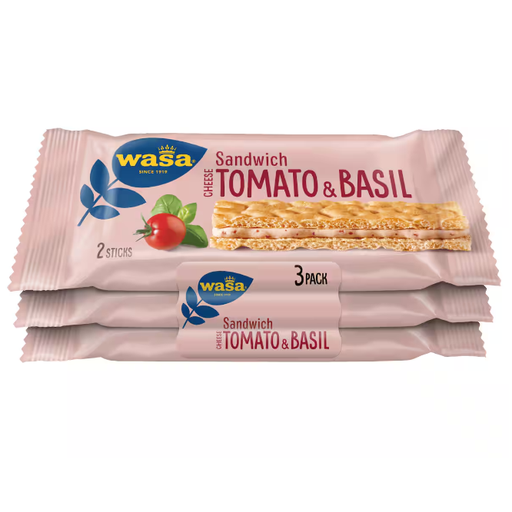 No image available
The three 40 g portions are handy if you’d like to serve a small amount of a savoury variety. Tomato and basil aren’t a neutral flavour to pair with cake, so also check the pack for information about wheat, milk and possible traces when choosing.
 No image available
This 200 g pack is an option if you’re looking for spelt crispbread with seeds rather than a milder flavour. If you need to avoid gluten-containing grains or sesame, check the current pack labelling and follow the storage instructions.
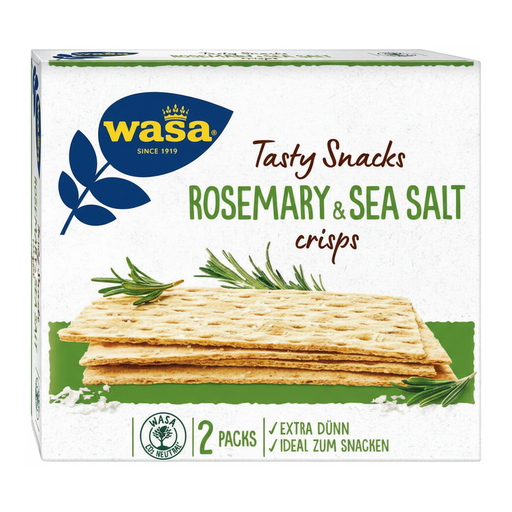 No image available
The 190 g pack offers a savoury option with rosemary and sea salt if that’s the contrast you want with sweet cake. Check the ingredients and allergen information when choosing, particularly if you need to avoid gluten-containing grains, milk or sesame.
 No image available
The 210 g pack is worth considering as a savoury accompaniment if the quantity suits how much you’ll eat. Before buying, check the packaging type and, if relevant, the information about rye, wheat and possible traces of milk or sesame.
A pack is practical if the quantity suits how much you’ll actually eat. Compare the weight and check whether the specific product has a resealable closure; EDEKA, for example, describes a 250 g wholegrain crispbread pack with a resealable closure.
No. Rye is a gluten-containing grain. If you need to avoid gluten-containing grains, choose a product labelled accordingly and check the current packaging.
Check the ingredients list and allergen information on the specific pack. Look separately for ingredients that are present and possible traces, especially if you need to avoid particular substances.
Online information can help you narrow down your choices, but when you’re ready to eat the product, check the labelling on the pack you receive. EDEKA notes on its product pages that the information shown may differ from what’s on the packaging.