Festival-goers looking for wholegrain options
You want to take a packaged snack with you and compare its wholegrain content and fibre using the information on the pack, rather than relying on the word “digestive”.


Packaged crispbread is a practical choice for a street festival, provided you can carry it in its packaging and keep it dry and protected. If wholegrain is your priority, compare the ingredients list and fibre content per 100 g rather than relying on the word “digestive”. If you have a sensitive stomach or need to avoid certain allergens, the suitability of the specific recipe matters more than any single nutritional value.
You want to take a packaged snack with you and compare its wholegrain content and fibre using the information on the pack, rather than relying on the word “digestive”.
You choose ingredients and portion sizes based on your past experience. A higher fibre content alone doesn’t tell you how well you’ll tolerate a particular crispbread.
You may need to avoid, for example, gluten-containing cereals, milk or sesame, so you check the labelling on the specific pack you’re buying.
First, decide whether wholegrain content, how well it suits you, or ease of carrying it around is most important for your festival snack. Then compare only the information on the pack that’s relevant to your priority.
| Criterion | What to check | Who it matters to |
|---|---|---|
| Wholegrain and fibre | Check for an explicit wholegrain claim and compare fibre per 100 g. | If I choose crispbread for its wholegrain content, I want to be able to compare the actual figures. This is the main reason for buying it for around 46 % of consumers. |
| Dietary tolerance and allergens | Read the ingredients, highlighted allergens and, where applicable, precautionary allergen statements on the specific pack. | If I have known triggers, I need a recipe that meets my requirements; a high fibre content won’t determine that for me. Around 27 % of consumers give this priority. |
| Transport and storage | Check that the packaging is undamaged and read the storage instructions before packing your snack. | If I’m spending a long time outdoors, I want to be able to keep the crispbread sealed and dry. This is the most important consideration for around 27 % of consumers. |
The term doesn’t tell you whether a crispbread will suit you personally or affect any symptoms. The German Nutrition Society also recognises that people’s tolerance of foods varies.
Compare the wholegrain claim and fibre content with the foods you’ve eaten before, rather than assuming a marketing term guarantees a particular effect.
Rye contains gluten. Depending on the variety, milk, sesame or precautionary allergen statements about traces may also be relevant.
Check the highlighted allergens on the specific pack. If you need to avoid gluten, rye crispbread isn’t a suitable alternative.
Seeds affect a recipe’s ingredients and nutritional values. For example, EDEKA Bio 3 Saaten lists 20,3 g of fat and 459 kcal per 100 g; you can’t draw conclusions about every seeded crispbread from this.
Compare specific products using their nutritional information per 100 g, and check in particular whether they contain sesame.
With Wasa, it’s worth checking the details of each wholegrain rye recipe. The Milk & Yoghurt variety is aimed at different tastes, with a more delicate bite according to the manufacturer, than a plain rye crispbread.
Ryvita Original is worth comparing if you’re looking for a rye recipe with a short list of ingredients.
BURGER Delikatesse is a plain wholegrain rye crispbread worth considering if you want to compare ingredients and fibre content.
EDEKA Bio 3 Saaten is an example of a crunchier recipe containing sunflower seeds, sesame and linseed.
This wholegrain crispbread is another option to compare for ingredients and nutritional information.
This selection includes wholegrain rye crispbread as well as varieties with sesame, oats or seasoning. Check the specific pack to see which ingredients and storage instructions suit your festival snack.
 No image available
A wholegrain rye option if you’re looking for a simple flavour to take with you. Check the fibre content, allergens and instructions for resealing the pack after opening.
 No image available
A sesame variety for anyone who chooses this ingredient deliberately. If you need to avoid sesame or gluten-containing cereals, check the allergen information before buying.
 No image available
A variety with oats and sesame if you’d prefer a different combination of ingredients to plain rye crispbread. Read the allergen information; the name of the ingredients alone doesn’t tell you how well you’ll tolerate it.
 No image available
A sourdough rye option for a dry snack on the go. Check the fibre content on the pack, along with the information about milk and sesame if these are relevant to you.
 No image available
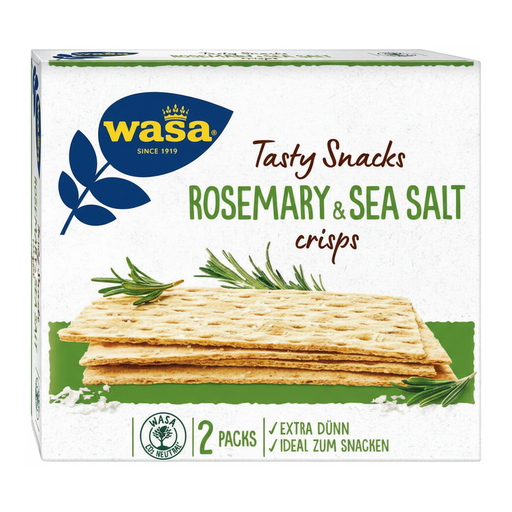
A seasoned alternative if rosemary and sea salt matter more to you than a plain rye recipe. Check the information on the pack for fibre comparisons and any allergen requirements.
No. The term alone tells you nothing about the specific recipe or how well you’ll tolerate it. Instead, compare the wholegrain claim, ingredients and fibre per 100 g. The German Nutrition Society stresses that people’s tolerance of foods varies, particularly when they have symptoms.
Look for an explicit wholegrain claim on the packaging. The German Nutrition Society points out that a product’s dark colour alone isn’t a reliable way to tell whether it’s wholegrain.
No, rye contains gluten. If you need to avoid gluten, don’t rely on the product being called “crispbread”; check for an explicit gluten-free claim and read the ingredients on the specific pack.
Check the ingredients and highlighted allergens, nutritional information per 100 g, best-before date and storage instructions. For carrying it around, make sure the packaging is undamaged and that the crispbread will stay protected until you eat it.