When comparing crispbread for a sugar-conscious lunch, start with the “of which sugars” figure per 100 g, rather than descriptions such as “less sweet”. Of the three varieties described by EDEKA24, Wasa Roggen Sauerteig has the lowest declared sugar content at 0.3 g per 100 g; EDEKA Bio 3 Saaten contains 1.4 g of sugar, but also 20.3 g of fat per 100 g. Ingredients, allergen information and your choice of topping should also factor into your decision.
Who should take care when choosing?
Compare sugar levels for lunch
If you eat crispbread plain or with a savoury topping and want to keep its sugar content as low as possible, compare the nutritional information for specific varieties per 100 g. Descriptions of the flavour are no substitute for checking the pack.
Consider seeds and wholegrains
If you’re looking for a seeded or wholegrain base for lunch, check the other nutritional values as well as the sugar content. For example, EDEKA Bio 3 Saaten, as described by EDEKA24, is labelled as containing 1.4 g of sugar and 20.3 g of fat per 100 g.
Check ingredients and allergens
If you need to take account of specific grains, sesame or declared possible traces, check the labelling on the pack you buy. A low sugar content alone won’t answer these questions.
What should you look for when buying?
For a sugar-conscious lunch, it helps to decide what matters most to you, then consider all the information on the same pack together: sugar content, other nutritional values, ingredients and allergens.
| Criteria |
What to check when buying |
Who it matters to |
| Sugar content |
Compare “of which sugars” per 100 g; consider the topping separately. |
If the sugar content of the crispbread is my main concern, I want to compare varieties on a like-for-like basis. For around 50% of consumers, this figure is the main consideration when choosing. |
| Seeds and other nutritional values |
For seeded or wholegrain varieties, check the fat and salt content per 100 g as well as the sugar content. |
I’m looking for a seeded or wholegrain base for lunch, but I don’t want to overlook the other nutritional values. Around 30% of consumers focus mainly on this. |
| Ingredients and allergens |
Read the ingredients and allergen information on the current pack; distinguish ingredients that are present from possible traces. |
If I need to avoid certain ingredients, the specific labelling determines whether a variety is suitable for me. For around 20% of consumers, this check takes priority. |
Common comparison mistakes
-
Assuming “less sweet” means low in sugar
According to the Verbraucherzentrale, descriptions such as “less sweet” or “naturally sweet” don’t reliably tell you how much sugar a food contains. Taste alone is no substitute for checking the nutritional information either.
When comparing crispbread, check the “of which sugars” figure per 100 g and don’t treat marketing descriptions as a numerical value.
-
Focusing only on sugar in seeded crispbread
The EDEKA Bio 3 Saaten variety described by EDEKA24 contains 1.4 g of sugar and 20.3 g of fat per 100 g. So the sugar content alone doesn’t tell you everything about the nutritional values that may matter when you’re choosing.
Compare sugar, fat and salt on the same per-100-g basis if these values matter for your lunch.
-
Overlooking allergen information because the sugar content is low
The varieties described differ in their grains and seeds, and possible traces are also listed for some of them. If you need to avoid certain ingredients, the information on the specific pack is therefore what matters.
Before buying, check both the ingredients present and any possible traces listed separately.
-
Leaving the topping out of the picture
The nutritional information for crispbread applies to the product without toppings. Fruit spread or another sweet topping will change the sugar content of your finished lunch.
Consider the crispbread and topping together if you want to assess the meal as a whole.
Brands and varieties to consider
The information below relates to the specific varieties named, not to a brand’s entire range.
Wasa
Wasa Roggen Sauerteig, as described by EDEKA24, is a rye crispbread for lunch.
- EDEKA24 lists 0.3 g of sugar per 100 g for Wasa Roggen Sauerteig. That’s the lowest declared figure among the three EDEKA24 varieties described here.
- The ingredient and possible-trace information applies to this variety. Check the information separately for other Wasa products and the specific pack you buy.
EDEKA Bio
EDEKA Bio 3 Saaten is the seeded crispbread variety considered here as a base for lunch.
- The product information from EDEKA24 lists 1.4 g of sugar per 100 g.
- It also lists 20.3 g of fat per 100 g. When checking the ingredients, pay particular attention to the declared grains and sesame.
Alnatura
Alnatura Bio Knäcke-Brot Sesam is the rye wholegrain and sesame variety considered here.
- EDEKA24 lists 3.4 g of sugar per 100 g for this variety; the product description says it is made without yeast.
- Its declared sugar content is higher than the figures for the other two varieties described here. Rye and sesame are among the ingredients to check.
Crispbread at Joybuy
This selection includes Wasa crispbread made with rye, along with seeded or oat varieties that could make a base for lunch. To choose with sugar content in mind, compare the sugar information and ingredients on the pack offered; the product names alone don’t tell you what you need to know.
 No image available
Wasa Sesame & Flaxseed Crispbread 210 g
A lunch option if you’re looking for crispbread with sesame and linseed. Compare the declared sugar content per 100 g with other varieties, and check the current allergen information if you need to avoid certain ingredients.
View at Joybuy
 No image available
Wasa Sourdough Rye Crispbread 235 g
A rye sourdough variety if you’re looking for a base for lunch. Check the sugar content per 100 g on the pack offered; if you need to avoid certain ingredients, pay particular attention to the information about grains and possible traces.
View at Joybuy
 No image available
Wasa Whole Grain Rye Crispbread 260 g
A wholegrain rye variety to enjoy with a topping. If a low sugar content is important to you, compare the nutritional information per 100 g; also check the allergen information on the specific pack.
View at Joybuy
 No image available
Wasa Delicate Crisp Oats & Sesame Crispbread 230 g
An oat and sesame variety for anyone who wants to take these ingredients into account when choosing what to have for lunch. Alongside “of which sugars”, check the other nutritional values and allergen information on the pack offered.
View at Joybuy
 No image available
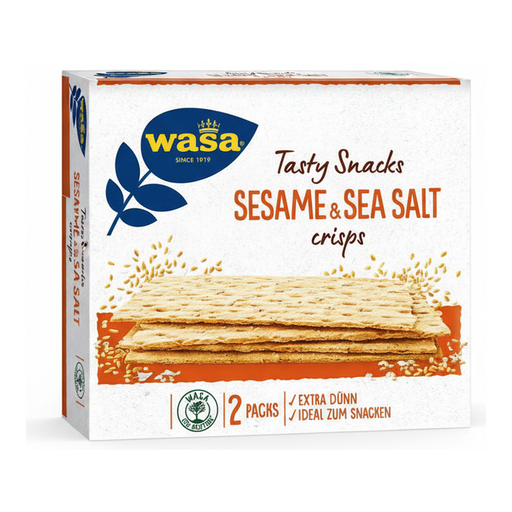
Wasa Round Sesame & Sea Salt Crispbread 190 g
A round sesame and sea salt variety for lunch. If both values affect your choice, compare the salt content per 100 g as well as the sugar content, and check the ingredients on the specific pack.
View at Joybuy
Frequently asked questions
Does “less sweet” mean that crispbread is low in sugar?
No. “Less sweet” doesn’t reliably tell you the sugar content. The Verbraucherzentrale also points out that descriptions such as “naturally sweet” don’t give a clear indication of the actual sugar content. Instead, compare the “of which sugars” figure per 100 g.
Which of the three varieties described has the lowest sugar content?
Of the three varieties described by EDEKA24, Wasa Roggen Sauerteig has the lowest figure, at 0.3 g of sugar per 100 g. EDEKA Bio 3 Saaten is listed at 1.4 g and Alnatura Bio Knäcke-Brot Sesam at 3.4 g per 100 g; the comparison is for crispbread without toppings.
How should I store crispbread once opened?
Keep it somewhere dry and seal it as airtight as possible after opening. The storage guidance described by EDEKA24 recommends keeping Wasa in a dry place away from light, and sealing Alnatura airtight after opening. Follow the instructions on your pack.
Do I still need to check the ingredients if the sugar content is low?
Yes. The sugar content doesn’t tell you whether the ingredients meet your requirements. The varieties described differ in their grains and seeds; some labels also list possible traces of milk or soya. Always check the ingredients and allergen information on the specific pack you buy.


