Guests who enjoy wholegrain rye
If you’re looking for a robust, crunchy counterpoint to your Sunday roast, choose crispbread clearly labelled as made with wholegrain rye. A dark colour alone doesn’t tell you which flour has been used.


Rye wholegrain crispbread makes a good choice with a Sunday roast if you’re looking for a robust, crunchy contrast. For fussy eaters, a different grain or texture may be more appealing; you can’t tell whether a variety tastes milder from its colour or name alone. To find the right compromise, check the ingredients list and the wholegrain, allergen and nutritional information on the pack.
If you’re looking for a robust, crunchy counterpoint to your Sunday roast, choose crispbread clearly labelled as made with wholegrain rye. A dark colour alone doesn’t tell you which flour has been used.
If not everyone enjoys a pronounced rye flavour, it’s worth checking the grain and product description. Whether the crunch and variety work with your planned toppings is a matter of personal choice.
If guests need to avoid certain ingredients, the information for the specific variety you’re serving is what matters. The Federal Ministry of Agriculture, Food and Regional Identity explains allergen labelling; you should also check the pack for possible ‘may contain’ statements.
For your Sunday roast, first decide whether wholegrain ingredients, a texture that suits everyone at the table or particular ingredients matter most. Once you’ve done that, you can compare varieties using the information on their packs.
| Criteria | What to check when buying | Who it matters most to |
|---|---|---|
| Wholegrain and fibre | Look for a wholegrain claim and the named wholegrain flour; compare fibre using the nutritional information per 100 g. | If I specifically want wholegrain crispbread with my roast, I don’t rely on a dark colour. Around 33 % of consumers prioritise a clearly labelled wholegrain base. |
| Flavour and crunch | Compare the grain and described texture; check whether the shape and size suit the toppings you have in mind. | I want the crispbread to appeal to everyone at the table, including guests who don’t enjoy a strong rye flavour. For around 25 % of consumers, this balance of flavour and texture comes first. |
| Ingredients and allergens | Read the ingredients list, highlighted allergens and, where applicable, ‘may contain’ statements on the specific pack. | Before serving crispbread to guests, I need to know what’s in the variety I’ve chosen. Checking ingredients and allergens is a priority for around 25 % of consumers. |
| Availability and packaging | Look for the variety you want at your chosen retailer, and check the pack size and current labelling. | For my planned Sunday roast, I need a variety I can get in time and a pack whose information I can check in store. This comes first for around 17 % of consumers. |
If you’re looking for a compromise between white flour and wholegrain, the actual flour base matters more than appearance. According to the Federal Office of Consumer Protection and Food Safety, ingredients are listed in descending order by weight.
Check the product name and look in the ingredients list for wholegrain flour or wholegrain meal, as well as the grain used.
Different varieties from the same brand can contain different ingredients and carry different ‘may contain’ statements. Rye and wheat are gluten-containing cereals; other relevant ingredients depend on the individual product.
For every variety you buy, check the highlighted allergens and any ‘may contain’ statements on the pack.
ALDI SÜD notes that the nutritional information for its wholegrain crispbread may vary between suppliers. So, when comparing products, use the information on the pack you’re buying.
Compare salt and fibre per 100 g, and check the ingredients and allergens on the pack itself.
If you’re serving crispbread as a crunchy contrast to your roast, bear in mind that moist toppings can affect its texture if left to stand for too long.
Store the crispbread in a dry place and add spreads or sauce just before serving.
The Whole Grain Rye range is a useful reference if you’re looking for crispbread clearly labelled as made with wholegrain rye.
This wholegrain crispbread gives you a specific, clearly labelled wholegrain rye base to compare.
ALDI SÜD sells GOLDÄHREN wholegrain crispbread in a 250-g pack.
Naturata describes its Delikatess wholegrain crispbread as crunchy and light, with a hearty rye flavour.
On its international product page, Ryvita describes its Thins as a crunchy option for dipping and snacking.
This selection includes wholegrain rye crispbread, varieties with sesame, linseed or oats, and a round option. For your Sunday roast, compare the specific varieties rather than assuming they share the same ingredients or taste.
 No image available
A variety to consider if you’re looking for crispbread specifically labelled as made with wholegrain rye to serve with your Sunday roast.
Pack size: 260 g. Check the specific pack for ingredients, allergens and nutritional information.
 No image available
An option for guests who might enjoy crispbread with sesame and linseed alongside their roast.
Pack size: 210 g. Check the information on the pack to see whether the ingredients suit everyone at the table.
 No image available
An option to compare if you’re looking for a Delicate Crisp variety with oats and sesame to serve with your Sunday roast.
Pack size: 230 g. Check the specific pack for the grains used and allergen information.
 No image available
A sesame variety to compare if you want to check the specific ingredients in the crispbread you’re serving.
Pack size: 250 g. Before serving, check the ingredients and allergen information on the pack you’ve bought.
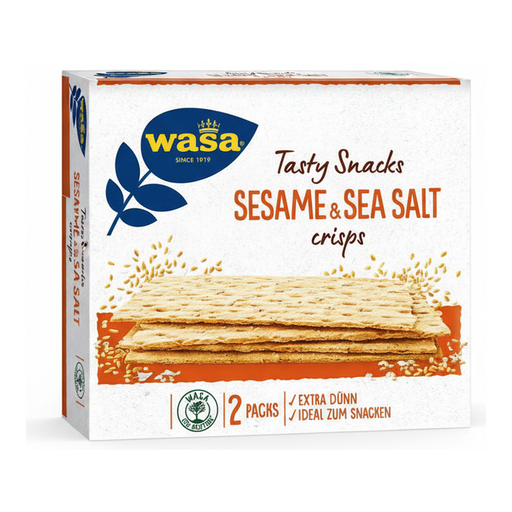 No image available
The round shape is another option if you’d like to serve crispbread for topping alongside your roast.
Sesame and sea salt variety; pack size: 190 g. Compare the wholegrain base, salt content and allergens using the information on the pack.
Check the product name and ingredients list for wholegrain flour or wholegrain meal made from the stated grain. The Federal Office of Consumer Protection and Food Safety explains that ingredients are listed in descending order by weight; colour is no substitute for this information.
No. Rye is a gluten-containing cereal. If a guest needs to avoid gluten, check the labelling for the specific variety rather than assuming it’s suitable because it’s labelled wholegrain.
Read the highlighted allergens in the ingredients list and check for any ‘may contain’ statements on the pack you’ve bought. The Federal Ministry of Agriculture, Food and Regional Identity explains the requirement to label the main allergens; possible traces vary by product.
If you want to keep it crunchy, add toppings just before serving. You can set out moist spreads and sauce separately until then.