Which variety suits you?

Wholegrain newcomers who prefer wheat

If you find pure wholemeal rye too strong for teatime, look for a blend of wholemeal wheat flour and wheat flour. Wasa lists the proportions of both flours separately for its Sesame & Wholegrain crispbread. Whether you enjoy the taste is a matter of personal preference.

Shoppers focused on wholegrain

If a high wholegrain content matters more to you than a wheat blend, compare the grain base and the fibre per 100 g. The German Nutrition Society says wholegrain products keep you feeling fuller for longer than products made with white flour. The portion size and recipe also matter when making comparisons.

Hosts checking ingredients and allergens

If you’re choosing crispbread for guests with specific intolerances, check the ingredients, highlighted allergens and any ‘may contain’ warnings on the actual pack for each variety. Wheat, rye and sesame may be particularly relevant.

What to look for when choosing

Wholemeal wheat blend

A good choice if: you’d like a combination of wholemeal flour and white wheat flour, and want a variety that’s less rye-heavy.

Bear in mind: A blend isn’t the same as a product made entirely from wholegrain. Wasa also lists 11% sesame in its Sesame & Wholegrain variety.

Wholemeal rye

A good choice if: a recipe based mainly on wholemeal rye is more important to you than a wheat blend.

Bear in mind: Its grain profile differs from a wheat blend. EDEKA Bio lists 94% wholemeal rye flour in its wholemeal rye crispbread.

Wholegrain crispbread with seeds

A good choice if: sunflower seeds, linseed or sesame are an important part of the recipe you’re looking for.

Bear in mind: Seeds don’t automatically mean a particular nutritional profile. REWE lists 19.5 g fat and 448 kcal per 100 g for its Bio-Naturland wholegrain seed crispbread.

What matters What to check when buying Who might find it especially important
Wheat blend and taste Look for wholemeal wheat flour and white wheat flour listed separately in the ingredients; compare the stated proportions. If I find wholemeal rye too strong, I’d like to try a wheat blend for teatime first. Around 29% of shoppers put this preference for a milder introduction first.
Wholegrain and fibre Check the grain base and wholegrain content; compare fibre using the same measure per 100 g. For my choice, a clearly stated wholegrain content and comparable fibre information matter more than a wheat blend. Around 36% of shoppers prioritise this.
Texture and toppings Check the types of grain and seeds, as well as the texture description. If you’re trying an unfamiliar variety, follow the storage advice on the pack. I’m looking for a crunchy base whose grain and seed flavours go well with my spread. This combination is the main consideration for around 21% of shoppers.
Ingredients and allergens Read the ingredients, highlighted allergens and any ‘may contain’ warnings on the actual pack. If I’m shopping for someone with an intolerance, I need to check the exact recipe before serving. Around 14% of shoppers say checking the ingredients is their main reason for choosing a product.

Common buying misconceptions

  • A dark colour or ‘multigrain’ means it’s high in wholegrain

    The German Nutrition Society points out that colour alone isn’t a reliable sign of wholegrain. Crispbread labelled as wholegrain can also contain white flour.

    Look for the word ‘wholegrain’ and check the ingredients, including the stated flour proportions, before comparing a blended variety with wholemeal rye crispbread.

  • Seeded crispbread is automatically the lighter choice

    Nutritional values depend on the recipe. REWE lists 19.5 g fat and 448 kcal per 100 g for its Bio-Naturland wholegrain seed crispbread.

    Compare energy, fat, salt and fibre per 100 g, and take into account how much you actually eat and what you top it with.

  • Crispbread is gluten-free unless the label says otherwise

    Wheat and rye contain gluten, and sesame may also be a relevant allergen. The product category alone doesn’t tell you whether a crispbread is suitable for someone with an intolerance.

    Check the label on the specific pack for the person you’re buying for, including highlighted allergens and any ‘may contain’ warnings.

  • Online nutritional information applies to every pack of a supermarket brand

    ALDI SÜD notes that different suppliers may provide its GOLDÄHREN wholegrain crispbread, so nutritional values can vary.

    Use the online information to help narrow down your choices, then check the ingredients and nutritional values on the pack in store before buying.

Brands to help you choose

Wasa

The brand offers both wholemeal wheat blends and wholemeal rye varieties. The specific variety is what matters when comparing options for teatime.

  • Wasa lists 49% wholemeal wheat flour, 39% wheat flour and 11% sesame in its Sesame & Wholegrain variety.
  • This variety contains wheat and sesame. The brand’s description of its flavour is no substitute for trying it yourself.

REWE Bio

The Bio-Naturland wholegrain seed crispbread is a wholemeal wheat variety with sunflower seeds, sesame and linseed.

  • REWE lists 64% wholemeal wheat flour for this variety.
  • The product contains 19.5 g fat per 100 g, as well as wheat and sesame. Other allergens may also be present in traces.

EDEKA Bio

The wholemeal rye crispbread has a different grain base from the wholemeal wheat blend.

  • EDEKA24 lists 94% wholemeal rye flour, along with water and sea salt, for this variety.
  • It isn’t a blend of white wheat flour and wholemeal wheat flour. Check the allergen and ‘may contain’ information on the pack.

GOLDÄHREN / ALDI SÜD

This wholegrain crispbread is another option to consider when shopping in store.

  • ALDI SÜD lists fibre and protein in the nutritional information for the product described.
  • According to ALDI SÜD, different suppliers may be used and nutritional values may vary. The information on the specific pack is what matters.

Leicht&Cross

According to REWE, the wholegrain crispbread combines wholemeal rye flour, wholemeal wheat flour and rice flour, making it a multigrain alternative to classic rye crispbread.

  • You can compare the grains listed in the ingredients with those in a rye-only option or a wheat blend.
  • This variety contains gluten-containing grains and sugar. Follow the pack’s advice to store it in a dry place and use it within the stated time after opening.

Crispbread for different tastes

This Joybuy selection includes a wheat blend, as well as crispbread with wholemeal rye or seeds. Compare the ingredients of the specific variety with the grain profile you’re looking for at teatime.
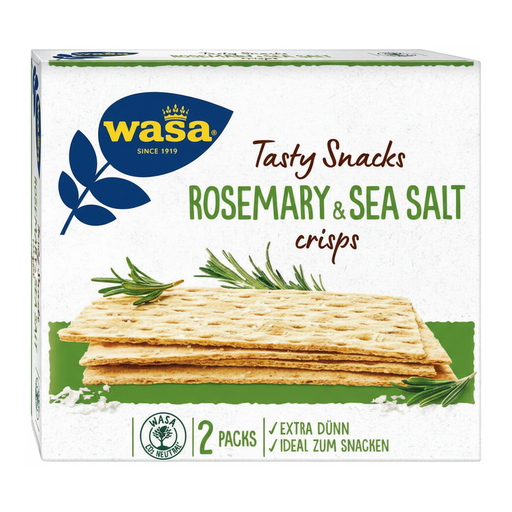
Wasa Round Crispbread Rosemary & Sea Salt, 190 g

Wasa Round Crispbread Rosemary & Sea Salt, 190 g

If you’re looking for a wholemeal wheat blend with a savoury twist, check the flour proportions and salt content on the pack. If you have an intolerance, also check the information about grains and possible traces.

View at Joybuy

Wasa Delicate Crisp Oats & Sesame, 230 g

Wasa Delicate Crisp Oats & Sesame, 230 g

If you’d prefer a grain and seed variety for teatime rather than a wheat blend, check the ingredients and fibre per 100 g for this option. Read the allergen information on the pack before serving.

View at Joybuy

Wasa Wholemeal Rye Crispbread, 260 g

Wasa Wholemeal Rye Crispbread, 260 g

If wholemeal rye is more important to you than a wheat blend, compare this variety by checking the ingredients and fibre per 100 g. Rye contains gluten, so also check the pack for other allergen information.

View at Joybuy

Alnatura Organic Sesame Crispbread, 250 g

Alnatura Organic Sesame Crispbread, 250 g

If you’re considering a sesame variety with a wholegrain base, check the type of grain and ingredient proportions on the pack rather than assuming it’s the same as a wheat blend. Sesame and gluten-containing grains are important to consider when choosing for guests.

View at Joybuy

Wasa Sesame & Linseed Crispbread, 210 g

Wasa Sesame & Linseed Crispbread, 210 g

If you’re looking for a seeded variety instead of a wholemeal wheat blend, compare the grain and seed information for this crispbread. If you’re serving guests with intolerances, check the ingredients and ‘may contain’ information on the specific pack.

View at Joybuy

Frequently asked questions

How can I tell if crispbread contains both wholemeal wheat flour and white wheat flour?

Both flours should be listed separately in the ingredients. For example, Wasa lists 49% wholemeal wheat flour and 39% wheat flour in its Sesame & Wholegrain variety. According to the German Food Federation, ingredients are generally listed in descending order by weight; stated percentages make comparisons easier.

Does wholegrain crispbread keep you fuller for longer than a white flour variety?

The German Nutrition Society says wholegrain products keep you feeling fuller for longer than products made with white flour. This doesn’t mean every crispbread variety can be judged in the same way: compare the specific recipe, portion size and nutritional information.

Is crispbread made with wholemeal wheat flour gluten-free?

No. Wholemeal wheat flour contains gluten, just like white wheat flour. Wasa Sesame & Wholegrain contains both ingredients. If you’re shopping for someone who needs to avoid gluten, check the label on the specific pack.

How should I store crispbread once it’s opened?

Follow the instructions on the pack and make sure it’s kept dry. Leicht&Cross wholegrain crispbread should be stored in a dry place and eaten within a few days of opening. Instructions may differ for other varieties.

Does sesame have to be listed on packaged crispbread?

Yes. If sesame is used as an ingredient, it must be declared as an allergen. This is noted in the information on allergen labelling from the Federal Ministry of Agriculture, Food and Regional Identity. Also check the specific pack for any ‘may contain’ warnings.