Hosts serving mild or sweet toppings
If you’re serving jam, honey, cream cheese or mild cheese, a lightly seasoned or sesame variety can make a good base. Whether the combination works is a matter of personal taste.


For Sunday coffee, the key is choosing a crispbread that suits the toppings you plan to serve and your guests’ dietary requirements. A sesame variety can work well with mild or sweet toppings, while wholegrain rye can provide a more robust base for savoury ones. If anyone needs to eat gluten-free, choose a product explicitly labelled gluten-free and check the current packaging.
If you’re serving jam, honey, cream cheese or mild cheese, a lightly seasoned or sesame variety can make a good base. Whether the combination works is a matter of personal taste.
If you’re also serving cheese or savoury spreads, you could choose wholegrain rye and compare the ingredients and fibre content of the specific varieties.
An explicit gluten-free label is essential for them. Standard rye or wheat crispbread is not a suitable alternative.
First, think about which toppings you’ll serve and whether anyone needs to eat gluten-free. Then compare the ingredients and nutritional information of the varieties that might suit your coffee table.
| What matters | What to check | Who it matters to |
|---|---|---|
| Toppings and flavour | Check the ingredients list for grains, sesame and seasoning; use the packaging to assess the product’s shape. | If I’m serving jam or mild cheese, I want a base whose own flavour works well with them. For around 56 % of consumers, this is the main consideration when buying. |
| Wholegrain rye and nutritional values | Check the grain type and ingredients list; compare the fibre content per 100 g. | I’m specifically looking for a wholegrain rye variety to serve with savoury spreads, and want to compare its nutritional values. This is the top priority for around 33 % of consumers. |
| Gluten-free suitability | Check for an explicit gluten-free label, as well as the ingredients and any precautionary allergen statements on the current packaging. | If gluten-free eating is required, the specific variety must be labelled as such; standard rye crispbread isn’t suitable. This requirement is a priority for around 11 % of consumers. |
The fibre content alone won’t tell you whether a variety suits the toppings or dietary requirements at your table. Wasa lists 20 g of fibre per 100 g for its Whole Grain Rye variety, and 7 g per 100 g for its gluten-free Classic variety.
Start by choosing based on the toppings and any dietary requirements. Then compare nutritional values using the same measure.
Rye contains gluten. Even a simple ingredients list doesn’t make rye crispbread a gluten-free alternative.
If you eat gluten-free, look for an explicit gluten-free label on the specific variety. The German Coeliac Society advises checking the ingredients list; if you have other allergies, the relevant allergen and precautionary statements are important too.
When presenting its Wholegrain Crispbread, EDEKA notes that the information on the packaging may differ.
Check the ingredients, allergens and nutritional information on the current packaging if these details will influence your decision.
The range includes wholegrain rye, Sesame & Wholegrain and a Classic variety explicitly labelled gluten-free.
Delikatess is a wholegrain rye option for a coffee table with savoury toppings.
Finn Crisp is another brand in REWE’s crispbread range, with Original, Rustic and Snack varieties.
EDEKA’s Wholegrain Crispbread is an option if you’re looking for a straightforward wholegrain rye recipe.
This selection includes varieties with oats and sesame, milk and yoghurt, wholegrain rye, and sesame and sea salt. Choose according to the toppings you plan to serve, and check the information on the specific packaging if you have dietary requirements.
 No image available
If you’re looking for a variety with oats and sesame for your coffee table, this could suit your choice of toppings. If you have allergies or need to eat gluten-free, check the ingredients and information on the current packaging.
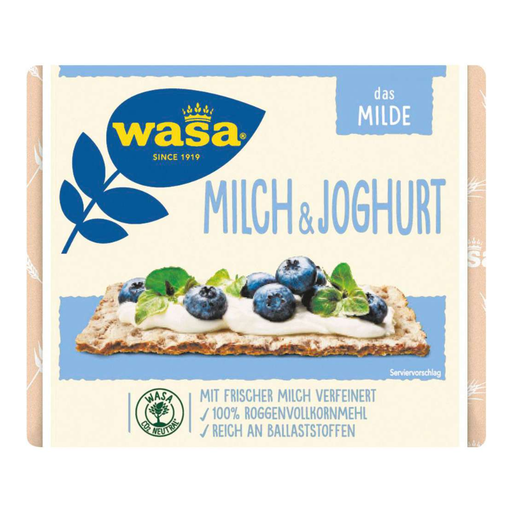 No image available
This variety could be a good choice if you’re looking for crispbread with milk and yoghurt to serve with spreads. Check the current packaging to make sure the ingredients meet your guests’ requirements.
 No image available
Wholegrain rye is an option for a coffee table with savoury toppings. Rye contains gluten, so this variety isn’t suitable for guests who need to eat gluten-free.
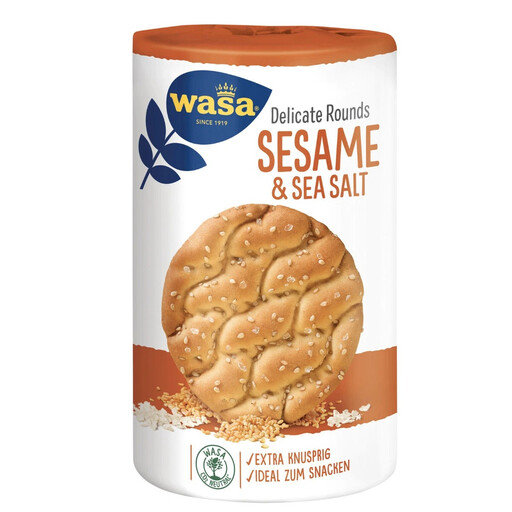 No image available
This sesame and sea salt variety is better suited to a coffee table with savoury or mixed toppings. If you have a sesame allergy or other dietary requirements, check the current packaging.
For sweet or mild toppings, start with a less strongly seasoned variety; wholegrain rye can also work well with savoury spreads. Wasa describes Sesame & Wholegrain as nutty and its wholegrain rye variety as savoury. The best choice depends on the flavours you want to serve with your coffee.
Compare the same values per 100 g and check the ingredients list too. Wasa lists 7 g of fibre per 100 g for its gluten-free Classic variety and 20 g per 100 g for Whole Grain Rye; this doesn’t amount to a blanket judgement about quality. According to the German Federal Centre for Nutrition, the Nutri-Score can also help with comparisons, but it doesn’t replace checking ingredients and allergens.
Choose crispbread explicitly labelled gluten-free rather than a standard rye or wheat variety. Check the current ingredients list and, if you have other allergies, any precautionary allergen statements too. The German Coeliac Society notes that cereals containing gluten must generally be identified in the ingredients list.
Keep it somewhere dry and follow the instructions on the packaging. Burger Delikatess is labelled for dry storage; an airtight container can help protect the crispbread from moisture.