Occasional crispbread buyers
If you only take crispbread to work on a few days, pack weight, the seal and how to store it after opening are particularly important. Buying a small pack is of little use if you can’t store the rest properly.


For the occasional packed lunch at work, pack weight is a more useful guide than looking for a “half loaf”: the products featured here are sold as crispbread in packs. If you only eat it now and then, also check how you can reseal and store an opened pack. Ingredients and allergen information may affect your choice, regardless of pack size.
If you only take crispbread to work on a few days, pack weight, the seal and how to store it after opening are particularly important. Buying a small pack is of little use if you can’t store the rest properly.
For a packed lunch, you can take the crispbread and toppings separately. Check that the size and shape of the slices suit how you’ll carry them and the toppings you have in mind. You can compare ingredients and nutritional information on the specific pack.
If you need to avoid gluten, sesame, milk or other allergens, read the ingredients list and allergen information for the specific variety. The rye crispbreads described here contain cereals containing gluten; the terms “organic” and “wholegrain” do not mean a product is suitable for a gluten-free diet.
First, work out how much crispbread you’ll get through over several lunch breaks. Then check the seal and storage advice, as well as the ingredients for the specific variety.
| Criterion | What to check when buying | Who it matters most to |
|---|---|---|
| Leftovers and storage | Compare pack weights and check whether the pack is specifically described as resealable; follow the storage instructions. | I only eat crispbread occasionally and want to store an opened pack properly until my next lunch break. Around 45% of consumers put the amount left over first. |
| A lunch you can add toppings to | Consider the slice size and how you’ll carry the pack; check whether you can take the toppings separately. | I want to enjoy crispbread with my own toppings during a short canteen break, without any extra preparation. This is a priority for around 33% of consumers. |
| Ingredients and allergens | Read the ingredients list, highlighted allergens and, where relevant, precautionary “may contain” information on the specific pack. | If I need to avoid certain ingredients, the labelling on each variety determines my choice. This check comes first for around 22% of consumers. |
“Half loaf” doesn’t clearly describe the crispbread packs featured here. If you’re really looking for a smaller amount left over, searching for this term could mean you miss suitable pack sizes.
Instead, check the stated weight and the seal. If you mean half a loaf of fresh bakery bread, search specifically in that category.
A seal makes it easier to close the pack, but it doesn’t replace the storage instructions. Moisture can affect the crispness.
Seal the crispbread after each serving and store it as directed on the pack.
Rye is a cereal that contains gluten. The terms “wholegrain” and “organic” don’t change that; other allergen information may also apply, depending on the variety.
If you need to avoid gluten or other allergens, check the labelling on each specific pack before buying rather than relying on the product name alone.
The range featured includes rye and wholegrain crispbreads in different pack sizes, including Wasa Wholegrain Rye at 260 g.
Burger Delikatess is a wholegrain rye crispbread sold in a 250 g pack. REWE states that each pack contains 27 servings.
EDEKA describes this own-brand wholegrain crispbread as a 250 g pack with a resealable closure.
The wholegrain rye crispbread featured is sold as an organic product in a 250 g pack.
These packs are worth considering for a packed lunch with toppings. They range in weight from 125 g to 260 g. If you only eat crispbread occasionally, remember to check how to store it after opening as well as the pack size.
 No image available
If you’re looking for a 125 g pack for occasional lunch breaks, this size may suit your needs. If you need to avoid gluten, check the gluten-free labelling on the specific pack and plan how you’ll store it after opening.
 No image available
The 260 g pack is an option if you want rye crispbread to top over several lunch breaks. Wasa states that this variety contains 20 g of fibre per 100 g; it contains rye, which contains gluten. Check the storage and allergen information on the pack.
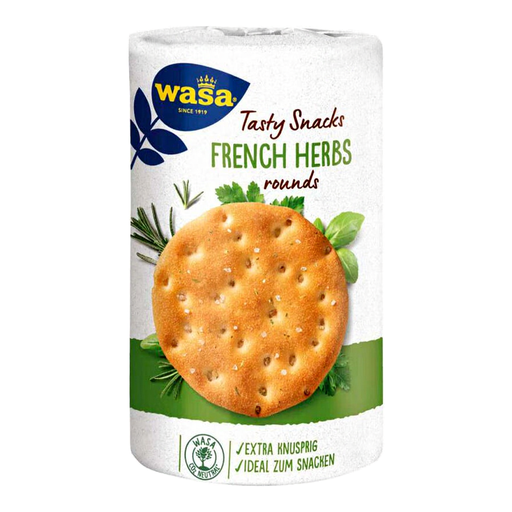 No image available
This 205 g variety is worth considering if you’d prefer a smaller pack than Wasa’s 260 g option. If you need to avoid wheat or sesame, read the ingredients list and allergen information on the specific pack before buying.
 No image available
The 210 g pack gives you another option for adding your own toppings. Follow the storage instructions once the pack is opened; if you need to avoid gluten or sesame, check the ingredients and allergen information for this variety.
 No image available
If you’re planning several packed lunches with sesame crispbread, consider the 250 g pack when choosing how much to buy. If you need to avoid gluten or sesame, the ingredients and allergen information on the specific pack are essential.
No, the rye crispbreads described here contain cereals containing gluten. If you need to avoid gluten, choose a product that is specifically labelled as gluten-free and check the information on its specific pack.
Follow the storage instructions on the pack and seal it well after taking out a serving. The Wasa Wholegrain Rye featured here should be stored in a dry place, away from light.
No, a best-before date is not a use-by date. The German Federal Centre for Nutrition explains that a product’s stated typical qualities are guaranteed up to this date, provided the pack is unopened and has been stored correctly. After that, check the product for any noticeable changes; don’t eat crispbread that is mouldy or clearly spoiled.
No, the ingredients list and a warning about possible traces describe different things. If sesame matters to your choice, read both on the specific pack. The German Food Federation explains that allergenic ingredients must be identified in the ingredients list.