Hosts serving dips and mezze platters
If you’re serving several creamy or strongly flavoured spreads, decide whether you want the crispbread to add its own seed flavour or let the toppings shine.


Choose crispbread for World Food Night based on the dips you’re planning and your guests, rather than relying on the word ‘premium’. Sesame varieties bring their own nutty, seed-like flavour, while plain wholegrain rye works well when you want the toppings to take centre stage – although it has a robust flavour of its own. Before serving, check the ingredients, the stated texture and the allergen information on each specific pack.
If you’re serving several creamy or strongly flavoured spreads, decide whether you want the crispbread to add its own seed flavour or let the toppings shine.
If the grain base and nutritional values matter to you, compare the ingredients list and the figures per 100 g rather than relying on the word ‘premium’.
If guests need to avoid certain ingredients, check the information on each pack carefully, especially for gluten-containing cereals, sesame and possible traces.
First, decide what role you want the crispbread to play alongside the dips. Then you can check the texture, ingredients and suitability for your guests against specific products.
A good choice if: You want the bread to add its own seed flavour alongside strongly flavoured spreads.
Consider: Sesame is an allergen, and other ingredients vary by product. For example, Wasa lists wheat as an ingredient in its Sesame & Wholegrain variety.
A good choice if: You want the toppings to take centre stage and are looking for a rye-forward base.
Consider: Rye has a robust flavour of its own and contains gluten. Precautionary ‘may contain’ statements can also vary between packs.
A good choice if: You’re looking for crispbread made with oats and seeds to serve with creamy spreads.
Consider: Wasa lists rye, wheat ingredients, oats and sesame in its Oats & Sesame variety, and notes that it may contain traces of milk. Check the texture of the specific variety to make sure it’s right for you.
| What to consider | What to check when buying | Who it matters most to |
|---|---|---|
| Flavour with the dips | Seeds and the grain base in the ingredients list; consider whether you want their flavours to come through alongside your planned toppings. | When I’m serving hummus and other strongly flavoured dips, I want to decide whether sesame should add its flavour to the mix. Around 33% of consumers put this first. |
| Texture and serving | Description of the texture; keep crispbread dry until you’re ready to serve more. | I’m serving creamy spreads too, so it matters to me how the bread feels to eat and how easy it is to serve in portions. For around 25% of consumers, this comes first. |
| Ingredients and nutritional values | Main ingredient and wholegrain content; compare nutritional information using the same reference, such as per 100 g. | I want to know which grain is actually the main ingredient and what nutritional values are listed on the pack. Around 25% of consumers make this their top priority. |
| Allergens | Highlighted allergens and possible traces on each specific pack. | If guests need to avoid gluten or sesame, I check the ingredients before serving rather than assuming the product category is suitable. Around 17% of consumers put this check first. |
Sesame can be a deciding factor for some guests. Other ingredients and possible traces also vary from one product to another.
Check the allergen and precautionary ‘may contain’ information on every pack. If needed, serve products separately.
Wholegrain rye can have a robust flavour and contains gluten-containing cereals. The word ‘wholegrain’ also tells you nothing about the texture of a particular variety.
Check the type of grain and the product description separately. If you need gluten-free crispbread, look for the relevant labelling on the specific pack.
A listed variety may not be available at every store. EDEKA notes that its GUT&GÜNSTIG Wholegrain Crispbread may vary between stores.
Check the range at your chosen store, then compare the information with the pack itself when you shop.
Leaving crispbread uncovered next to moist spreads makes it harder to keep its crunch until serving time.
Keep the rest in a dry place and put only a small amount on the platter at a time. Add the spreads just before eating.
Wasa describes different recipes for its crispbreads, including varieties made with wholegrain rye, sesame, or oats and sesame.
Ryvita’s UK product information offers useful comparisons for crispbread with sesame or a mix of seeds and grains.
REWE’s crispbread category features a range of grain and product profiles, giving you a starting point for comparing ingredients.
EDEKA’s GUT&GÜNSTIG Wholegrain Crispbread is an example of a straightforward wholegrain rye recipe.
GOLDÄHREN Wholegrain Crispbread is another specific variety to consider when comparing ingredients and nutritional information.
These crispbreads include a plain wholegrain rye option, as well as varieties with oats or sesame to serve with dips and toppings. What matters is choosing ingredients and a texture that suit your platter and your guests.
 No image available
A rye-forward choice when you want a selection of savoury toppings to take centre stage. Wasa lists 20 g of fibre per 100 g for its wholegrain rye crispbread. Rye contains gluten, so check the specific pack for other allergens and possible traces.
 No image available
A variety made with oats and sesame for serving with spreads. Wasa also lists rye and wheat ingredients in its Oats & Sesame variety, and notes that it may contain traces of milk. If texture or current ingredients will affect your choice, check the specific pack.
 No image available
A sesame variety for when you want the crispbread on your dip platter to add its own seed flavour. Before serving, check the ingredients and allergen information on the pack against your guests’ needs.
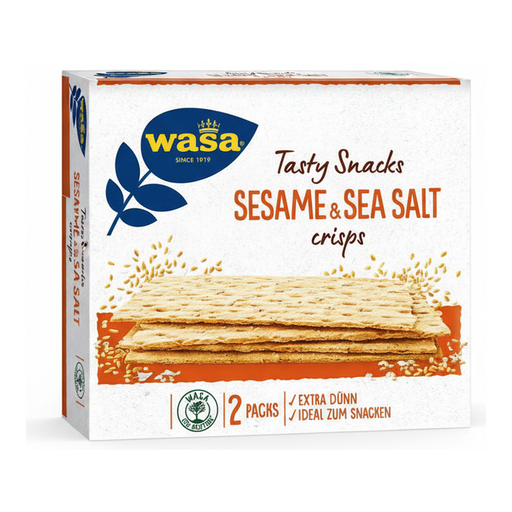 No image available
Round crispbread with sesame and sea salt, ideal for serving individual pieces with spreads. Before serving, check the ingredients and allergen information on the pack, especially if any guests need to avoid sesame or gluten-containing cereals.
Look at the ingredients and qualities that suit your dips and guests, rather than relying on the word ‘premium’. Compare a sesame variety for its distinctive seed flavour with wholegrain rye for a plainer, but robustly flavoured, base. Then check the texture, nutritional information and allergens on the pack.
No. Crispbread can contain rye, wheat or other gluten-containing cereals. Some varieties also contain sesame or list possible traces of other allergens. If guests need to avoid certain ingredients, choose based on the current labelling on the specific pack.
For pre-packed crispbread, check the ingredients list and precautionary ‘may contain’ statements on the pack. According to information from the Federal Ministry of Agriculture, Food and Regional Identity, relevant allergens must be declared. The European Union explains that allergens must be emphasised in the ingredients list. When choosing for guests, don’t rely on a general product description alone.
Keep the rest in a dry place and serve smaller amounts at a time. Add moist dips and spreads to the pieces just before eating, if possible. Burger Knäckebrot Delikatess carries the storage instruction ‘Store in a dry place’.