For an occasional children’s tea time, choose a pack size based on how much is actually eaten, then compare the ingredients, nutritional information and allergens for the specific variety. Smaller crispbread packs mean you don’t have to open as much at once; if wholegrain is a priority, traditional crispbread is another option. It’s also important to consider whether your child can safely chew the hard, crunchy texture.
Who should take care when choosing?
Parents who don’t use much crispbread
If you only prepare children’s tea time now and again, you can choose a pack size to suit how much is actually eaten. For example, EDEKA24 stocks crispbread snacks in 75 g and 125 g packs, as well as larger packs of traditional crispbread.
Families who prefer wholegrain
For a snack, they’re looking for a crunchy cereal base and checking which varieties contain wholegrain. The consumer advice centre recommends choosing wholegrain versions of cereal products for children where possible.
Families who need to check texture or allergens carefully
They need to decide whether their child can safely chew hard pieces and check the ingredients of each variety. The German Federal Institute of Public Health warns that small and/or hard foods can pose a choking risk for toddlers; the German Food Federation explains how allergenic ingredients are highlighted on labels.
What should you look for when buying?
First, consider how much crispbread you’ll actually use and whether the texture is suitable for your child. Then compare the specific varieties by looking at their ingredients and nutritional information.
| Criteria |
What to check |
Who it matters to |
| Pack size |
Compare the pack weight and whether it can be resealed with the amount you plan to eat. |
If we only have crispbread occasionally, I don’t want to open more than we’re likely to eat. The pack size is likely to be the main concern for around 29% of consumers. |
| Wholegrain and nutritional information |
Check for wholegrain in the ingredients list and compare salt and other nutritional information per 100 g. |
If I want wholegrain to be the cereal base of the snack, the specific ingredients matter more to me than the packaging. Around 29% of consumers would put wholegrain and nutritional information first. |
| Ingredients and allergens |
Check the ingredients list, highlighted allergens and any precautionary allergen information on the current pack. |
If certain ingredients matter for my child, I need to check every variety individually; the brand name alone isn’t enough. This check would be the main priority for around 21% of consumers. |
| Texture |
Consider your child’s ability to chew, how hard the pieces are and whether they contain grains or seeds. |
If my child can’t yet safely eat hard, crunchy pieces, the right texture matters more than the variety. This would be the most important criterion for around 21% of consumers. |
Common misconceptions
-
Child-friendly packaging proves it’s suitable
The packaging tells you little about the ingredients, nutritional information or texture. The consumer advice centre points out that children don’t need special foods made just for them.
Compare the specific variety and also consider what you’ll serve with the crispbread.
-
Crunchy means easy for every child to eat
Small and/or hard foods can pose a choking risk for toddlers, as the German Federal Institute of Public Health explains. Grains and seeds also need careful consideration.
Assess your child’s ability to chew, stay with them while they eat and don’t offer hard pieces that aren’t suitable.
-
The smallest pack automatically prevents leftovers
A small pack limits how much you open, but whether any is left over depends on how often and how much is actually eaten.
Choose a pack size to suit your usage and check how to store it once opened.
-
You can check salt and allergens later
This information varies by variety. For example, EDEKA24 lists Wasa Rye Sourdough Crispbread as containing 1.2 g of salt per 100 g; this figure doesn’t apply to other Wasa products.
Before serving, read the nutritional information and the current ingredients list on the pack you’ve bought. If your child has a diagnosed allergy, follow the advice of their healthcare professional.
Brands to consider
Wasa
EDEKA24 lists Wasa crispbread varieties in several pack sizes.
- Listed examples include Crisp Original at 200 g, Wholegrain at 260 g and Rustikal at 275 g.
- Ingredients and salt content vary by variety, so the brand name alone won’t answer these questions.
Leicht & Cross
Crispbread snacks for households looking for a smaller pack rather than a large pack of traditional crispbread.
- EDEKA24 lists several varieties in 125 g packs, including rye and wholegrain.
- Check the ingredients and nutritional information separately for each variety.
Filinchen
Small-format crispbread snacks for occasional use.
- EDEKA24 lists Das Knusper-Brot Original and Ballaststoff in 75 g packs.
- A small pack doesn’t guarantee fewer leftovers or mean the texture will suit every child.
Goldähren
A retailer’s own brand with a wholegrain crispbread variety listed by ALDI SÜD.
- ALDI SÜD lists Goldähren Wholegrain Crispbread in a 250 g pack.
- Always check the label on the specific pack to decide whether its ingredients and allergens are suitable.
Crispbread and crispbread snacks at Joybuy
For occasional children’s tea times, this selection includes a portioned option, smaller packs and larger packs of traditional crispbread. Always compare the specific variety as well as the pack size; for young children, the hard texture is a factor in its own right.
 No image available
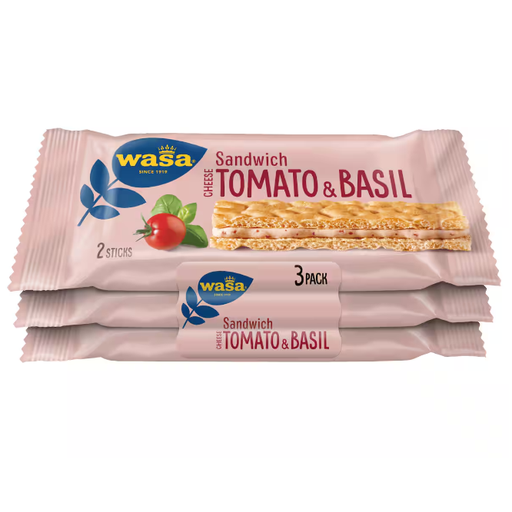
Wasa Crispbread Sandwich Tomato & Basil, 3 × 40 g
The three 40 g portions are worth considering if you don’t want to open the whole pack at once.
This variety is described as a tomato and basil sandwich. Before serving, check the ingredients and make sure your child can safely chew the crunchy texture.
View at Joybuy
 No image available
Schär Gluten-Free Dark Crispbread, 125 g
The 125 g pack is one option if you only eat crispbread snacks occasionally.
If the gluten-free label is important to your choice, check the current pack, along with the ingredients, other allergen information and storage instructions after opening.
View at Joybuy
 No image available
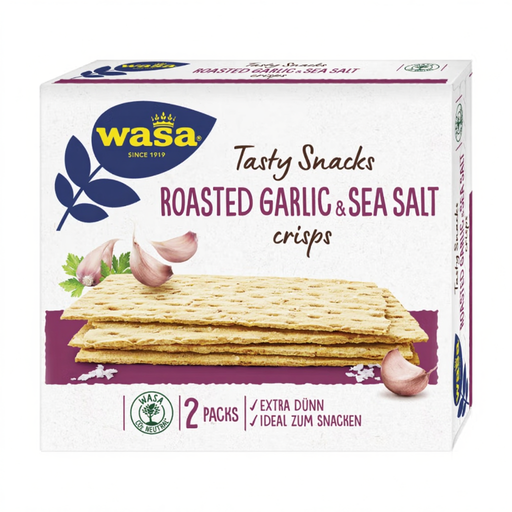
Wasa Round Crispbread Roasted Garlic & Sea Salt, 190 g
This 190 g variety is more suitable if you regularly eat a savoury crispbread.
Garlic and sea salt are part of the variety name. Compare the salt content per 100 g and check that the pack size suits how much you use.
View at Joybuy
 No image available
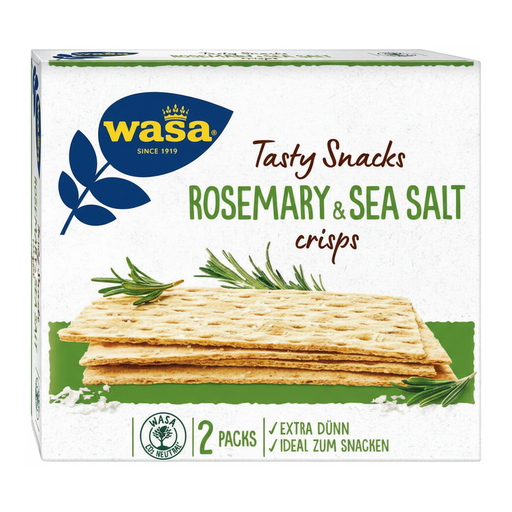
Wasa Round Crispbread Rosemary & Sea Salt, 190 g
The 190 g pack is better suited to households that regularly use a herb-flavoured variety.
Rosemary and sea salt set this variety apart from the garlic one. Compare the ingredients list and salt content per 100 g.
View at Joybuy
 No image available
Wasa Delicate Crisp Oats & Sesame Crispbread, 230 g
The 230 g pack is better suited to regular use than to a one-off children’s tea time.
Oats and sesame are part of the variety name. Check the ingredients and allergen information on the specific pack; crunchy pieces and seeds need particular care with young children.
View at Joybuy
Frequently asked questions
Is crispbread suitable for toddlers at tea time?
Crispbread isn’t suitable for every toddler: what matters is whether your child can safely chew and swallow hard pieces. The German Federal Institute of Public Health warns about the risk of choking on small and/or hard foods. Assess the texture for your child, stay with them while they eat and don’t offer pieces that aren’t suitable.
Should I choose wholegrain crispbread for children?
Wholegrain crispbread is an option if your child can eat that variety safely and you prefer wholegrain. The consumer advice centre recommends choosing wholegrain versions of cereal products for children where possible. Still check the other ingredients, salt content and toppings.
Where can I find out which allergens crispbread contains?
Check the ingredients list and any precautionary allergen information on the current pack. The German Food Federation explains that allergenic ingredients are highlighted in the ingredients list; a voluntary ‘may contain’ statement doesn’t automatically mean that traces are present. If you have a diagnosed allergy, choose products in line with your individual medical advice.
Does a small pack prevent food waste?
A small pack may suit occasional use, but it won’t automatically prevent leftovers. Compare the pack size with how much is actually eaten and check the storage instructions for after opening.


