
Lieferung heute & morgen

Qualitätsgarantie

Willkommens-Angebote freischalten: KOSTENLOSE Lieferung | Bis zu 80 % RABATT | Kostenlose 30-Tage-JoyPlus-Testphase
App herunterladen
Crispy seaweed snacks come in many varieties: thin, roasted seaweed sheets, spicy rolls, fried seaweed chips, or rice crackers with seaweed. When shopping in the UK, it’s not just about origin and flavour. Ingredients, allergens, portion size and packaging all determine whether a product suits your habits.
Seaweed sheets and rolls are light. A flashy packet can make you think there’s more inside, when in fact there may be only 24 to 40 grams. Always compare the net weight and – where relevant – the price per 100 grams. Several individually wrapped portions can be more convenient for on the go, but may cost more per gram.
Many products combine seaweed with rice, wheat flour, prawn powder, palm oil or extensive seasoning blends. A good example is Prawn Crackers: with Hanami Prawn Cracker Nori Seaweed, the main ingredients are wheat flour and prawns; seaweed is part of the seasoning. This product is therefore not the same as roasted seaweed sheets.
‘Spicy’, Wasabi, Sriracha and Tom Yum all represent different flavour profiles. Heat can come from chilli, wasabi seasoning, paprika or Sriracha powder. If you’re after a mild snack, check the ingredients list. For families with children, small, hard or very crunchy pieces should be served with care.
With classic Korean seaweed snacks or Japanese-inspired nori snacks, seaweed often appears high on the ingredients list. Taokaenoi Crispy Seaweed Original contains 85% seaweed according to the product information. Sempio Original Seasoned Laver combines roasted seaweed sheets with corn, sesame and olive oil, plus toasted sesame seeds.
Other Asian snacks are more heavily processed:
The percentage of seaweed helps with comparison, but on its own it doesn’t tell you about taste or personal suitability.
Among the product information provided, you’ll find sesame, soya, wheat, fish, crustaceans, egg, milk and sulphites. Particularly relevant:
Always check the allergy information on the current packaging before buying. Recipes and labelling can change.
Seaweed sheets are light, but added oil can mean relatively high fat content per 100 grams. Bibigo Crispy Seaweed Snack Wasabi lists 569 kcal and 47 grams of fat per 100 grams. With a 45-gram pack, the absolute amount is lower, provided the nutritional information is correctly applied to the product.
For snacks containing rice or batter, carbohydrates are added too. Bin Bin Seaweed Rice Crackers contain 75 grams of carbohydrates per 100 grams according to the product information; the salt content is 0.6 grams. Bin Bin Spicy Seaweed Rice Crackers, on the other hand, list 2.5 grams of salt per 100 grams. Looking at the full nutritional table is therefore more useful than making a blanket judgement based on product names.

Why this product fits the profile: The original seasoning offers a relatively straightforward introduction to crispy seaweed, without Wasabi, Sriracha or Tom Yum flavours.
The 32 g pack size and stated 85% seaweed content make the product form easier to compare.
Original flavour, 32 g pack and, according to the information, no listed allergens; please note possible traces of crustaceans and molluscs.
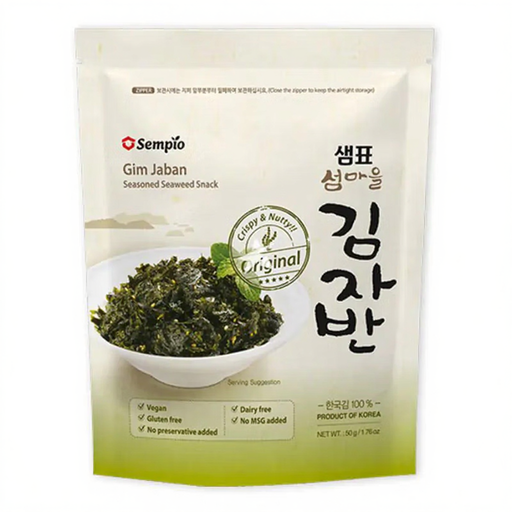
Why this product fits the profile: These Korean roasted seaweed sheets are seasoned with several oils and sesame, and work well as a standalone snack or as a topping.
The ingredients list clearly names the oils used and the toasted sesame seeds; sesame is listed as an allergen.
50 g net weight, crispy sheets and a clearly described Korean seasoning with sesame.
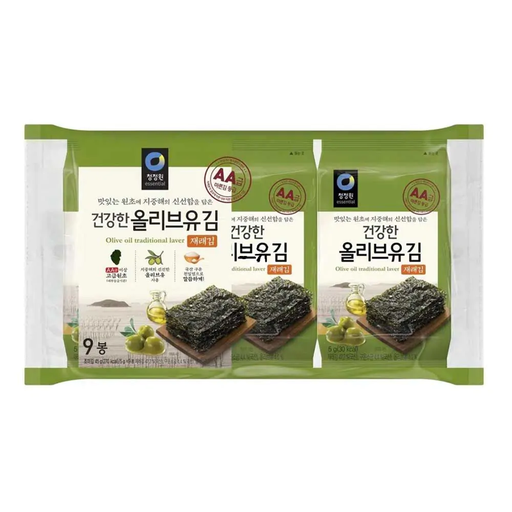
Why this product fits the profile: Nine individual packs totalling 45 g are ideal for lunchboxes, the office or several small snacking moments.
The individual portions limit the amount opened at once and help maintain crispness by avoiding repeated opening of a large pack.
Nine portions, corn and olive oil according to the ingredients, and sesame clearly listed as an allergen.
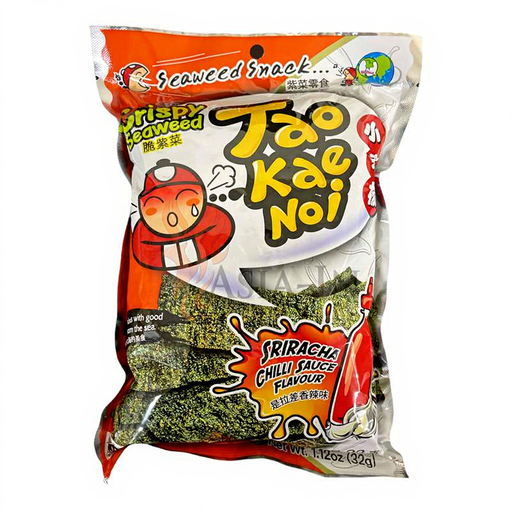
Why this product fits the profile: Sriracha seasoning with chilli, garlic and vinegar is aimed at those looking for a spicy seaweed snack with a tangy note.
The source of heat is described in the ingredients as Sriracha seasoning at 4%, rather than just a vague flavour name.
32 g pack, 85% seaweed according to the product information, and a clearly described Sriracha spice blend; please note possible traces of crustaceans and molluscs.
We’ve put together a full, regularly updated list of products that fully meet these strict selection criteria and the safety regulations in force in the EU.
Once opened, thin seaweed sheets and rolls quickly absorb moisture from the air. So store the pack in a dry, cool place away from direct sunlight. Resealable packaging or airtight containers can help preserve the texture. Also check the best-before date on the packaging.
Seaweed snacks can be eaten on their own or sprinkled over rice, soups, salads and noodles. For varieties containing prawns, fish, sesame or soya, check the ingredients even if you’re only using the snack as a topping.
Not necessarily. Pure roasted seaweed sheets can be made without gluten-containing ingredients. However, seaweed crackers, tempura products and rice crackers often contain wheat or soy sauce with wheat. Always refer to the allergen labelling on the individual pack.
The opened pack should be sealed as tightly as possible and stored in a dry place. Individual portions reduce contact with air and moisture. For some products, it’s recommended to consume the contents soon after opening.
Individually wrapped products such as Bibigo Crispy Seaweed Snack Wasabi in a 3-pack or CHUNG JUNG ONE with nine portions are easy to pop into a bag or lunchbox. Still, check the heat level, allergens and pack size before buying.