
Lieferung heute & morgen

Qualitätsgarantie

Willkommens-Angebote freischalten: KOSTENLOSE Lieferung | Bis zu 80 % RABATT | Kostenlose 30-Tage-JoyPlus-Testphase
App herunterladen
By the Joybuy Product Recommendation Officer
Crocs clogs for children are often bought as lightweight everyday shoes for nursery, the garden, the beach and leisure time. Their simple construction, low weight and easy cleaning are particularly appealing to parents. However, not every model suits every child or situation. If you choose based only on colour or size, you may overlook important details relating to fit, support and care.
Allowing plenty of room for growth may initially seem sensible. However, with children’s clogs, shoes that are significantly too large can cause the heel to slip while walking, making the child more likely to trip. Size should therefore not be selected solely according to age. The measured foot length, from the heel to the longest toe, is the key factor.
Some product details recommend choosing the next size up if your child is between sizes. Even so, this should be checked against the child’s actual foot shape and the intended fit of the model. The size chart for the individual listing is the deciding factor.
The openings on Crocs Classic Clog Kids and similar models support air circulation and can allow water to drain away. However, they do not make the shoe a waterproof boot. For puddles, heavy rain or spending longer periods in water, closed wellies or water shoes are usually more suitable.
Children’s clogs are suitable for many everyday situations, such as short walks, indoors, in the garden or for relaxed play. For longer hikes, running or activities involving significant lateral strain, they are not automatically the right choice. The adjustable heel strap can improve the fit, but it does not replace a properly fitting, closed sports-shoe design.
Several of the Crocs children’s shoes described here are made from Croslite or a similar EVA-based material. Such materials are described in the product details as lightweight, moulded and easy to care for. The low weight can be practical for younger children, as the shoe places less strain on them when putting it on and taking it off.
It is important to distinguish between material details and marketing claims: a lightweight construction alone says nothing about individual comfort. Check whether the inner shape suits the width of the foot and whether the foot slides forwards inside the shoe.
Children’s shoes with heel straps offer two wearing positions: depending on the model, the strap can be worn behind the heel or folded forwards. For active play, the position behind the heel is generally the more suitable setting, provided it is comfortable and does not dig in.
When trying them on, check the following:
Some Classic models are described in the product information as having a non-marking, slip-resistant outsole. This does not mean they are guaranteed to prevent slipping on every surface. Wet tiles, smooth sports-hall floors and damp wood can still be slippery.
For everyday use, slip-resistant children’s clogs with a well-profiled sole area are a sensible option. However, their suitability depends on the surface, wear and tear, and the child’s walking habits.
Washable children’s shoes are practical for family life, but “easy to clean” does not automatically mean machine washable. For the Crocs models mentioned, the relevant product page may recommend cleaning with water and soap or with a damp cloth. Several product details advise against using a washing machine, bleach, an iron or a tumble dryer.
Gentle care for the material therefore involves:
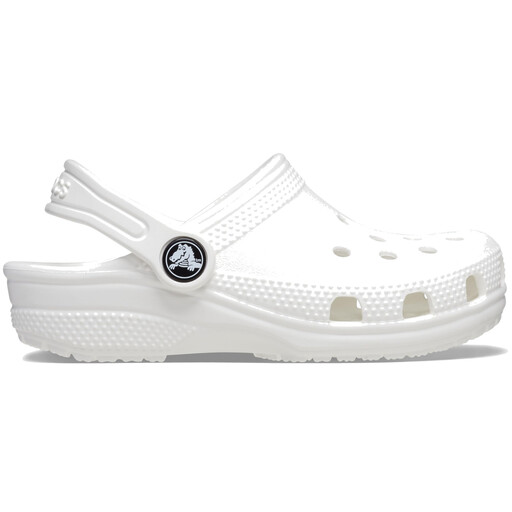
Why this product suits this profile: The classic white design works well with a wide range of outfits. The stated ventilation, adjustable heel strap and sizes ranging from toddler to Big Kid cover typical everyday situations.
The adjustable strap position helps reduce a loose fit. The product details also mention easy cleaning with a damp cloth.
Lightweight Croslite material, ventilation openings and a non-marking, slip-resistant outsole according to the product description.
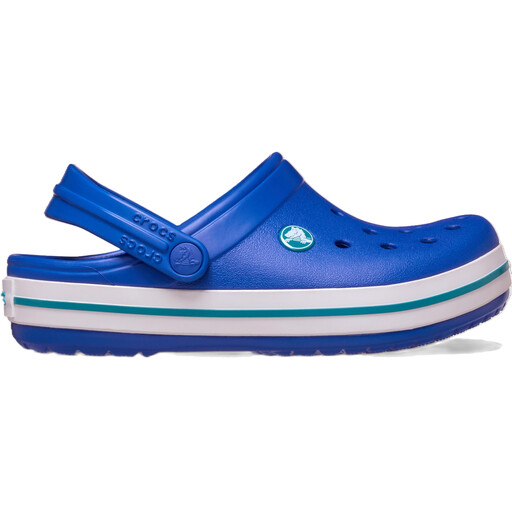
Why this product suits this profile: The blue Crocband design combines a sporty look with a contoured footbed and an adjustable strap construction. It suits families who pay close attention to material details and a more secure fit.
The size chart and measuring from heel to toe help prevent choosing a size based solely on age. The care instructions recommend cleaning with soap and water, followed by air drying.
Croslite construction, a contoured footbed and Jibbitz openings for personalisation.
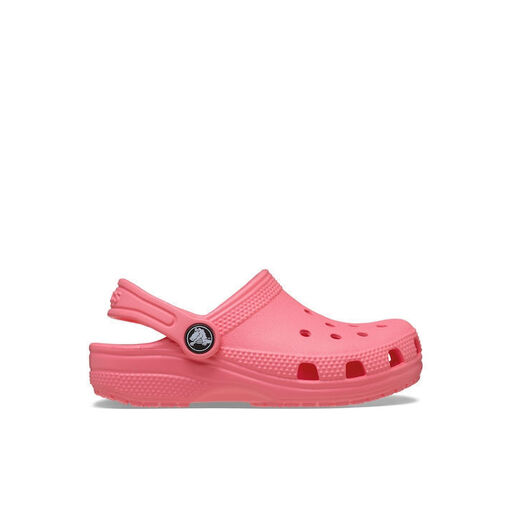
Why this product suits this profile: The striking colour makes it easier to identify in busy family life. The product description mentions 26 Jibbitz openings, ventilation ports and a design intended for indoor and outdoor use.
The care instructions advise against machine washing and direct heat. This helps prevent the material from becoming misshapen through unsuitable cleaning.
100% EVA for the upper and outsole according to the product details, a pivoting heel strap and sizes from C2 to J6.
Crocs white children’s shoes are easy to pair with different outfits, but they show dirt more quickly. Blue or navy Crocs for children tend to disguise signs of wear and pair well with sporty clothing. Black Crocs for children have a discreet look and are practical for everyday use at nursery. Crocs in Guava and Lemon are aimed at families who prefer a bolder choice of colour.
With Crocs with Jibbitz, small charms should be securely attached. For toddlers, also bear in mind that loose or removable small parts should not be used without supervision. The actual fit should always be checked on the child’s foot, as age recommendations are only a guide.
We have put together a complete, regularly updated list of products that fully meet these strict selection criteria and the safety regulations applicable in the EU.
For indoor use, short walks and free play, children’s clogs can be suitable if they fit correctly and the heel strap is used. For outings, longer walks or sporting activities, check whether a closed children’s shoe with greater support would be more suitable. The requirements of the relevant childcare provider should also be taken into account.
Measure both feet while standing, from the heel to the longest toe, and use the size chart provided for the product. Do not rely solely on age or the previous shoe size. If the feet are different lengths, use the measurements for the larger foot. Sizes may vary depending on the model and sizing system.
Their lifespan depends on how often they are worn, the surface they are used on, care and the child’s growth. Regularly check the sole, heel strap and material for cracks or significant wear. Once the shoe no longer fits securely or has become damaged, it should be replaced. Suitable care with water, mild soap or a damp cloth can help maintain its practicality for everyday use.