
Lieferung heute & morgen

Qualitätsgarantie

Willkommens-Angebote freischalten: KOSTENLOSE Lieferung | Bis zu 80 % RABATT | Kostenlose 30-Tage-JoyPlus-Testphase
App herunterladen
Crocs clogs for children are practical for many families: children can put them on and take them off independently, dirty shoes can be cleaned quickly and the ventilation holes help create a more breathable feel. However, not every model is suitable for every situation. Choosing based solely on colour or price often means overlooking important details.
1. Buying shoes that are too large to allow more room for growth:
Choosing a size larger may initially seem economical, but it can create too much movement inside the shoe when walking. The heel strap helps with stability, but it cannot replace the correct length. Crocs sizes are often shown in US sizing on the sole. Parents should therefore measure the child’s foot and compare it with the relevant size chart.
2. Confusing slip resistance with suitability for a particular use:
A treaded or described-as-slip-resistant sole can be helpful in everyday situations. On wet tiles, smooth indoor flooring or muddy ground, however, actual grip still depends on the surface, sole tread and degree of wear. Children’s clogs are not automatically suitable for every sports or water-based activity.
3. Ignoring care instructions:
EVA or Croslite material is easy to care for, but high temperatures can alter its shape. The models mentioned are not designed for washing machines, tumble dryers, irons or direct heat sources. Soapy water or a damp cloth, followed by air drying, is the more practical approach.
Depending on the product details, the Crocs children’s shoes featured are made from moulded Croslite or EVA. The material is lightweight, flexible and easy to clean. These qualities are practical for nursery, home, the garden and short journeys. At the same time, the shoe should not be viewed as a replacement for every type of enclosed everyday footwear: in cold weather, heavy rain or on longer walks, other designs may be more suitable.
A rotating heel strap can be folded forwards or worn behind the heel. This allows you to switch between easy entry and additional support. For active children, it is important that the heel does not continually slip out of the shoe while walking. Check the following after putting the shoes on:
For an in-between length, several product descriptions recommend choosing the next size up. This recommendation should still be checked against the specific size chart.
The openings on Classic Clog models promote air circulation and can allow water to drain away. They also serve as attachment points for Jibbitz charms. The soles on the Classic models are described as non-marking and slip-resistant. The Crocband Clog product description also highlights a contoured footbed and a treaded outsole.
For the models mentioned, care simply involves using a damp cloth or soapy water. The shoes should then be allowed to dry completely away from direct heat. This reduces stress on the material and helps preserve the fit.
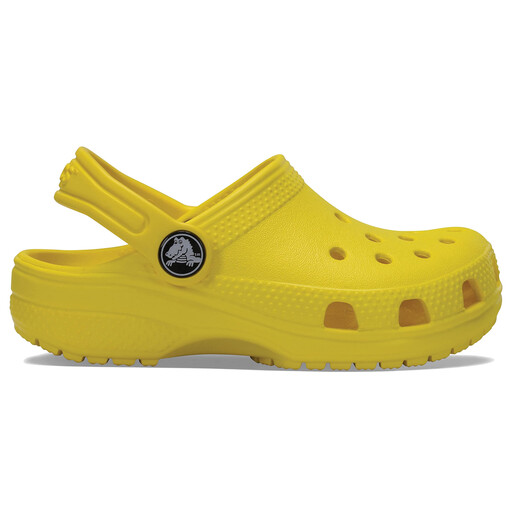
Why this product suits this profile: The bright, unisex colour is easy to identify, while the Classic design is suitable for nursery, home and the playground. Its low weight and easy slip-on design help children put the shoes on independently.
The size chart should be consulted before buying; the ventilation holes and rotating strap are clearly specified rather than relying solely on general comfort claims.
Lightweight Croslite material, ventilation holes, a non-marking sole described as slip-resistant, and cleaning with a damp cloth.
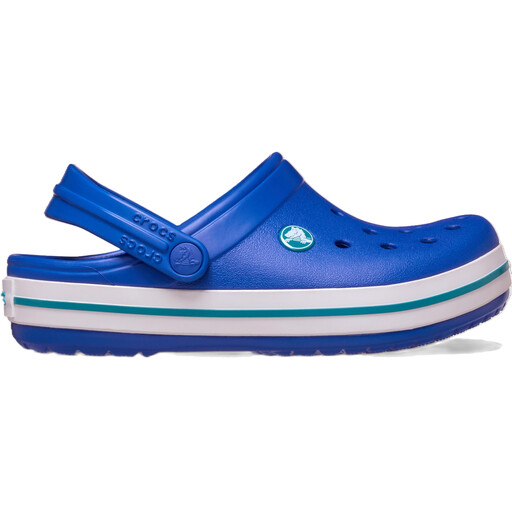
Why this product suits this profile: For parents who value additional design features alongside easy care, this model combines sporty stripes, a contoured footbed and a rotating heel strap.
The product details specify the material, care instructions, size range and measuring method. This makes it easier to base your choice on verifiable information rather than appearance alone.
Croslite material on the upper, footbed and sole, a contoured footbed and sole shape, an adjustable strap, and cleaning with water and soap.
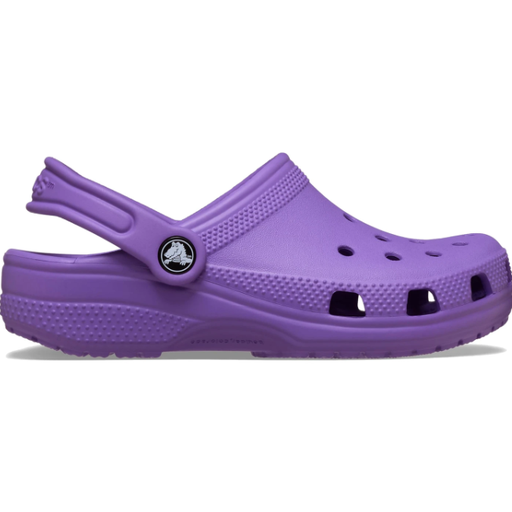
Why this product suits this profile: The wide size range from EU 17/18 to 38/39 covers various age groups. This makes the model appealing to families who regularly use children’s clogs in the garden, during leisure time and indoors.
The US size shown on the sole should not be equated with the EU size without checking. Measuring the foot and using the size chart helps prevent purchases based solely on age indications.
A wide choice of children’s sizes, rotating strap, ventilation holes, an outsole described as slip-resistant, and cleaning with a damp cloth.
We have put together a complete, regularly updated list of products that fully meet these strict selection criteria and the safety regulations applicable in the EU.
It is best to measure the foot while standing, from the heel to the longest toe. The two feet may be different lengths; use the larger measurement as your guide. Compare this result with the size chart for the specific product. Depending on the model, sizes range from toddler sizes to Big Kids sizes such as J6. Age guidance is for orientation only.
The intended use also plays a part: for a relaxed fit at home, the strap can be folded forwards. When playing outdoors, it should sit behind the heel. Too much additional room can reduce stability, while a shoe that is too short can cause pressure points.
Children’s clogs can be practical for many everyday nursery situations, particularly when easy on-and-off and simple cleaning are important. However, check the nursery’s requirements. Different footwear may be required for longer walks, sports activities or cold weather.
Their lifespan depends on how often they are worn, the surfaces they are used on, care and the child’s growth. Regularly check the sole, strap and fit. Clearly worn tread, damaged straps or a shoe that has become too small are signs that it should be replaced. It is not possible to give a reliable general lifespan.
According to the product details, the ventilation holes on Classic Clog and Crocband models are designed for Jibbitz charms. Make sure that attached elements do not press against the foot, cannot come loose and are not accessible as potential choking hazards to young children.