
Lieferung heute & morgen

Qualitätsgarantie

Willkommens-Angebote freischalten: KOSTENLOSE Lieferung | Bis zu 80 % RABATT | Kostenlose 30-Tage-JoyPlus-Testphase
App herunterladen
Crocs kids’ clogs are a practical alternative to traditional children’s shoes for many families. They are quick to put on, lightweight and often used in the garden, at home, on the beach or during leisure time. However, not every clog is suitable for every situation. A wide choice of colours or a well-known brand name cannot replace the right size and a practical design.
This buying guide from the Joybuy Product Recommendation Officer helps you avoid common buying mistakes and choose suitable models based on clear, easy-to-understand criteria.
A common mistake is to buy kids’ clogs significantly larger so they can be worn for longer. However, too much extra room can cause the foot to slide inside the shoe or leave the heel without sufficient support. This is particularly problematic for active children.
It is better to measure the foot from the back of the heel to the longest toe and compare the result with the size chart for the specific model. With Crocs, you should also note that US sizes are often shown on the sole. The equivalent EU size should therefore not be estimated solely based on the child’s age.
Ventilation holes can improve airflow and allow water to drain away more quickly. However, this does not automatically make a clog suitable for extended play in water or on slippery surfaces. The sole pattern, level of support and fit should be checked for each intended use.
Lightweight children’s shoes made from EVA or Croslite-like materials are usually easy to clean. However, direct heat, strong sunlight, washing machines and tumble dryers can cause deformation. The care instructions for the specific product are therefore more important than general advertising claims.
Many kids’ clogs are made from moulded EVA or Croslite material. The product details should clearly state which materials are used for the upper and outsole. A low weight can make it easier for children to put on and take off their shoes independently. At the same time, the construction should retain its shape sufficiently and not press against the sides of the foot.
The Crocs models in this selection are described as being made with lightweight, hard-wearing Croslite material or EVA. This makes them suitable for the garden, home and short journeys. For longer walks or formal occasions, traditional closed children’s shoes are often more practical.
A rotating heel strap can switch between an open slip-on fit and a more secure way of wearing the shoe. Before buying, parents should check that the strap rests against the heel without pressing. Width across the forefoot is also important: ventilation holes and a roomy fit will not suit every foot equally well.
For indoor areas, garden paths and playgrounds, a pronounced tread and a non-marking sole are practical features. Terms such as non-slip kids’ shoes should nevertheless always be considered in relation to the surface. A sole may provide good grip on dry ground, while wet tiles or smooth stones present different challenges.
When children are using them near water, they should never be left unsupervised solely because of the shoe description. Clogs do not replace supervision and are not automatically classified as swimming shoes or protective footwear.
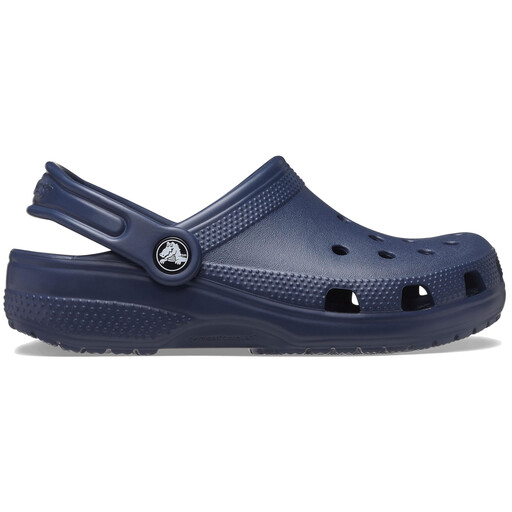
Why this product suits the profile: The unisex navy model is easy to pair with a range of everyday outfits and, according to the product details, is available for toddlers through to school-age children. The ventilation holes and rotating strap support flexible everyday use.
The size chart lists heel-to-toe lengths. This makes it easier to choose based on the child’s actual foot length rather than age alone.
Lightweight EVA upper, non-marking sole and easy cleaning with a damp cloth.
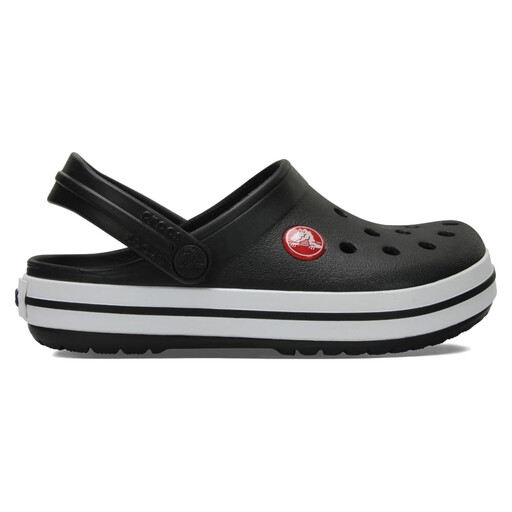
Why this product suits the profile: The Crocband Clog adds a sporty stripe to the classic shape. Its contoured footbed, flexible construction and pivoting strap will appeal to families who value clearly specified features.
Fit should be determined using the measured heel-to-toe length, not by adding a large allowance for growth. The shoes are designed to be cleaned with water and soap.
Lightweight Croslite material, contoured footbed and adjustable strap.
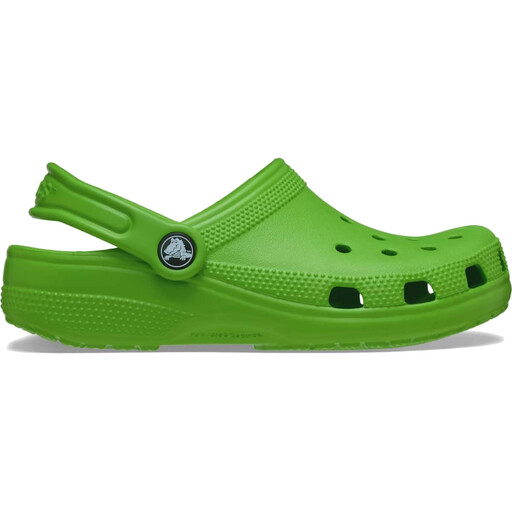
Why this product suits the profile: The striking green colour is easy to spot in the garden or on day trips. The ventilation holes, heel strap and described non-marking outsole support a wide range of everyday uses.
According to the product details, the shoes should be cleaned with a damp cloth. Direct heat should be avoided so that the moulded material retains its shape.
Ventilation holes, adjustable strap and easy-care EVA construction.
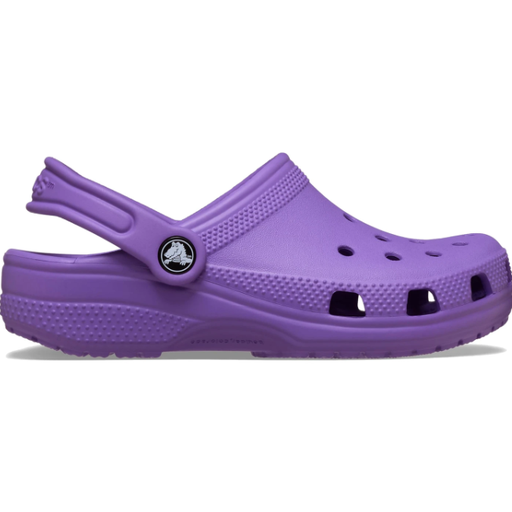
Why this product suits the profile: Children can customise the ventilation holes with Jibbitz charms. The unisex model is available in sizes for toddlers through to older children.
Personalisation is an added extra and does not replace checking the size, strap fit and sole tread. A damp cloth is recommended for care.
Customisable ventilation holes, lightweight material and adjustable heel strap.
Crocs Classic Clog Kids and Crocs Crocband Clog Kids are particularly suitable for easy journeys, the garden, leisure time and indoor use. For longer distances, closed trainers may be more practical. Alternatives include Skechers kids’ shoes, PUMA kids’ sandals or Nike kids’ shoes, for example. They differ in their upper material, fastening, footbed and intended use.
The categories girls’ shoes and boys’ shoes should not lead to an unnecessarily narrow choice either: many clogs are unisex. Fit, size, surface and the planned duration of wear are what matter—not the colour name.
We have put together a complete, regularly updated list of products that fully meet these strict selection criteria and the safety regulations applicable in the EU.
Measure both feet while standing and use the longer measurement. Compare it with the size chart for the specific model. If your child falls between two sizes, follow the manufacturer’s guidance; buying a shoe that is clearly too large is not a sensible allowance for growth.
They can be practical for short journeys, the garden, leisure time and many indoor areas. For longer walks, sporting activities or uneven ground, parents should check whether a closed children’s shoe with a more secure fit would be more suitable.
Their lifespan depends on how often they are worn, the surfaces they are used on, care and the child’s growth. Visible cracks, a heavily worn sole, a strap that remains loose or pressure marks are all signs that the shoes should be replaced. Follow the relevant manufacturer’s care instructions and avoid direct heat and machine washing unless they are expressly approved.