People with a regular commute
If you only need one croissant and already pass an in-store bakery, there’s no need to plan for a larger pack. ALDI SÜD sells its butter croissant individually at participating MEINE-BACKWELT stores.


For a regular weekday breakfast, a single croissant from an in-store bakery is a practical choice if the shop is already on your way. If you’re planning several breakfasts and have access to an oven in the morning, consider ready-to-bake croissants. Either way, take account of how many you actually need, how long they take to prepare and the information provided for the specific product.
If you only need one croissant and already pass an in-store bakery, there’s no need to plan for a larger pack. ALDI SÜD sells its butter croissant individually at participating MEINE-BACKWELT stores.
If you’re preparing several breakfasts, consider ready-to-bake croissant dough. The dough described by EDEKA makes six croissants and, according to the instructions, takes 12 to 15 minutes to bake.
If you want to pick up a single croissant to eat for breakfast straight away, you could choose a nearby bakery. Kamps’ specific range varies by location.
First decide whether you need a single croissant straight away or want to prepare several portions. Then consider the journey to the shop, the preparation time and the details of the option you’ve chosen.
| Criterion | What to check | Who it matters to |
|---|---|---|
| Right quantity | Compare individual croissants with the number in a pack, and think about how many you’ll actually use. | I only need one croissant on weekdays and don’t want to plan for leftovers. For around 42% of consumers, getting the right quantity in a single item is the main priority. |
| Time in the morning | Allow for the journey to the shop or the baking time; EDEKA’s croissant dough takes 12 to 15 minutes to bake, according to the instructions. | If I have very little time in the morning, I want to pick up a croissant without having to prepare it. Around 33% of consumers prioritise this above all. |
| Planning and ingredients | Check the pack size and preparation instructions, as well as the ingredients and allergens for the specific option if needed. | I want to plan portions for several breakfasts and know in advance which ingredients are used. For around 25% of consumers, this is the main priority. |
EDEKA’s croissant dough contains margarine, while REWE lists butter in its French butter croissant. Filled options contain additional ingredients, so the product name alone doesn’t tell you everything you need to know.
For packaged products, read the ingredients and allergen information on the packaging. For loose products, ask for allergen information at the in-store bakery or counter.
In-store bakeries, supermarkets and bakeries suit different shopping habits. What matters is the specific croissant and whether it’s available locally.
In-store bakery offering individual croissants to take away.
A range of baked goods available in Lidl stores, including butter croissants.
A supermarket range that includes ready-to-bake croissant dough and filled options.
A supermarket range with a variety of croissant products.
A bakery chain selling individual butter croissants.
This selection includes two croissants to prepare at home and a multipack of filled croissants. Check how each option should be stored and prepared before eating.
 No image available
This pack of four is a good choice if you’re planning several breakfasts and have time to prepare them at home. Check the preparation and allergen information on the packaging before eating.
 No image available
This single croissant is ideal for a planned breakfast when you have time to prepare it. Follow the storage and preparation instructions on the packaging.
 No image available
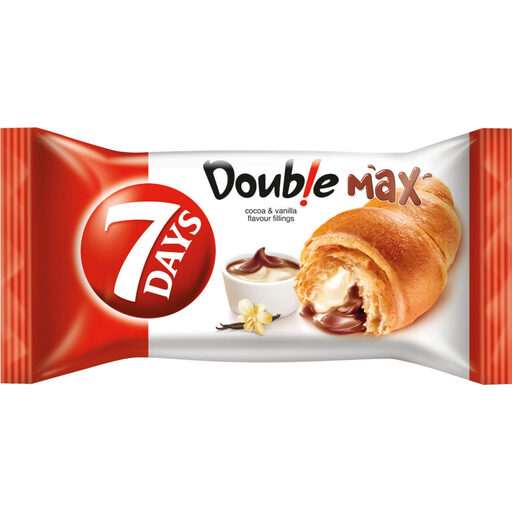
You can spread the four filled croissants across several breakfasts. Check the ingredients, allergens and storage and preparation instructions on the packaging before adding them to your plans.
Start by comparing the number you actually need, not just the pack size. If you choose ready-to-bake croissants, remember to allow time to prepare them on weekdays too.
They’re a good choice if you can plan the portions in advance and use an oven in the morning. The dough described by EDEKA makes six croissants, takes 12 to 15 minutes to bake according to the instructions, and isn’t suitable for eating raw.
Yes. As the Verbraucherzentrale explains, suppliers in Germany must also provide information about the 14 most common allergens for loose products. Ask for details about the specific croissant at the in-store bakery or counter. For packaged products, check the label on the packaging.
No, ingredients vary from product to product. EDEKA lists margarine in its GUT&GÜNSTIG croissant dough, while REWE says one French butter croissant option contains 23% butter. So check the ingredients for the option you’re planning to buy.