If you want breakfast without any preparation, you can buy a croissant at the bakery counter. If you want several warm croissants ready at a set time, a bake-at-home option could be a good fit. A sweet filling or a gluten-free label answers different questions from how the croissant is prepared. Check the ingredients, allergens and, where relevant, baking instructions for each specific variety.
Which shopping option suits you
Breakfast without the baking time
If you want breakfast straight away, a bakery counter or in-store bakery is one place to try. Lidl and ALDI SÜD say their bakery ranges are baked off several times a day; whether the croissant you want is available will depend on the store.
Hosts planning breakfast in advance
If you want to serve several warm croissants, you can buy a pack from the freezer section in advance. Make sure you have enough oven space and allow for the preparation time of your chosen variety.
Shoppers with specific ingredient requirements
If you need to avoid certain ingredients or allergens, check the information for the specific croissant. The Federal Ministry of Agriculture, Food and Home Affairs notes that allergen information is also required for unpackaged foods.
What to look for when buying
First, decide when you want to eat the croissants. Then work out how many you need and check any ingredient or allergen requirements. A filling is an extra flavour choice, not a substitute for these checks.
| Criterion |
What to check when buying |
Who it matters to |
| Ready to eat straight away |
Check whether the variety you want is currently available at the bakery counter, and ask about allergens if you’re buying loose items. |
If I want breakfast without waiting for the oven, I’d like to choose a croissant at the counter and eat it straight away. For around 36% of consumers, being able to eat it immediately is the top priority. |
| A planned quantity of warm croissants |
Compare the pack size with the oven space you’ll need and the baking instructions for your chosen frozen option. |
If I want to serve several croissants warm at the same time, I need the right quantity and enough time to bake them. Around 29% of consumers prioritise this kind of planning. |
| Ingredients and allergens |
Read the information on the actual pack; if you’re buying loose items, ask for details about the specific variety. |
If I need to avoid certain ingredients, the recipe for each croissant determines what I choose. For around 21% of consumers, this is the most important buying criterion. |
| Sweet filling |
Check the type of filling, as well as the ingredients, allergens and nutritional information per 100 g. |
If you’re looking for a deliberately sweet breakfast pastry, you’ll want something different from a croissant to fill with savoury toppings. A filling is the priority for around 14% of consumers. |
Common misconceptions
-
Assuming the shape tells you whether it contains butter or allergens
A croissant’s appearance doesn’t reliably tell you which ingredients it contains.
Check the product name, ingredients list and allergen information. If you’re buying loose items, ask which variety is on offer.
-
Treating a filled croissant like an unfilled one
A filling changes the ingredients and may contain additional allergens. The hazelnut and nougat croissant described by REWE contains hazelnuts, milk and egg.
Check the filling separately. If you want to add savoury toppings, choose an unfilled variety.
-
Using the same instructions for every bake-at-home croissant
Defrosting, oven temperature and baking time depend on the product. A general cooking time won’t apply to every pack.
Plan according to the pack you’ve bought and follow its storage instructions too.
-
Assuming an online listing means every store will have the product
EDEKA notes that its butter croissant may not be available in every store, while ALDI SÜD says promotional products are available in limited quantities.
If you need croissants for several people, check what your store has available and have an alternative in mind.
Retailers and brands to consider
REWE
REWE lists several documented croissant varieties, including a frozen pastry with a hazelnut and nougat filling and a packaged croissant from the REWE frei von range.
- The product information helps you tell the different varieties apart by filling, labelling and preparation method.
- Check the information on the specific pack when you buy, as the varieties meet different ingredient requirements.
EDEKA
EDEKA describes a frozen butter croissant to bake at home.
- For this product, EDEKA specifies 24% butter and provides product-specific baking instructions.
- EDEKA says availability may vary by store. The pack you buy is the source to check for ingredients and preparation instructions.
Lidl
Lidl features croissants as part of its in-store bakery range under “Our Bread”.
- Lidl says its bakery range is freshly baked several times a day.
- If you have ingredient or allergen requirements, ask in store for information about the croissant variety.
ALDI SÜD
ALDI SÜD describes croissants from its in-store bakery as well as a frozen bake-at-home option.
- These two options let you choose between buying a croissant at the bakery counter and baking one at home.
- For its listed bake-at-home pack, ALDI SÜD notes that nutritional information may vary between suppliers. Check the pack you buy.
Croissants for a planned or sweet breakfast at Joybuy
This selection includes croissants to bake at home and sweet varieties. When planning breakfast, the pack size, preparation instructions and ingredients for each variety are what matter.
 Image unavailable
Nutella Croissant, pack of 4, 340 g
For a planned breakfast with several sweet croissants; the pack contains four, weighing 340 g in total.
The croissants need to be baked before eating. Follow the baking and allergen information on the pack.
View at Joybuy
 Image unavailable
Bakery Village Hongbeicun Danish Croissant, 85 g
For a breakfast where you have time to defrost and then bake the croissant; the product name gives its weight as 85 g.
If you’re buying for several people, check how many are included in the pack and follow the defrosting and baking instructions.
View at Joybuy
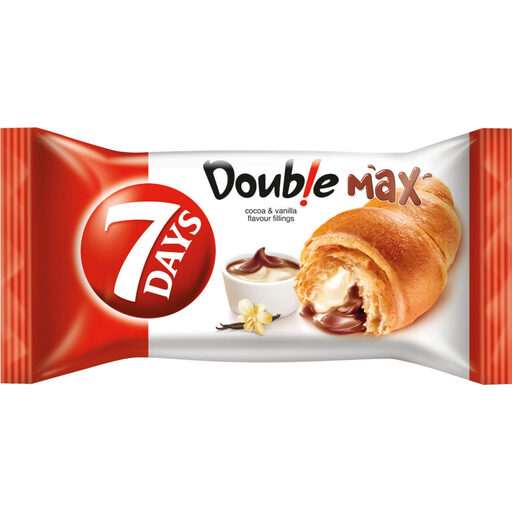 Image unavailable
7days Crossiant Cacao Vanilla, 4 × 60 g
A sweet option for breakfast; the product name specifies four pieces at 60 g each.
Before buying, check the pack for ingredient and allergen information, and read the serving instructions before breakfast.
View at Joybuy
Frequently asked questions
Is allergen information available for croissants from the bakery counter?
Yes. Allergen information is also required for unpackaged food in Germany, as explained by the Federal Ministry of Agriculture, Food and Home Affairs. Ask about the specific croissant variety, as ingredients can differ between varieties.
Can you tell from a croissant’s shape whether it contains butter?
No, its shape isn’t a reliable guide to the ingredients. Check the name and ingredients list on packaged croissants, or ask for details at the bakery counter.
How long do frozen croissants need in the oven?
Follow the instructions on the pack you’ve bought. For its documented frozen butter croissant, EDEKA specifies 18–20 minutes at 180 °C using conventional top and bottom heat, or 170 °C using a fan oven. These instructions don’t automatically apply to other products.
Is a gluten-free croissant suitable if you have another allergy?
No, a “gluten-free” label doesn’t answer every question about allergens. The REWE frei von croissant described by REWE contains sweet lupin flour and carries a warning that it may contain traces of other allergens. Check the labelling on the actual pack against your requirements.


