
Lieferung heute & morgen

Qualitätsgarantie

Willkommens-Angebote freischalten: KOSTENLOSE Lieferung | Bis zu 80 % RABATT | Kostenlose 30-Tage-JoyPlus-Testphase
App herunterladen
A crossbody phone lanyard is a practical solution for keeping your smartphone secure and accessible in your daily life. However, the market is flooded with products of widely varying quality. Many buyers only discover after a short time that their new accessory has flaws that significantly limit its usefulness or even endanger their expensive smartphone. This guide highlights the common pitfalls to avoid and the key features to look for when making your choice.
Before you decide on a model, it's helpful to know the most common defects that often only become apparent with use:
To avoid a bad purchase, you should check three core factors. These are crucial in determining the durability, security, and comfort of your phone lanyard.
The construction of the cord is decisive for its durability. A robust phone strap is typically made from densely woven materials like polyester or nylon. Pay attention to the diameter of the cord: models with a diameter of 7 to 8 mm often offer greater stability and feel more comfortable against the body than very thin versions. A reinforced core inside the cord, as found in some high-quality models, further increases its tear resistance.
An adjustable phone lanyard is a must-have for flexible use. The ability to adjust the length allows you to position the smartphone optimally depending on the situation and your clothing (e.g., over a thick winter jacket). Worn as a crossbody phone chain, the maximum length should be sufficient to place the device comfortably at hip level. Check the adjustment mechanism: a solid metal buckle is often more durable here than simple plastic clips.
The fastening system consists of two parts: the pad (also known as a "tether tab" or "hanging piece") and the carabiners.
Instead of presenting an overwhelming list, we have selected models that are suitable for specific user profiles and meet the quality criteria mentioned.
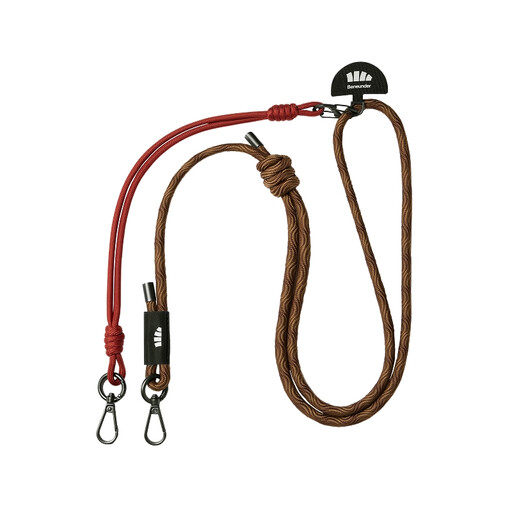
Why This Fits Their Persona: Ideal for users seeking a functional and stylistically neutral solution. The brown tone complements most outfits and occasions, from work to leisure.
The 8 mm thick cord with a reinforced core prevents material fatigue. The buckle, made from a high-hardness zinc alloy, prevents accidental detachment.
Infinitely adjustable length up to approx. 179 cm; lightweight material for superior comfort.
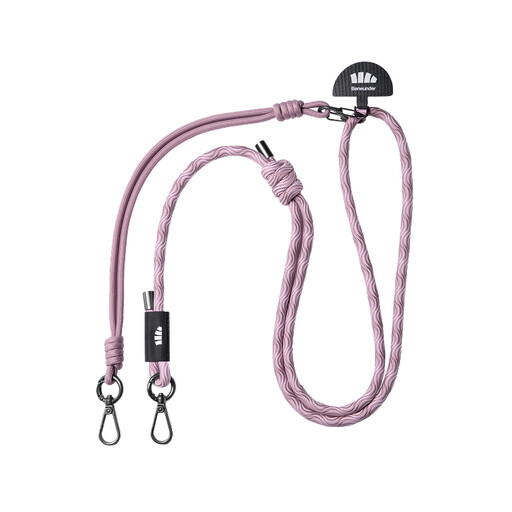
Why This Fits Their Persona: For anyone who sees their phone lanyard as a fashion statement. The bold colour adds a deliberate accent and elevates simple outfits.
The attachment pad, made of Oxford fabric with a TPU bond, is resistant to tearing and provides a secure hold, even with frequent use.
Combines a striking design with the same robust materials and high functionality of the base model.
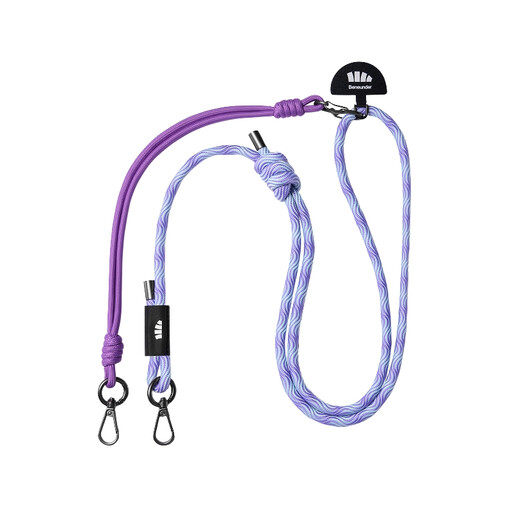
Why This Fits Their Persona: Perfect for users who prefer a subtle yet individual colour. The purple hue is elegant and stands out from standard colours without being obtrusive.
The multifunctional design and high-quality components ensure a long lifespan, avoiding the typical weak points of cheaper models.
Offers the same high durability and flexibility as the other colour variants in a stylish, understated shade.
We have compiled a complete, real-time list of products that fully satisfy these strict selection criteria and UK safety regulations.
A phone lanyard with a pad system is compatible with most standard smartphone cases that are closed at the bottom and have a cut-out for the charging port. They are not suitable for cases that are completely open at the bottom, as the pad will have no support.
Most cords made of polyester or nylon can be cleaned with a damp cloth and mild soap if necessary. Allow the cord to air dry completely afterwards. Avoid harsh cleaning agents or washing it in a machine, as this can damage the materials and metal parts.
The durability of the pad depends heavily on the material. Models made of thin plastic can break quickly. Pads made from a reinforced fabric composite (e.g., with TPU) are significantly more durable. It is still recommended to regularly inspect the pad for signs of wear, such as small tears at the eyelet, and to replace it if necessary.