
Lieferung heute & morgen

Qualitätsgarantie

Willkommens-Angebote freischalten: KOSTENLOSE Lieferung | Bis zu 80 % RABATT | Kostenlose 30-Tage-JoyPlus-Testphase
App herunterladen
A crystal growing kit promises a fascinating journey into the world of chemistry and geology, right in your child's room. The idea of watching sparkling crystals grow from a simple solution excites inquisitive children and offers a welcome break from digital screens. But the reality after purchase often looks different: initial enthusiasm quickly gives way to frustration when the experiment fails or the kit is incomplete.
As a Joybuy Product Recommendation Officer, I frequently see where the common pitfalls lie. Before you choose a gift for kids aged 8 and up, you should know the three most common problems that cause a promising science project to fail.
To avoid these disappointments, you shouldn't base your purchase decision on packaging design alone. Instead, focus on three objective criteria that define a high-quality crystal growing kit.
A good set should offer an "all-in-one" experience. Before buying, check if all the necessary materials are included. This includes not only the chemical powders (usually alum salts) but also:
A kit that includes all these components allows for an immediate start without extra shopping trips.
The instructions are the heart of any crystal experiment kit. They should be written in clear, understandable English and illustrate each step with pictures. Look for a clear structure and unambiguous directions. Equally important are clearly visible safety warnings that explain the correct handling of the materials. Statements like "Use under the direct supervision of an adult" and a clear age recommendation, such as "suitable for children aged 8 and up," are hallmarks of a responsible manufacturer.
The secret behind an impressive DIY crystal lies in the purity of the salts used. High-quality kits typically use high-purity potassium aluminium sulfate (alum). This substance has the property of forming large and well-defined monoclinic crystals when the solution is correctly saturated. Lower-quality materials lead to cloudy, small, or misshapen results. A good indicator of quality is an established brand name in the science for kids sector, such as Clementoni, which is known for adhering to EU safety and quality standards.
Not every child has the same interests. Instead of making a one-size-fits-all recommendation, we have selected products for different inclinations and profiles.
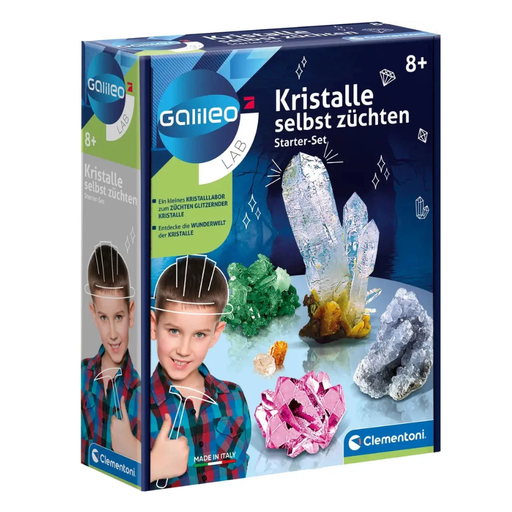
Why This Fits Their Persona: Ideal for children who are fascinated by stones, minerals, and the invisible processes of nature. This kit focuses on the core of crystal growing and explains the scientific background of chemical reactions and geological phenomena.
As an all-in-one starter kit from Clementoni Galileo Lab, it contains all the necessary utensils and chemicals. The illustrated instructions are specifically designed for children, preventing frustration from unclear directions.
Playfully introduces children to the fundamentals of chemistry and geology. The set is designed to deliver visible and appealing results, which boosts learning motivation.
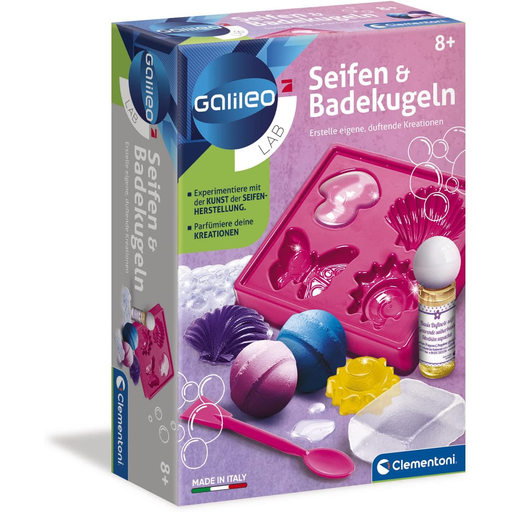
Why This Fits Their Persona: Perfect for kids who want to combine science with creativity and a practical, usable result. Instead of just observing, here they create fragrant soaps and fizzy bath bombs, learning about the chemistry of cosmetics along the way.
This set bypasses the trap of vague promises by setting a clear, achievable goal: making soap. It includes all the necessary ingredients and moulds, plus a proven guide that ensures success.
Encourages sensory and creative play by combining scents and shapes. The finished product can be used personally or given as a gift, which creates a high level of satisfaction.

Why This Fits Their Persona: For children whose interests lean more towards technology, mechanics, and construction. Instead of chemical reactions, the focus here is on the precise assembly of components into a complex model.
COBI is known for its precision-fit bricks and detailed, clear building instructions. This prevents the frustration that arises with kits that have poorly made parts or illogical manuals.
Develops fine motor skills, spatial reasoning, and the ability to follow complex instructions. The finished model has high display value and serves as a lasting reward for the effort.
We've compiled a complete, up-to-date list of products that fully meet these strict selection criteria and EU/UK safety regulations.
Crystal growth is a process that requires patience. After preparing the solution, it usually takes between 24 hours and several days for the first small crystals to become visible. Full growth to the size shown in the instructions can take up to a week or longer. The exact duration depends on the room temperature and how undisturbed the container is.
Reputable manufacturers who sell their products in the EU must comply with strict safety standards (e.g., the Toy Safety Directive EN 71). The chemicals used, mostly alum salts, are safe when used correctly and under adult supervision. However, it is crucial that children wear the provided protective gear, such as goggles and gloves, and do not put the substances in their mouths.
If no crystals grow, it is often due to one of three factors: the solution was not fully saturated (too little powder or too much water), the cooling phase was too rapid, or the container was moved during the growth process. One solution is to carefully reheat the liquid (without boiling it), possibly add a little more powder to ensure saturation, and then let it cool down slowly in a quiet, vibration-free place.