Fans of chunky raita
If you want the cucumber to be visible in the yoghurt, grate or dice it and stir the yoghurt separately. That’s how the EDEKA recipe makes its raita.


You don’t need a blender for chunky cucumber raita: grate or dice the cucumber, then stir the yoghurt until smooth on its own, as the EDEKA recipe suggests. A hand blender is a space-saving option if you’d also like to purée small quantities; if you often chop herbs, a mini chopper may be worth considering. Before buying, check exactly what’s included in the set and how each food-contact part should be cleaned.
If you want the cucumber to be visible in the yoghurt, grate or dice it and stir the yoghurt separately. That’s how the EDEKA recipe makes its raita.
If you make puréed dishes as well as raita and need to put your appliance away after use, a hand blender with a detachable blending foot could be a good fit. Bosch Hausgeräte Deutschland lists this feature for the MSM66110, while Braun notes that the MultiQuick 3 range comes in different set configurations.
If you regularly chop herbs or vegetables, compare what’s included in the specific set and how much space a mini chopper takes up. Braun lists a 350 ml chopper with the MQ 3025 Omelette, while Philips lists a 0.7 l container for the HR1393/90.
First decide whether you want the cucumber in your raita to stay chunky or be puréed. The EDEKA recipe stirs the yoghurt until smooth, then folds in diced cucumber.
| Consideration | What to check before buying | Who it matters most to |
|---|---|---|
| Cucumber texture | Decide in advance whether you want to grate, dice, chop or purée the cucumber. | If I want to keep pieces of cucumber in my raita, I prepare the cucumber separately. Around 36% of consumers put their preferred texture first. |
| Cleaning | Check the instructions for detachable parts and distinguish accessories from the motor unit. | If I share an appliance with others, I want to be able to clean the food-contact parts thoroughly after use. Around 29% of consumers prioritise ease of cleaning. |
| Storage space | Compare the appliance’s dimensions and the space needed for containers and included attachments. | If storage space is limited in the shared kitchen, I need to be able to put the appliance and its accessories away easily. Around 21% of consumers pay particular attention to how much space an appliance takes up. |
| Extra chopping tasks | Check the specific set for a chopper, container capacity and cleaning instructions. | If I often chop herbs or vegetables as well as making raita, a suitable chopper could save me some extra effort. Around 14% of consumers put extra chopping tasks first. |
The EDEKA recipe doesn’t need a blender. An extra appliance takes up storage space and needs cleaning.
First decide what texture you want for the cucumber. If you’re only making this raita, a grater or knife and a bowl will do; if you have other puréeing tasks, you could consider an appliance as an extra.
The Braun MultiQuick 3 range includes models with different accessories. A chopper or whisk isn’t automatically included with every set.
Compare the full model number and check which attachments are included in the specific offer.
Cleaning instructions may apply to individual accessories, not the motor unit. In a shared kitchen, it’s important to clean utensils and work surfaces properly; the Verbraucherzentrale recommends cleaning your hands and kitchen utensils before and between tasks.
Check the instructions for each component to see whether it can be washed by hand or in the dishwasher.
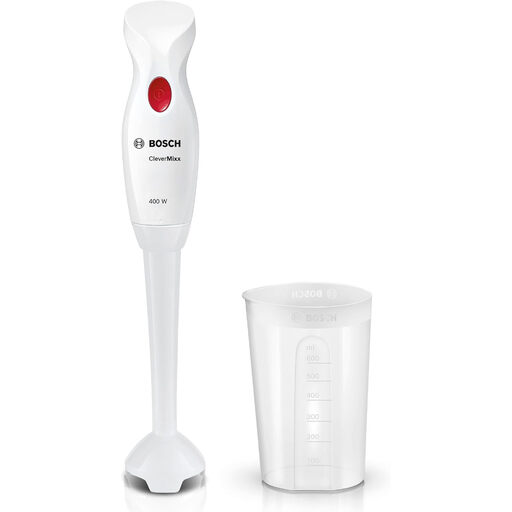
The Bosch MSM66110 is a hand blender for additional puréeing tasks.
The MultiQuick 3 range includes hand blender sets with different accessories.
The Daily Collection HR1393/90 is a compact chopper for vegetables and herbs.
The Kult X Mix & Go is a compact blender for making extra smoothies or shakes.
The options below include hand blenders for extra puréeing tasks and a multifunction blender. For chunky cucumber raita, prepare the cucumber separately.
 No image available
If you’d also like to purée dips or soups as well as making raita, this hand blender could be a useful addition; prepare the cucumber separately to keep the texture chunky.
Listed features include 400 W and a detachable blending foot.
 No image available
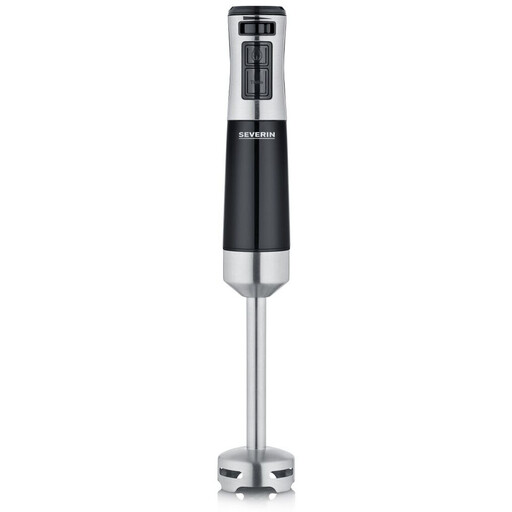
If you also make puréed dishes, a hand blender could be an option; for visible pieces of cucumber in your raita, preparing it separately is still the right approach.
The product name lists 600 W, variable speed control and a detachable blending shaft.
 No image available
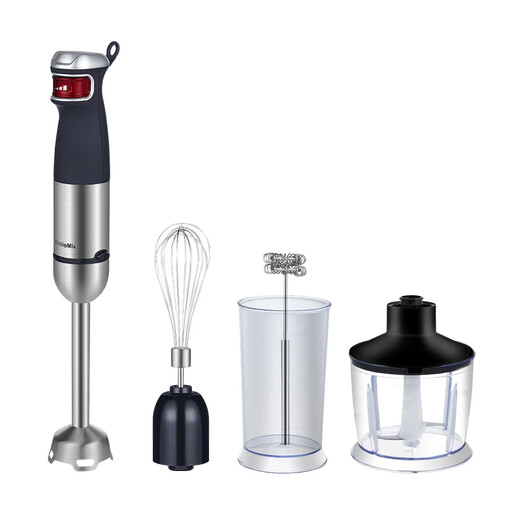
If you’re looking for a hand blender for puréeing and blending other dishes, you could consider this model alongside a grater.
The product name lists 1200 W and variable speed control.
 No image available
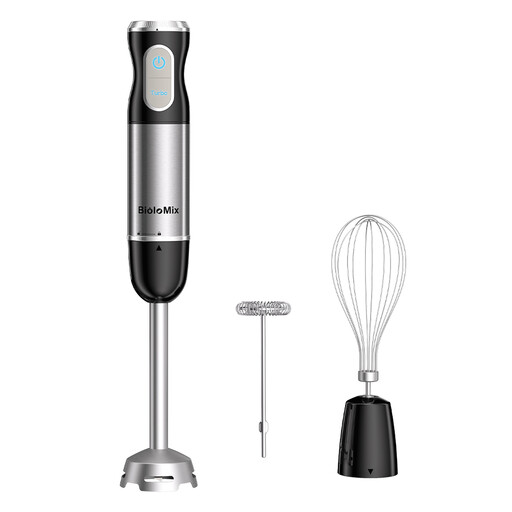
This hand blender could be a useful addition for extra puréeing tasks; for chunky raita, prepare the cucumber separately.
The product name lists a detachable design, a turbo mode and splash protection.
 No image available
If you’d also like to purée fruit or vegetables, this blender is another type of appliance to consider; for chunky raita, don’t blend the cucumber.
The product name lists 600 W, a 1.5 l container and three speed settings.
No. The EDEKA recipe dices the cucumber, stirs the yoghurt until smooth separately, then folds in the cucumber. A blender is more useful if you also want to use it for other recipes or are deliberately aiming for a different texture.
Clean your hands, work surfaces and kitchen utensils before and between tasks. The Verbraucherzentrale recommends this for good kitchen hygiene. Also check the instructions for each component: a detachable blending foot isn’t necessarily dishwasher-safe, and a claim that accessories are dishwasher-safe doesn’t necessarily include the motor unit.
The Verbraucherzentrale explains that online purchases generally come with a 14-day right to cancel, starting from the day you receive the goods; you must notify the other party to the contract that you’re cancelling. The right to cancel because you’ve changed your mind is separate from what applies when goods are faulty.
Mains-powered appliances covered by the EU Low Voltage Directive, which applies to alternating current from 50 to 1,000 V, must meet the relevant requirements. The European Commission explains the scope of the directive; according to Your Europe, the manufacturer is responsible for conformity and the required CE marking. This doesn’t apply universally to battery-powered appliances, nor does it prove that a specific product offer complies.