
Lieferung heute & morgen

Qualitätsgarantie

Willkommens-Angebote freischalten: KOSTENLOSE Lieferung | Bis zu 80 % RABATT | Kostenlose 30-Tage-JoyPlus-Testphase
App herunterladen
A cuddly toy can be a playmate, decoration, gift for a child or everyday companion. But there are clear differences between a baby’s cuddly toy, a soft toy for children and a collectable figure. Looks alone tell you little about age suitability, care requirements or how practical a toy will be day to day.
As a Joybuy Product Recommendation Officer, I focus on the most important product details and assess them against practical criteria. This can help you avoid common buying mistakes without relying solely on marketing claims.
A soft toy may look small and cuddly, but still contain small parts that could be swallowed. Button eyes, plastic noses, sewn-on accessories and loose decorations are especially important to consider for children under three. That’s why the official age recommendation on the product page and packaging matters.
For some products, marketing descriptions and safety information don’t match. The Sterntaler Heiko Plush Toy, for example, is described as a baby’s first toy, but the product details state that it is suitable from the age of three. For babies, only use a product if the manufacturer’s information clearly confirms that it is suitable for them.
A cuddly toy is often handled every day, taken on trips or brought to bed. If it can only be wiped clean on the surface, keeping it clean may be awkward in a busy family home. Before buying, check:
Care instructions are more reliable than general claims such as “easy to care for” or “especially durable”.
A 12 cm soft toy is a good fit for a bag or as a small gift. A 35 cm model, on the other hand, needs more space and may be harder for a young child to carry. Extra features such as sound, a reversible design or the chance element of a blind box can also affect how the toy is used:
Check the age recommendation, warnings and any small parts. A cuddly toy for children aged 3 and over may have different design features from a baby’s cuddly toy. For younger children, pay particular attention to loose parts, long ribbons and decorations that could come off.
For toys that use batteries, also check that the battery compartment closes securely. The Peppa Pig model, for example, requires two AAA batteries and is intended for children aged three and over.
Polyester is widely used in soft toys, either for the outer fabric or the filling. But the material alone doesn’t tell you everything about the overall quality. It’s also worth checking for:
According to the product description, the Teddy Hermann rabbit has a plush exterior and recycled polyester filling. It can be washed on a gentle cycle at 30 °C. It is not suitable for tumble drying.
The size should suit the child’s age and how the toy will be used. A small soft toy is easy to carry, while a larger model makes more of a statement as a decoration or cushion. Ideally, compare the product’s dimensions with a ruler or a toy you already own before ordering.
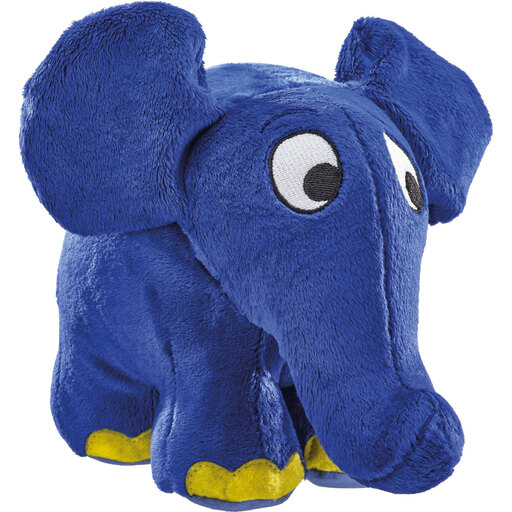
Why this product suits this profile: This compact soft toy measures 16 × 22 cm and, according to the product details, is intended for children aged three and over. It makes a manageable gift or a handy companion for trips out.
Clear information about the size and age recommendation makes it easier to choose and reduces the risk of buying a soft toy that’s too big or unsuitable.
Compact dimensions, soft plush fabric and versatile use in the playroom or on trips.
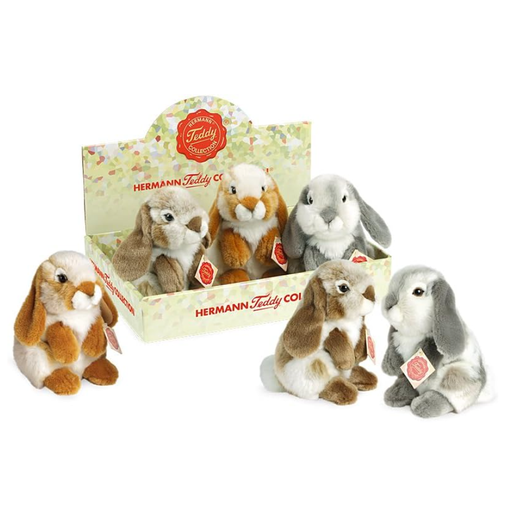
Why this product suits this profile: According to the product details, this rabbit is suitable for children aged 18 months and over and has recycled polyester filling. The stated 30 °C wash temperature makes it practical for everyday family life.
The product details specify the suitable age, filling material and care limitations, rather than relying on a general claim about softness.
Recycled polyester filling, a natural design and care instructions that specify a gentle 30 °C wash.
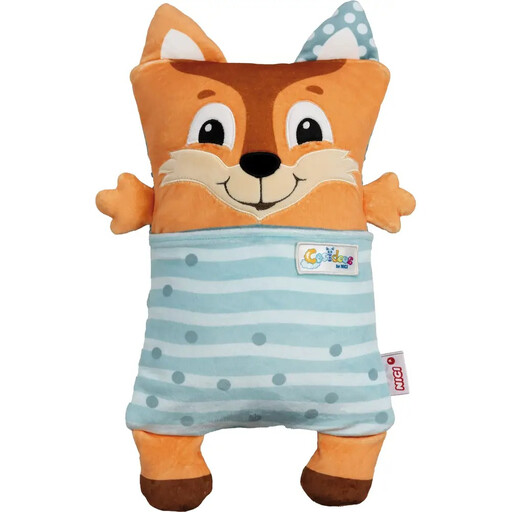
Why this product suits this profile: The product details state that this fox is suitable from 12 months and can be turned from its daytime side to its night-time side. It also has soft pockets and can be used as a cushion.
The feature is clearly described and doesn’t require batteries, so it’s easy to see the practical benefit of the reversible design.
Reversible design, cushion function, built-in pockets and dimensions of around 35.5 × 21.1 × 12 cm.
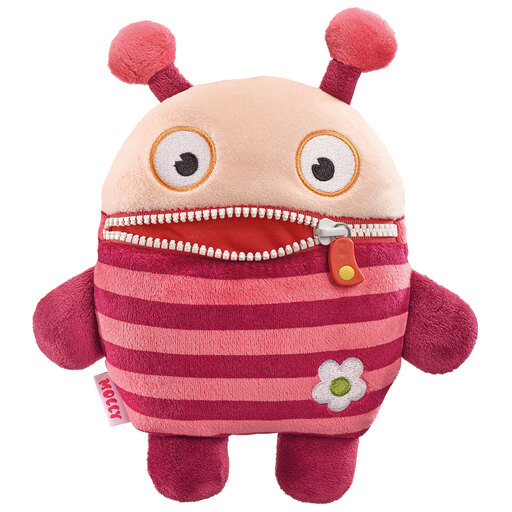
Why this product suits this profile: The worry-eater has a zipped mouth where children can symbolically keep drawings or notes. The idea can help start conversations, but it doesn’t replace support from an adult.
The feature is clearly explained and isn’t presented as a standalone solution to worries or problems.
23 cm size, zipped mouth and plush fabric that is washable according to the product details.
We’ve put together a complete, regularly updated list of products that meet these strict selection criteria and the safety regulations in force in the EU.
For babies, choose a toy with a clear age recommendation, securely sewn-on parts and no small parts that could be swallowed. A rattle or sound feature is only suitable if it is safely integrated and intended for the stated age. Always follow the packaging information rather than general marketing copy.
That depends on how it is used. Check a soft toy that’s in bed every day or taken out and about regularly for dirt, loose seams and damaged parts. Clean it only according to the manufacturer’s instructions. Some models can be washed on a gentle cycle at 30 °C, while others should only be wiped with a damp cloth.
Its lifespan depends on the material, the quality of the seams, how it is used and how it is cared for. Pay particular attention to the eyes, nose, seams and filling. If any parts come loose or the material is damaged, stop letting young children use the toy. For collectable figures, the condition may also be affected by the packaging, sunlight and frequent handling.