
Lieferung heute & morgen

Qualitätsgarantie

Willkommens-Angebote freischalten: KOSTENLOSE Lieferung | Bis zu 80 % RABATT | Kostenlose 30-Tage-JoyPlus-Testphase
App herunterladen
A cup with lid is designed to keep drinks, yoghurt or snacks safely stored while you're on the go. In practice, however, unclear material information, poorly fitting lids or unsuitable care instructions can quickly lead to a bad purchase. Families, commuters and professionals in particular should therefore check before buying whether the cup actually suits their daily routine.
A lid does not automatically prevent liquid from escaping. What really matters is a continuous seal, a suitable closure and information about what contents the container is suitable for. A leakproof cup for yoghurt does not automatically mean it is designed for hot drinks or carbonated liquids.
Look for specific claims such as "airtight", "leakproof" or "secure closure". If such details are missing, the cup should be transported upright in your rucksack as an extra precaution.
Glass, plastic and stainless steel each have different advantages and disadvantages. A glass cup with lid can be flavour-neutral and easy to clean, but is generally more prone to breakage than a plastic container. Borosilicate glass is often associated with temperature resistance; nevertheless, you should follow the manufacturer's specific instructions for hot and cold contents.
With plastic, the labelling is important. A BPA-free drinking cup should explicitly state this in the product description. A general term like "food-safe" does not imply any further material properties.
A cup may be suitable for taking out and about, but not for the microwave or dishwasher. So check before you buy:
With a drinking cup with straw in particular, residue can build up in the straw or around the lid area. Easy disassembly makes regular cleaning much simpler.
For children, breakfast and short journeys, around 400 to 500 ml may be sufficient. A 450 ml container, for example, works well for yoghurt with toppings, while a 500 ml cup offers more room for water, milk, juice or smoothies.
Think beforehand about what you will regularly be transporting:
For glass cups, details such as borosilicate or tempered glass are relevant. They describe the type of glass, but do not replace the user manual. The lid is often made of plastic and may have different care or temperature limits than the glass container.
Polypropylene, or PP, is used in many food containers. However, whether a product is microwave-safe, freezer-safe or dishwasher-safe must be explicitly stated. For an on-the-go cup, weight also matters: glass may feel sturdy, but it is less suitable for children's hands and overstuffed bags than a lightweight plastic container.
A drinking cup with straw can be practical for children or smoothies. For transport, however, the closure must fit the design precisely. Check whether the straw is firmly inserted and whether the lid closes completely.
With a yoghurt cup to go or cereal cup, a separate compartment is useful if you want to add fruit, nuts or cereal just before eating. This helps to keep the texture just right. For the microwave: the lid and any extra compartments must be removed according to the manufacturer's instructions.
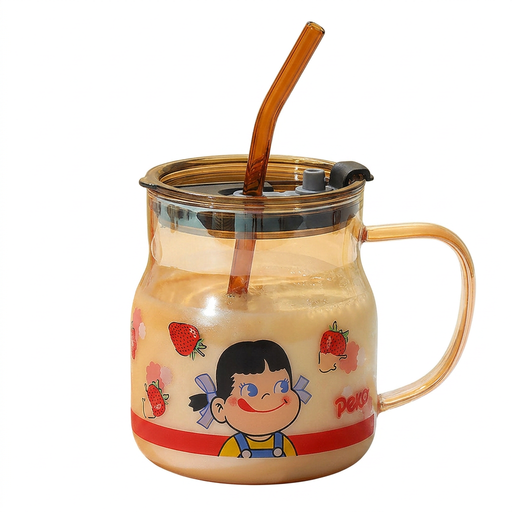
Why this product fits the profile: The 500 ml cup is designed for water, milk, juice and smoothies, and combines a lid with a straw. This can be practical for children and for breakfast.
The product description explicitly states the capacity, the lid and the straw. For transport, the closure should be checked before packing.
500 ml capacity; borosilicate glass according to the product information; lid and straw included.
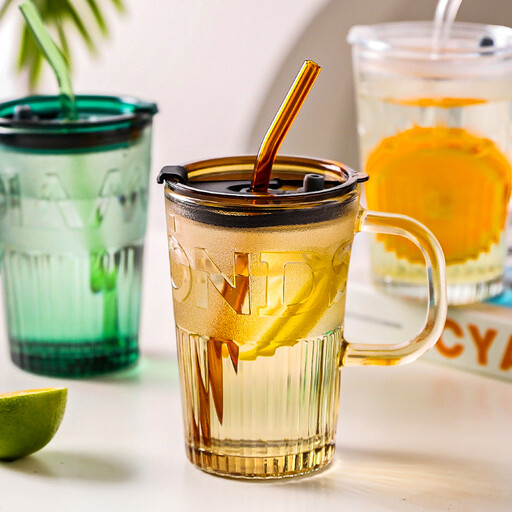
Why this product fits the profile: The ribbed glass cup is designed for iced coffee, smoothies, juice and cold drinks. 400 ml suits smaller portions in the office or on the way to work.
The product name explicitly mentions the lid and straw. As it is made of glass, the cup is better suited for bags with extra protection than for loose storage.
400 ml volume; glass container with ribbed surface; lid and straw for cold drinks.
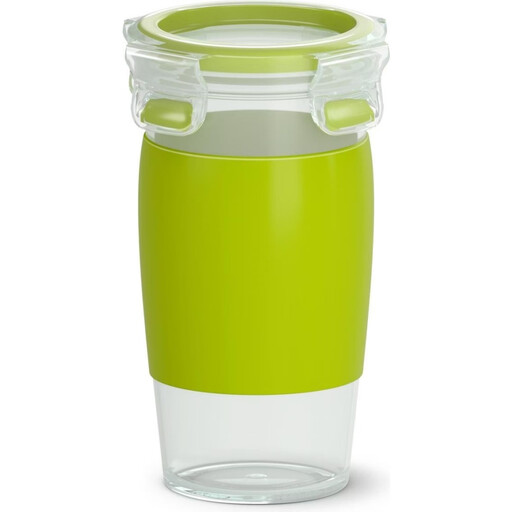
Why this product fits the profile: The polypropylene container is described as leakproof, BPA-free and suitable for the dishwasher, freezer and microwave according to the product description.
The product details list the relevant care and transport functions. According to the instructions, the lid must be removed before heating.
Leakproof construction according to the product information; dishwasher and microwave safe; suitable for yoghurt, smoothies and oat dishes.
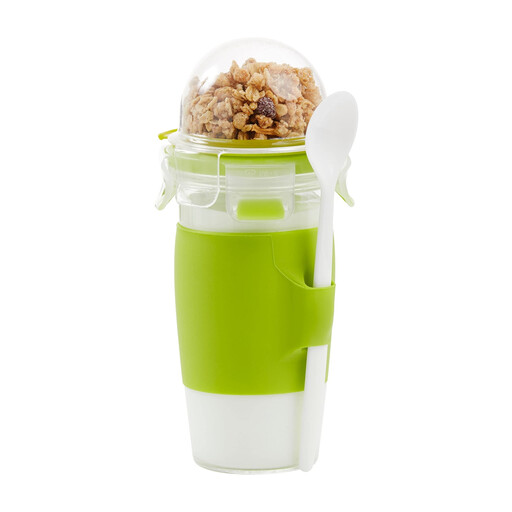
Why this product fits the profile: The yoghurt cup to go has a separate compartment for cereal, fruit or nuts and comes with a spoon. This makes it ideal for breakfast and snacks in the office, at school or on the commute.
The separate storage prevents dry ingredients from mixing with the yoghurt before eating. According to the product description, the closure is airtight.
0.45 l capacity; separate compartment; BPA-free plastic according to the product information; suitable for freezer, microwave and dishwasher.
We have put together a full, regularly updated list of products that fully meet these strict selection criteria and the safety regulations in force in the EU.
Not every cup with a lid is leakproof. Look for an explicitly mentioned seal, a secure closure and information about the intended use. With glass cups, the container should additionally be transported upright and protected.
That depends on the material and the manufacturer's instructions. A container marked as microwave-safe can often only be heated without the lid. With the Tefal models mentioned, the product information advises removing the lid before heating. Never use a container in the oven or on the hob unless this is expressly permitted.
The lifespan depends on the material, usage, cleaning and closure. Check the cup regularly for cracks, warping and damaged seals. If you notice any visible damage, it should not be used further. A dishwasher-safe cup can make daily cleaning easier, but the care instructions for the lid, straw and seals still remain important.