
Lieferung heute & morgen

Qualitätsgarantie

Willkommens-Angebote freischalten: KOSTENLOSE Lieferung | Bis zu 80 % RABATT | Kostenlose 30-Tage-JoyPlus-Testphase
App herunterladen
Curly hair needs a different combination of products from straight hair. While wavy hair can quickly feel weighed down, very curly hair often needs more nourishment and more reliable hold. Curl care for curly hair therefore involves more than just shampoo. Depending on your hair type, you may also need conditioner, curl cream, mousse or gel.
However, it is easy to make some common mistakes when buying curl care products. A high price, terms such as “anti-frizz” or an especially rich formula alone do not indicate whether a product is right for your hair.
Oils, waxes and butters can make the hair fibre feel smoother. However, on fine hair or type 2A to 2C waves, an overly heavy formula can reduce volume. The waves may lose their shape more quickly or look greasy.
For fine, wavy hair, lightweight gel-cream textures or mousse are often more practical than very rich creams. Start by applying a small amount of product.
Anti-frizz products can smooth the surface of the hair and help support curl shape. However, the result also depends on humidity, drying, brushing and the amount used. Claims such as “up to 72 hours” or “up to 96 hours” are product-specific marketing claims and should be treated as guidance, not a guarantee for every hair type.
A curl shampoo cleanses the hair, while a curl conditioner can improve manageability. Styling products such as curl cream, curl mousse or curl gel, on the other hand, provide definition and hold. One product does not necessarily have to perform all of these jobs equally well.
The classification from 2A to 3C provides a general guide:
This classification cannot replace observing your individual hair. Porosity, hair density, length and chemical treatments also affect how a product performs.
Ingredients in an INCI list are shown in descending order of concentration. Glycerin, for example, is often used to help retain moisture. Plant oils such as coconut, jojoba, moringa or macadamia oil can contribute to the conditioning effect. Waxes and film-forming polymers, on the other hand, often help shape the hair and provide hold.
If you are sensitive to fragrances, check the labelling carefully. Several of the formulas mentioned contain parfum as well as fragrance allergens that must be declared, such as Limonene, Linalool or Citral. If you have sensitive skin, a patch test on a small area is recommended. In the event of contact with the eyes or skin, follow the instructions on the packaging.
Defining curls is usually more even when the product is distributed through damp hair. A practical routine is:
When using mousse from aerosol cans, it is important to follow the safety instructions: do not use near heat, naked flames or sparks, and do not expose the can to temperatures above 50 °C.
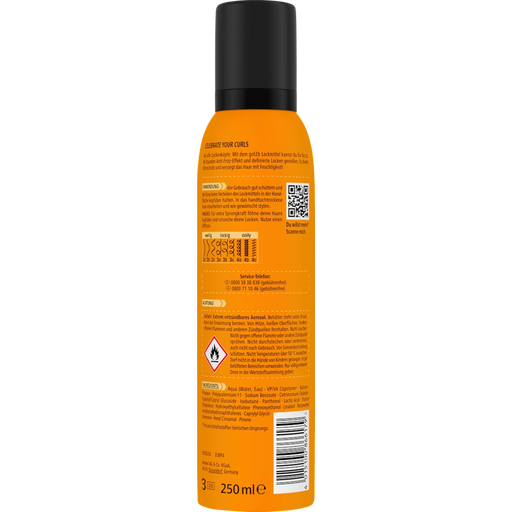
Why this product suits the profile: The mousse provides light hold at level 3 and is designed for a range of curly hair types. Applying it to towel-dried hair is straightforward, making it suitable for anyone starting out with a simple styling routine.
The stated hold level makes the styling effect easier to assess than a general description such as “strong hold”. The amount can be adjusted gradually.
Light hold, panthenol in the formula and no-rinse application. According to the product description, the can is made from 50% recycled aluminium.
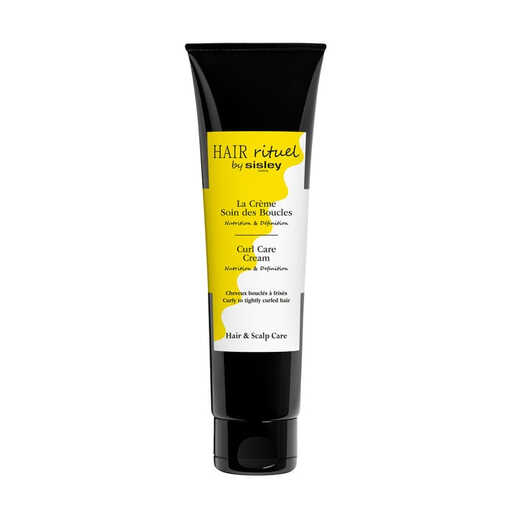
Why this product suits the profile: According to the product description, this cream is designed for curly to very curly type 3A to 3C hair. Its richer texture suits hair that needs more intensive care and clear definition.
Its stated suitability for 3A to 3C hair helps prevent choosing a lightweight wave product for much more highly textured curls.
The formula lists three plant oils and two plant-based waxes. It is designed for use on wet or damp hair, followed by air-drying or drying with a diffuser.
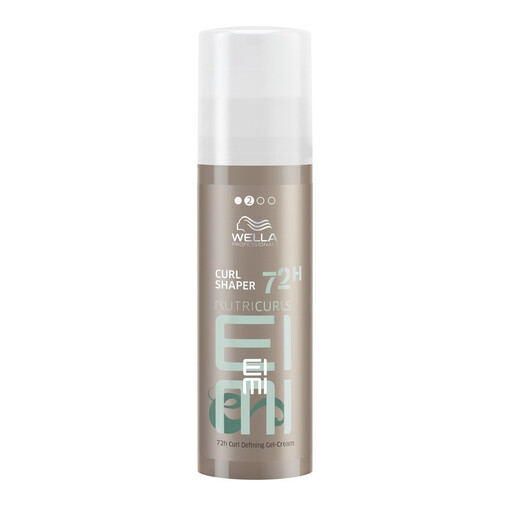
Why this product suits the profile: This gel is suitable for anyone who values defined curls and a specific hold claim in their daily styling routine. According to the product description, it provides hold for up to 72 hours.
The stated gel texture and hold claim help with product selection when mousse feels too light or a cream does not provide enough fixation.
Pump bottle, VP/VA copolymer and Polyquaternium-4 are included in the stated INCI list. Jojoba oil and panthenol are also listed.
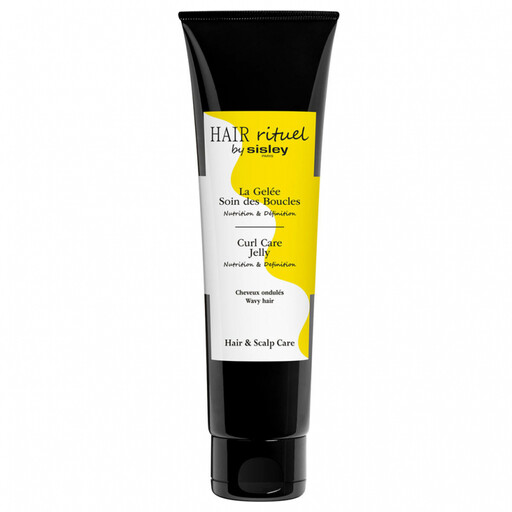
Why this product suits the profile: According to the product description, the gelée texture is designed for type 2A to 2C waves. It combines care and definition without being positioned as a traditional rich curl cream.
Its classification for 2A to 2C hair reduces the risk of choosing a product that is too heavy for light waves. The amount is easy to control.
Gel-cream texture, three plant oils and two plant-based waxes. According to the product description, its moisture resistance has been tested at 80% humidity.
For a complete curl care routine, shampoo can be combined with conditioner. Dry or very curly hair may benefit from a leave-in product such as curl cream. For greater shape retention, follow with a gel or mousse.
It is important not to apply several strongly film-forming products generously at the same time. Start with a small amount and observe whether the curls remain elastic, whether residue develops or whether the hair loses volume. An occasional more thorough wash may be useful if styling residue builds up.
We have put together a complete, regularly updated list of products that fully meet these strict selection criteria and the safety regulations applicable in the EU.
A simple basic routine consists of a suitable curl shampoo, a curl conditioner and a styling product. For fine waves, mousse or a lightweight gel-cream is often enough. Dry, more tightly curled hair may also benefit from a curl cream.
Apply styling products to thoroughly damp hair and start with a small amount. Lightweight textures such as mousse or jelly are often more suitable for 2A to 2C hair than very rich products. Once the hair is dry, you can gently scrunch out any hard styling residue.
The shelf life of the product is indicated by the printed best-before date or the PAO symbol showing how long it can be used after opening. How long the styling lasts depends on hair structure, humidity, the amount of product used and drying. Claims such as 72 or 96 hours come from the relevant product description and cannot automatically be applied to every use.