Travellers with longer hair
If you want to create large, loose waves in your hotel room, consider the barrel diameter and usable barrel length. BaByliss describes the C453E as a model for large waves, with a 38 mm barrel and an extra-long design.


For large, loose waves on longer hair, a wide-barrel curling tong with a clamp is a natural place to start. A tapered wand is better suited to creating waves of varying sizes. You’ll also want a temperature setting that suits your styling routine and a suitable place to rest the tong in your hotel room. When travelling, check the voltage and plug type too. An automatic shut-off doesn’t replace switching the appliance off and unplugging it.
If you want to create large, loose waves in your hotel room, consider the barrel diameter and usable barrel length. BaByliss describes the C453E as a model for large waves, with a 38 mm barrel and an extra-long design.
Check whether the temperature settings suit your routine. According to the manufacturer, the BaByliss C453E has six settings from 160 to 210 °C, while ghd gives the curve soft curl tong a fixed temperature of 185 °C. ghd recommends letting your hair dry completely before using a heated styling tool.
If there’s little room in your hotel room, it’s important to check the appliance’s designated resting place and safety instructions. BaByliss lists a heat-resistant mat and automatic shut-off for the C453E; ghd lists a stand and sleep mode for the curve soft curl tong.
A good fit if: You want to create large, loose waves on longer hair and secure each section with a clamp. According to the manufacturer, the BaByliss C453E has a 38 mm barrel and an extra-long design.
Worth noting: The C453E’s six temperature settings start at 160 °C. Check whether this lowest setting suits your routine.
A good fit if: You prefer a slightly narrower barrel for big curls and soft waves. ghd also lists universal voltage and a stand for the curve soft curl tong.
Worth noting: According to ghd, this model operates at a fixed temperature of 185 °C rather than offering adjustable settings. Universal voltage alone doesn’t tell you whether the plug will fit.
A good fit if: You want to create sections of varying wave sizes and feel comfortable using a wand without a clamp. The instructions for the Wella Professionals Pro Curl Conical give a diameter of 25 to 13 mm.
Worth noting: A tapered wand isn’t the same as a consistently wide 32 or 38 mm barrel. The instructions specify 220–240 V; check this against the mains voltage at your destination.
First decide whether you want a consistently wide barrel or waves of varying sizes. Then compare the temperature settings, resting arrangements, and voltage and plug information for the specific model.
| Priority | What to check when buying | Who is it important to? |
|---|---|---|
| Large, loose waves | Barrel diameter, whether the barrel is straight or tapered, the clamp and usable barrel length. | If I want large, loose waves on longer hair in my hotel room, I pay particular attention to the shape and barrel length. Around 33% of consumers would put their preferred wave shape first. |
| Temperature control | Whether the temperature is adjustable and how low the lowest setting goes; dry your hair completely before styling. | If I want to adjust the heat to suit my styling routine, I check the actual temperature range rather than just the number of settings. Around 25% of consumers would prioritise heat control. |
| A safe place to rest your styler | Whether there’s a designated mat or stand, an automatic shut-off feature, and what the instructions say. | When there’s little space in my hotel room, it’s important to know where I can put the hot tong while styling. Around 25% of consumers would make a safe resting place their priority. |
| Using it while travelling | The voltage specified for the particular appliance, the plug type at your destination and how much room it takes up in your luggage. | If I want to use my curling tong in different destinations, I check both the voltage and the plug type. Around 17% of consumers would consider travel compatibility first. |
A voltage specification doesn’t tell you what the socket looks like at your destination. ghd’s universal-voltage information applies to the model mentioned, not automatically to other curling tongs.
Before travelling, check the voltage on the appliance and compare its plug type with what’s used at your destination.
Depending on where you’re travelling, you may also need a suitable travel adaptor.
A sleep mode or automatic shut-off only works under the conditions specified for that appliance. The tong remains hot while you’re styling.
Use the mat or stand intended for your model and follow the safety instructions. Switch the appliance off and unplug it after use.
According to its instructions, the Wella Professionals Pro Curl Conical tapers from 25 to 13 mm. Its shape is different from that of a consistently wide barrel.
Choose a design based on the waves you want and what feels comfortable to use when wrapping your hair.
The C453E is a 38 mm clamped option for large waves. Its extra-long barrel may be useful for longer hair.
The curve soft curl tong combines a 32 mm barrel with a clamp and features designed with travel in mind.
The Pro Big Curl CI5538 is another 38 mm option for creating large waves.
The Pro Curl Conical CT 15 has a tapered shape for creating sections of varying wave sizes.
This selection includes curling tongs, wave stylers and heated styling brushes for creating waves in your hotel room. Check that each appliance’s design and features suit the style you want.
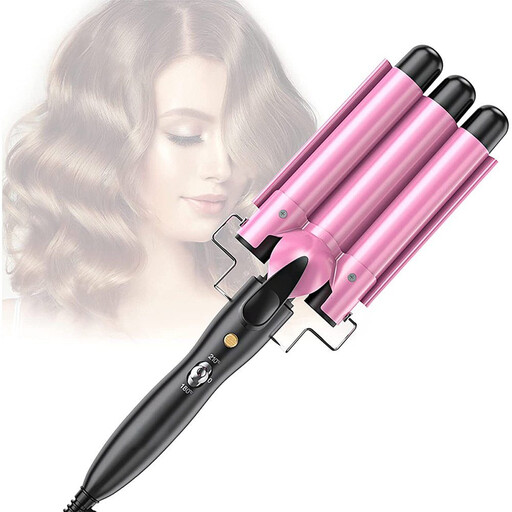 No image available
The three styling barrels are described as creating soft, natural waves. An integrated stand is designed to provide a heat-resistant surface to rest the appliance on.
Two temperature settings are listed: 180 °C and 210 °C.
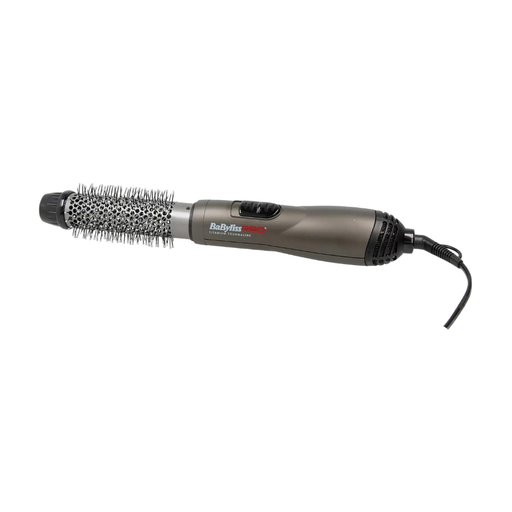 No image available
The 32 mm barrel is described as suitable for medium to large curls and waves.
The product description specifies a heat-resistant surface for use while the appliance cools down.
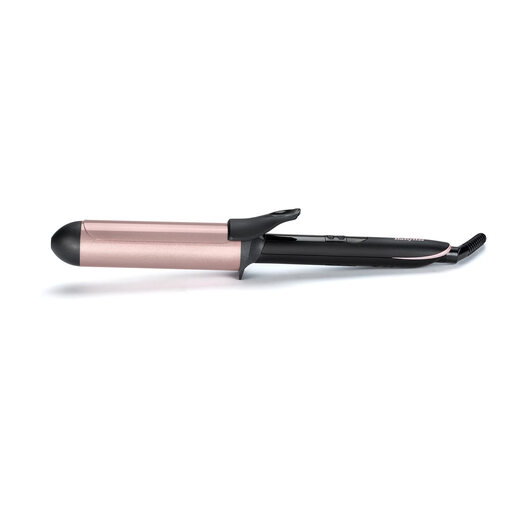 No image available
The wide barrel and extra-long design are described as ideal for creating large, loose waves on longer hair.
BaByliss lists six temperature settings from 160 to 210 °C, a heat-resistant mat and automatic shut-off. The lowest temperature setting is 160 °C.
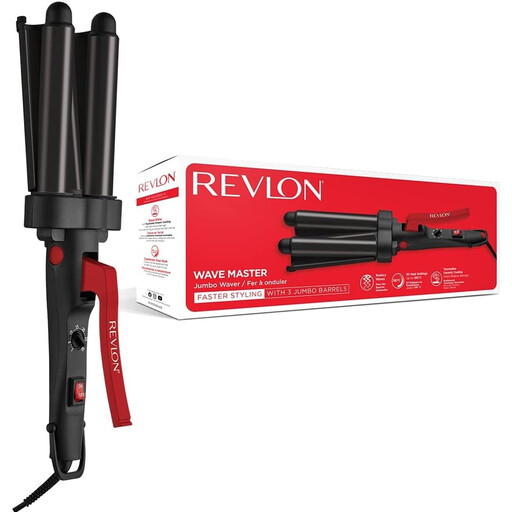 No image available
This wave styler, with three styling plates, is described as creating soft, natural waves.
The listing specifies 30 temperature settings up to 190 °C and a plug that can be switched between UK and EU types. Before travelling, also check the voltage specified for the particular appliance.
 No image available
This heated styling brush is described as creating voluminous waves. It isn’t a hot air brush and, according to the product information, is designed for dry hair.
Five temperature settings from 150 to 215 °C, dual voltage and an EU plug are listed. Before travelling, check the details on the specific appliance and the plug type at your destination.
No. Follow the instructions for your specific appliance, switch it off after use and unplug it. Don’t rely on sleep mode alone. The Wella instructions also say to check the mains voltage against the rating plate before use.
ghd recommends letting your hair dry completely before using a heated styling tool. This is the manufacturer’s recommendation.
That depends on your destination and the specific appliance. ghd lists universal voltage for the curve soft curl tong, whereas the instructions for the Wella Pro Curl Conical CT 15 specify 220–240 V. Check the plug type too: the voltage specification alone doesn’t mean the plug will fit the socket.
Mains-powered appliances covered by the EU Low Voltage Directive must meet the relevant EU conformity requirements. The Directive has applied since 20 April 2016. According to Your Europe, the CE marking is the manufacturer’s declaration of conformity, not an independent quality mark. Check the marking and applicable documentation for the specific product listing.
According to the Verbraucherzentrale, online purchases generally come with a 14-day right to cancel. In its explanation, the period starts when the contract is concluded or when you receive the goods you ordered. The statutory requirements and exceptions apply to the specific contract. A voluntary guarantee is separate from this right.