For fans of defined face-framing strands
You want small, clearly defined curls around your face and are comparing barrel sizes and clamp designs.


For sharply defined strands around your face, a slim-barrel curling tong is a good starting point; for softer movement, a medium-width barrel may be a better fit. Then consider the temperature control and how the tongs are handled: whether they have a clamp or use a wrap technique, as well as where you rest them and how you guide the hot appliance, matters in the bedroom too.
You want small, clearly defined curls around your face and are comparing barrel sizes and clamp designs.
You prefer loose movement rather than small curls, and want to check whether a medium-width barrel will create the look you’re after.
You style individual strands close to your face and pay particular attention to temperature settings, safe handling and a suitable place to rest the tongs in the bedroom.
First decide whether you want tight definition or softer movement. Then compare the temperature settings and how easy the tongs are to handle while styling and when you put them down.
| What matters to you | What to check | Who is it important to? |
|---|---|---|
| Precision and curl size | Barrel size and clamp; a slim barrel is designed to create a different style from a medium-width one. | If you want to define individual strands tightly around your face, the barrel size and how you guide the tongs should suit the result you’re after. Around 33% of consumers put precision first. |
| Temperature settings | Check the temperature range or fixed temperature of the specific model. | If you want to tailor the heat to your styling routine, being able to select a temperature setting is essential. Around 25% of consumers say heat control matters most to them. |
| Soft waves | Check whether a medium-width barrel and the way the tongs operate suit the style you want. | A medium-width barrel is an obvious option to compare if you want loose movement rather than small, tight curls. Around 25% of consumers prioritise soft waves. |
| Handling and resting the tongs | Check for a cool tip, a stand and a suitable resting place; a glove does not make the hot barrel safe to touch. | If you style close to your face and put the tongs down in the bedroom, controlled handling and a suitable place for the hot appliance are important. Around 17% of consumers prioritise handling and where to rest the tongs. |
Claims about ceramic or keratin do not replace checking the barrel size, temperature and controls. Don’t take claims about care or protection as a guarantee of how the appliance will perform for your individual styling routine.
Start by comparing the appliance’s specific features, and treat claims about conditioning effects as statements made by the manufacturer.
Curling tongs can still be hot after they have been switched off. Automatic shut-off does not remove the need for a suitable place to rest them.
Plan where you’ll put them down and follow the instructions for your specific appliance.
ghd notes that the glove described is not completely heatproof.
Do not touch the hot barrel directly, even while wearing a glove.
The BAB2272TTE and C451E models show the difference between slim and medium-width barrels with a clamp.
The Pro Curl CI5519 is an example of a 19 mm curling tong designed for defined curls.
The curve thin wand is a slim barrel with a wrap technique and no clamp.
The StyleCare BHB864/00 is an example of a medium-width barrel with digital temperature settings.
The CF321L is a 25 mm model with a clamp and a fixed temperature.
This selection includes curling tongs for creating curls and waves, including automatic models with different barrel sizes and temperature settings. When styling strands around your face, pay particular attention to how the appliance operates and where you can rest it.
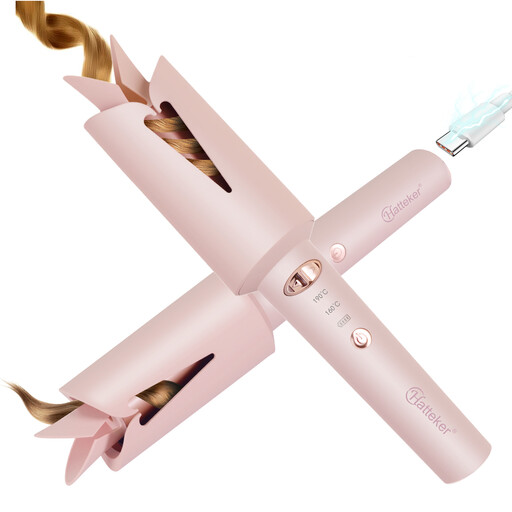 No image available
An option if you want to create curls with a medium-width barrel and use automatic curling.
25 mm barrel; two temperature settings: 160 °C and 190 °C; cool tip.
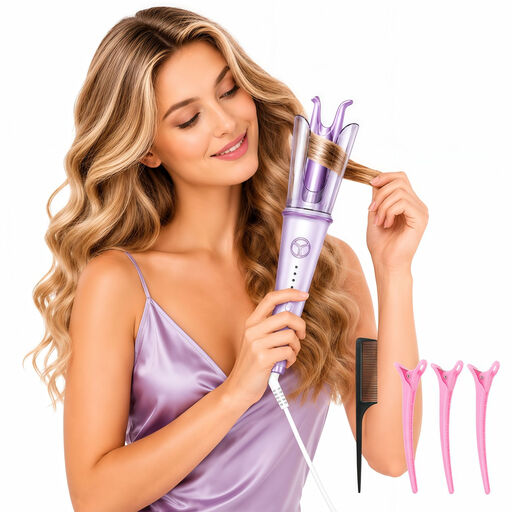 No image available
Could suit your needs if you’re looking for a medium-width barrel with automatic curling and several temperature settings.
26 mm barrel; four temperature settings from 160 °C to 220 °C; 360° swivel cord and automatic shut-off after around 60 minutes, according to the product description.
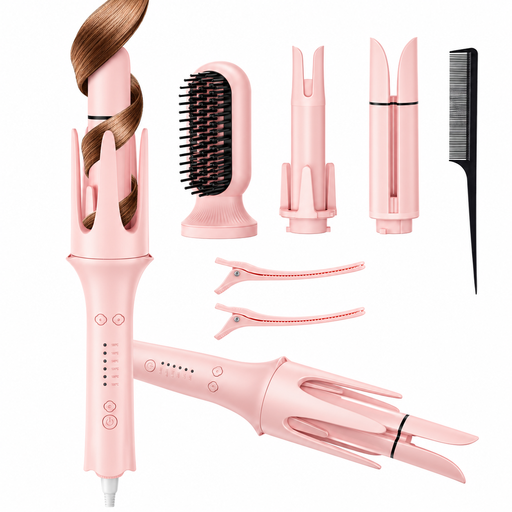 No image available
An option if you want to vary the direction of the curl and styling time using the appliance’s settings.
Three temperature settings: 160 °C, 180 °C and 200 °C; timer settings of 6, 9 or 12 seconds, according to the product title.
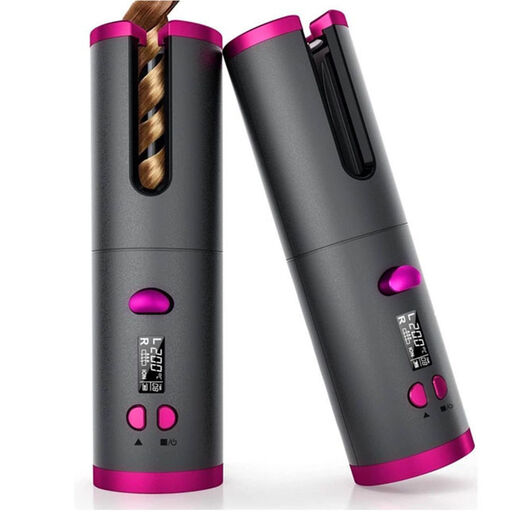 No image available
Could be worth considering if you’re looking for an automatic curling tong to use without a cord while styling.
Rechargeable 5000 mAh battery; six temperature settings from 150 °C to 200 °C and six timer settings, according to the product title.
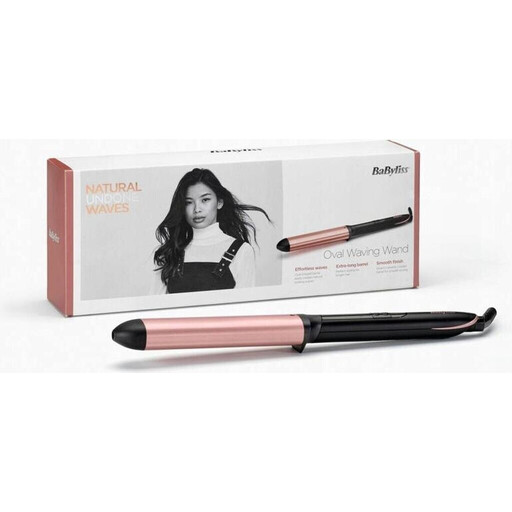 No image available
Another option if you want to create curls or waves with curling tongs and choose the styling temperature.
Six temperature settings up to a maximum of 210 °C, according to the product title.
For tightly defined strands, the 19 mm models reviewed are a useful comparison; for softer movement, a 25 mm barrel is a better starting point. The result also depends on how you wrap the strand.
Guide individual strands carefully and only use the designated grip areas and the cool tip of the specific model. For its creative curl wand, ghd recommends using the appliance on dry hair and explicitly warns against touching the hot barrel directly, even when wearing a styling glove.
Check the resting feature on your specific model and use a suitable heat-resistant surface. A stand or automatic shut-off does not mean you should leave hot tongs unattended on a surface that could be damaged.
According to Your Europe, the European Union’s information portal, faulty goods are generally covered by a statutory guarantee of at least two years from the seller. Subject to the applicable conditions, you may first be entitled to a free repair or replacement; a refund may also be possible.
No. For products that must carry a CE mark under harmonised EU rules, the manufacturer uses it to declare that the relevant requirements have been met; a central EU body does not automatically issue a certificate. The Bundesnetzagentur lists marking and manufacturer information, among other things, as points to check for electrical and electronic products within its remit.