For fans of defined curls
If you’re styling dry, shoulder-length hair and want an even, clearly defined curl, barrel diameter and the clamp are good places to start. ghd and BaByliss offer classic models with 26 mm and 25 mm barrels respectively.


For even, defined curls, a classic curling tong with a clamp and a barrel of around 25–26 mm is a sensible starting point. For softer or varied waves, consider wider or tapered barrels; if you’d rather not wrap your hair around the barrel yourself, an automatic curler may be worth a look. These designs differ in how they’re handled, their temperature settings and how they can be rested between sections – and no barrel size guarantees the same result for every hair type.
If you’re styling dry, shoulder-length hair and want an even, clearly defined curl, barrel diameter and the clamp are good places to start. ghd and BaByliss offer classic models with 26 mm and 25 mm barrels respectively.
If you’re after looser or more varied waves, compare wider and tapered barrels with a curling tong that has a uniform shape. Remington describes its tapered CI91X1 as designed for loose waves, although the result also depends on your hair and wrapping technique.
If you find it difficult to wrap your hair around a hot barrel, an auto-curler could be an alternative. Philips describes the BHB876/00 as having automatic strand guidance, although you’ll still need to place each section correctly.
A good fit if: you want to wrap each section yourself and use a traditional clamp to hold it in place.
The trade-off: Wrapping and releasing your hair are still manual tasks.
A good fit if: you want to guide each section yourself and try different wrapping positions.
The trade-off: You’ll need to take care when guiding your hair close to the hot barrel; a protective glove may be included.
A good fit if: you want to reduce manual wrapping and prefer a curl chamber or automatic strand guidance.
The trade-off: You’ll still need to divide your hair into individual sections and position them correctly.
A good fit if: you also want to dry and style your hair, and can adapt how you prepare it.
The trade-off: For the Airwrap, Dyson recommends towel-dried hair that is ideally around 80% dry – which differs from styling hair that is already dry.
| Buying priority | What to check | Who it matters most to |
|---|---|---|
| Curl shape and barrel diameter | Compare the diameter in millimetres, barrel shape and styling description of the specific model. | If I want to choose between defined curls and softer waves, I look at the shape and diameter; around 40% of consumers say their desired curl shape is their top priority. |
| Temperature settings | Check whether the model has a fixed temperature or adjustable settings, and what temperatures are listed. | If I want to control the heat myself when styling dry hair, the actual temperature range matters; around 30% of consumers prioritise temperature control. |
| Handling and strand guidance | Consider whether a clamp, a freely guided wand or a curl chamber suits your wrapping technique. | If I find wrapping difficult, I check whether automatic guidance would be easier to use and how to position each section; around 20% of consumers prioritise strand guidance. |
| Resting the tool on your dressing table | Check whether the specific model has a stand, heat mat and automatic shut-off, and plan a suitable place to rest it. | If I need somewhere safe to rest the tool while styling section by section, I look for a stand or mat; around 10% of consumers put safe resting first. |
An air-powered multi-styler isn’t automatically designed for the same hair preparation. Dyson recommends towel-dried hair for Airwrap curls, whereas this scenario is based on hair that is already dry.
Before choosing, consider whether you want a hot barrel for dry hair or deliberately want a tool that dries and styles.
If your chosen model requires a different hair preparation routine, it may not fit the way you plan to style your hair at your dressing table.
Even with an auto-curler, you’ll need to divide your hair into sections and place each one correctly in the guide.
Compare the loading instructions with manual wrapping before choosing automatic guidance.
You’ll need somewhere to put the tool down between sections. Sleep or shut-off mode only starts after a model-dependent period of inactivity.
Check what’s included with the specific model and make sure you have a suitable heat-resistant surface on your dressing table.
If the right mat isn’t included, you’ll need to provide one separately.
The Chronos Curve range includes curling wands designed to create different shapes. The Classic Tong has a 26 mm barrel and a clamp, making it a documented option for defined curls.
The range includes classic tongs with clamps and tapered models. The C451E is listed with a 25 mm barrel, while the BAB2280TTE has a tapered barrel.
The automatic StyleCare Prestige BHB876/00 is an option if you’d rather not guide every section entirely by hand.
The CI6525 has a 25 mm barrel, while the CI91X1 is wider and tapered.
The Pro Curl Conical is a traditional tapered curling wand. In its test dated 1 September 2026, F.A.Z. Kaufkompass named it the winner among the classic curling wands it compared.
This Joybuy selection includes automatic, tapered and classic curling wands to suit different curl styles and handling preferences.
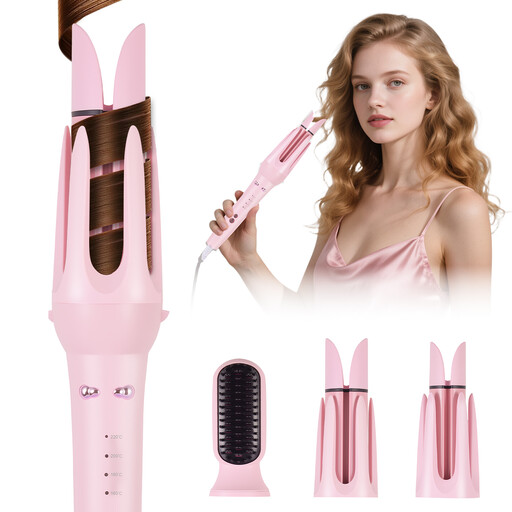 No image available
Automatic rotation in both directions is an option if you’d rather not wrap your hair around the barrel yourself.
32 mm barrel; three temperature settings; automatic rotation to the left and right; ceramic tourmaline coating according to the product name.
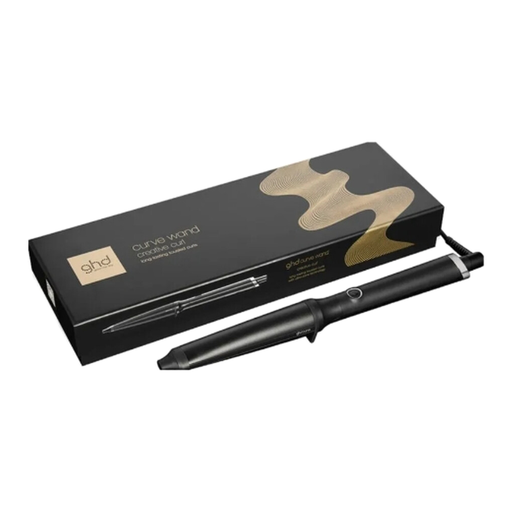 No image available
This tapered wand is worth considering if you want to guide each section yourself and try different curl or wave shapes.
28 mm at the barrel and 23 mm at the tip; 185 °C; a glove is listed. The usage instructions are for dry hair.
Sections are wrapped around the hot barrel by hand; the usage instructions recommend wearing the glove while doing so.
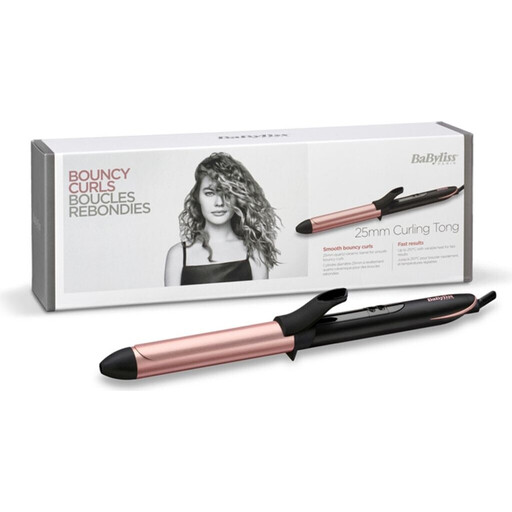 No image available
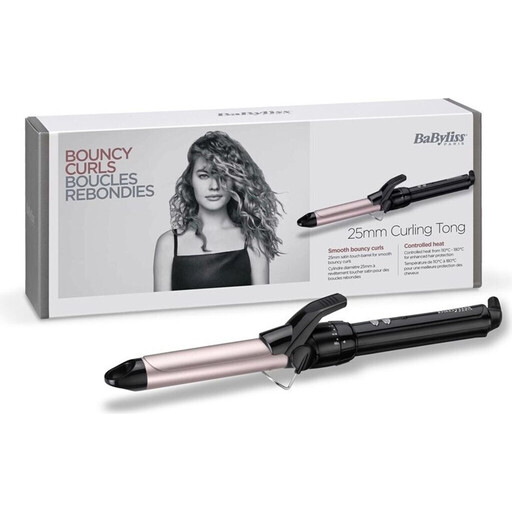
The clamp holds each section in place as you wrap it, making this a good fit for a classic styling technique.
25 mm barrel; six temperature settings from 160 °C to 210 °C; heat mat; switches off after 60 minutes. Colour according to the product name: black and rose gold.
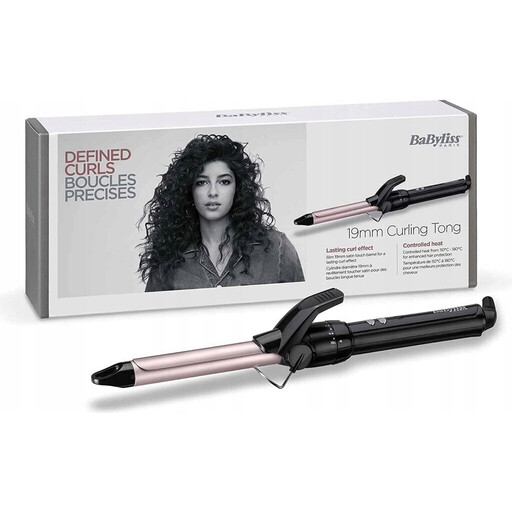 No image available
According to the product description, the narrow barrel is designed for tight, defined curls, rather than soft waves.
19 mm barrel; ten temperature settings from 110 °C to 180 °C; cool tip and swivel cord. The instructions specify completely dry hair and small sections.
 No image available
This 25 mm tong with a clamp is a classic choice if you want to hold and wrap each section yourself.
25 mm barrel; ten temperature settings from 110 °C to 180 °C; insulated tip; integrated stand; automatic shut-off.
Sections are wrapped around the barrel by hand.
For evenly defined curls, a classic tong with a clamp and a barrel of around 25–26 mm is a sensible starting point. For softer or varied shapes, compare wider or tapered barrels; the result also depends on your hair and wrapping technique.
Philips recommends sections 2–3 cm wide for this model. According to the instructions, hold the device vertically and guide the hair into the curl chamber through the rear opening; wait for the signal before releasing the section.
Not without changing how you prepare your hair: Dyson recommends towel-dried hair that is ideally around 80% dry for Airwrap curls, and doesn’t describe the device as a classic curling tong. If you only want to style hair that’s already dry, bear this different method in mind when choosing.
The statutory guarantee covers faults and is the seller’s responsibility; a manufacturer’s warranty is an optional extra with its own terms. Online purchases generally come with a right to cancel, usually within 14 days of receiving the goods; exceptions and the relevant terms should be checked.
No. The European Commission explains that by affixing the CE marking, the manufacturer declares that the product meets the relevant EU requirements; there is generally no central EU body that grants approval. The marking required for a specific device depends on the product regulations that apply to it.